


You can post every day and still go nowhere on LinkedIn. The accounts that grow run a simple system instead of chasing the feed, and this guide lays out the six steps behind a LinkedIn content strategy that turns content ideas into real results for the B2B founders, marketers, and operators building an audience.
The 6 steps to a winning LinkedIn content strategy
Step 1: Own one narrow topic
Before you pick a topic, get clear on two things: what you want LinkedIn to do for you, whether that's inbound leads, hiring, or partnerships, and who you need to reach to get it. Your topic is the bridge between the two.
Once you know the goal and the reader, growth starts with picking one lane and staying in it. LinkedIn learns what you're known for and shows your posts to people who care about that subject, so consistency on one topic keeps building while a scattered feed resets every time.
Broad content gets ignored. If your focus is just "marketing," you are casting too wide a net. Instead, aim for something precise, like "demand generation for early-stage B2B SaaS." The tighter your niche, the faster you build a reputation as the person to read on it.
Run this quick test: can someone describe your account to a colleague in a single sentence? If they say, "Oh, they post about business stuff," you’re losing. Pick the exact topic you want to own and spend the next month writing exclusively about that.
Step 2: Lead with people over the logo
Personal profiles out-reach company pages by a wide margin, because people connect with people.
Build your strategy around real voices:
- Put your founder or leaders forward. Their first-person takes carry authority that a logo can't, and their networks are larger and more engaged than your company's following.
- Activate your team. A handful of employees posting in their own voice reaches more of the right people than any single company page can.
- Write as a person even on the brand account. First-person language, real opinions, and a human tone outperform corporate messaging everywhere on the platform.
Step 3: Write for depth
Winning content holds attention and earns saves. Every time a reader stays to the end and bookmarks your post, it signals to LinkedIn that the value is real. That's the signal that earns wider organic reach.
You get there with three pillars:
- Open with a hook that stops the scroll. The first two lines decide whether anyone hits "see more." Lead with a specific claim, a number, or a tension, and cut the throat-clearing.
- Deliver something worth keeping. Reference content (frameworks, step-by-steps, breakdowns) gets saved, and saves are among the strongest signals you can earn. Give the reader something they'll want to find again.
- Make one point well. A post built around a single clear idea outperforms one that tries to cover five. Decide on the one thing you want the reader to take away, then build the whole post toward it, ideally through a specific example or story rather than abstract advice.
Step 4: Turn reach into conversation
Comments are where reach turns into relationships. A post that sparks real back-and-forth early tends to get pushed wider, and the people who comment are the ones who remember you.
Earn it the honest way:
- Ask a question you want answered. End posts with a specific prompt, not a generic "thoughts?" The more specific the question, the better the replies.
- Reply to every comment. Each genuine reply extends the conversation and signals that the post is worth showing to more people. Block 20 minutes after posting to do this.
- Comment on others' posts daily. Thoughtful comments on posts from accounts in your lane put you in front of their audiences and build the relationships that show up when you post.
Step 5: Prioritize consistency over frequency
Accounts that post steadily grow faster than accounts that post in bursts and go quiet, because each gap resets the momentum you've built. For most people building a personal brand, three to five posts a week is the sweet spot.
A few simple rules will keep you on track:
- Pick set days and protect them. Three reliable slots beat five you hit one week and miss the next. Put them on the calendar as recurring blocks.
- Batch your writing. Drafting several posts in one sitting is far easier than starting from zero every morning, and it keeps a rough week from breaking your rhythm.
- Post when your audience is active. Mid-week mornings work for most B2B audiences, but your own analytics are the real answer. Find the windows when your people are scrolling and write them down.
Step 6: Build a system you can sustain
Staying consistent for months comes down to a system you can repeat, so each post isn't a scramble from scratch. Two habits carry most of the load:
- Repurpose everything. One strong idea is a long-form post, a follow-up that goes deeper, a comment-thread prompt, and a short video. Squeeze each idea for everything it's worth instead of chasing a new one every day.
- Keep an idea bank. Capture the questions your customers and prospects ask, the takes you have in meetings, and the posts that land, so you're never staring at a blank screen. A running list of raw ideas is the difference between a sustainable habit and a stressful one.
What to actually post
A strategy tells you how to show up; these are the posts that fill it. Each one gives a B2B reader a reason to stop, and each works in your narrow lane:
- A contrarian take. Name a piece of advice your industry repeats and explain why it's wrong. Disagreement pulls comments faster than agreement.
- A result with the receipts. Share a before-and-after, a number that moved, and what you actually changed to move it. Proof travels.
- A lesson from a real conversation. Something a customer or prospect said this week, and what it taught you. Specific beats generic every time.
- A teardown. Walk through a common mistake and how you'd fix it, step by step. This is the reference content people save.
- A decision you made and why. The tradeoff, the options you passed on, and how it turned out. Thinking-in-public earns trust.
- A question you keep getting. Answer it once, in public, in full. If prospects ask it, your audience is searching for it.
Formats that work on LinkedIn
Once you know what you're posting, the format decides how far it travels. A few consistently earn the most reach:
- Document carousels. Swipeable multi-slide posts are among the highest-engagement native formats, which makes them strong for frameworks and step-by-steps. The first slide is the only one that decides whether anyone swipes, so make it earn the swipe.
- Text posts with a real point of view. Plain text posts earn among the highest comment rates when they take a genuine stance. Plain text is the natural home for the sharper angles above, like a contrarian take or a lesson from a real conversation; a post that summarizes generic advice gets scrolled past.
- Native video. Short video can push your reach to people who don't follow you yet. Keep it tight, lead with the problem in the first few seconds, and caption it for sound-off viewing.
How to measure your LinkedIn content performance
Track the signals that reflect depth and relationships, and ignore the vanity numbers:
- Saves and shares. They rise only when a post is genuinely worth keeping, and they pull the widest reach. Watch which topics earn them and make more of those.
- Comments, especially threaded ones. Replies measure connection in a way likes never will. The posts that spark conversation are the ones to study and repeat.
- Profile visits and follows from your target audience. A rising follow count among the right people means your lane is gaining ground. Who follows you matters more than how many.
- Inbound conversations. The real return on a LinkedIn strategy is the DMs, replies, and meetings it creates. Track those, since they're closer to revenue than any engagement metric.
Pick two of these, watch them over a month, and let what's working shape what you post next.
Keep your LinkedIn content strategy consistent without burning out
Step 5 asks for three to five posts a week. At 45 minutes each, much of it fighting writer's block, that's close to four hours gone before you've posted anything. HyperWrite cuts that down.
Its Chrome extension drops TypeAhead into your LinkedIn text box and reads your open tabs to draft in context, while Personas match your voice so the draft still sounds like you.
Tired of watching a single post eat your whole morning? Try TypeAhead free with the Chrome extension and get a week of posts drafted in the time one used to take.
Frequently asked questions
How often should you post on LinkedIn?
You should post on LinkedIn three to five times per week for most personal brands, which is frequent enough to stay visible without sacrificing quality. Consistency matters more than volume, so a steady three posts a week beats five posts one week and none the next, because gaps reset the momentum you build with a steady presence.
What is the best time to post on LinkedIn?
The best time to post on LinkedIn is mid-week mornings, with Tuesday through Thursday generally seeing the strongest engagement for B2B audiences. These are starting points, though; your own LinkedIn analytics show when your specific audience is active, which is a more reliable guide than any universal recommendation.
How do I grow my LinkedIn following?
You grow your LinkedIn following by owning one narrow topic, posting consistently, and turning reach into conversation through genuine comments and replies. Personal profiles grow faster than company pages, so leading with a real voice and engaging daily with others in your lane pays off far faster than posting alone.
Do hashtags still matter on LinkedIn?
No, they don’t. Hashtags have minimal impact on LinkedIn reach because the platform now understands a post's topic from its content rather than its tags. Write naturally about your subject and focus on substance. A hashtag or two does no harm, but it won't rescue a post that lacks a clear point or a strong hook.
What kind of content performs best on LinkedIn?
The content that performs best on LinkedIn holds attention and earns saves, which means frameworks, step-by-step breakdowns, document carousels, and posts with a genuine point of view. Reference content people want to keep and personal takes that spark real comments consistently outrun generic posts and motivational filler.
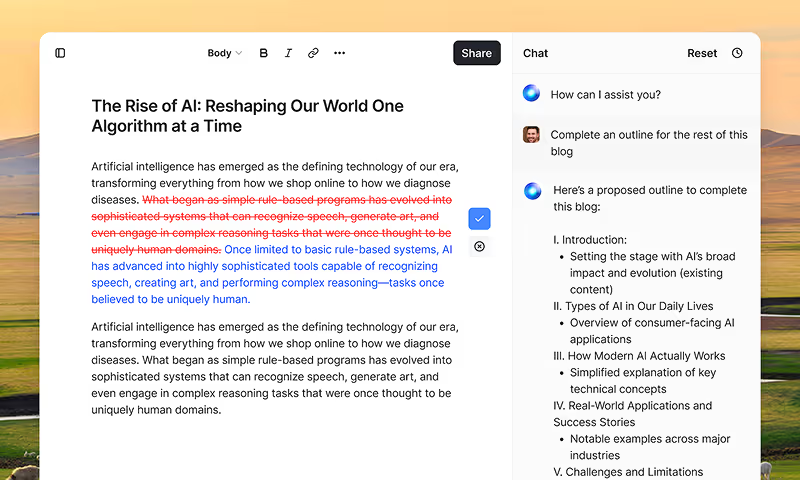
HyperWrite is the AI writing assistant that learns your style. It handles drafting, editing, and researching so you can focus on ideas.
- Autocompletes sentences as you type
- Works inside Google Docs & Gmail
- Adapts to your personal writing style
- 500+ AI tools for any writing task
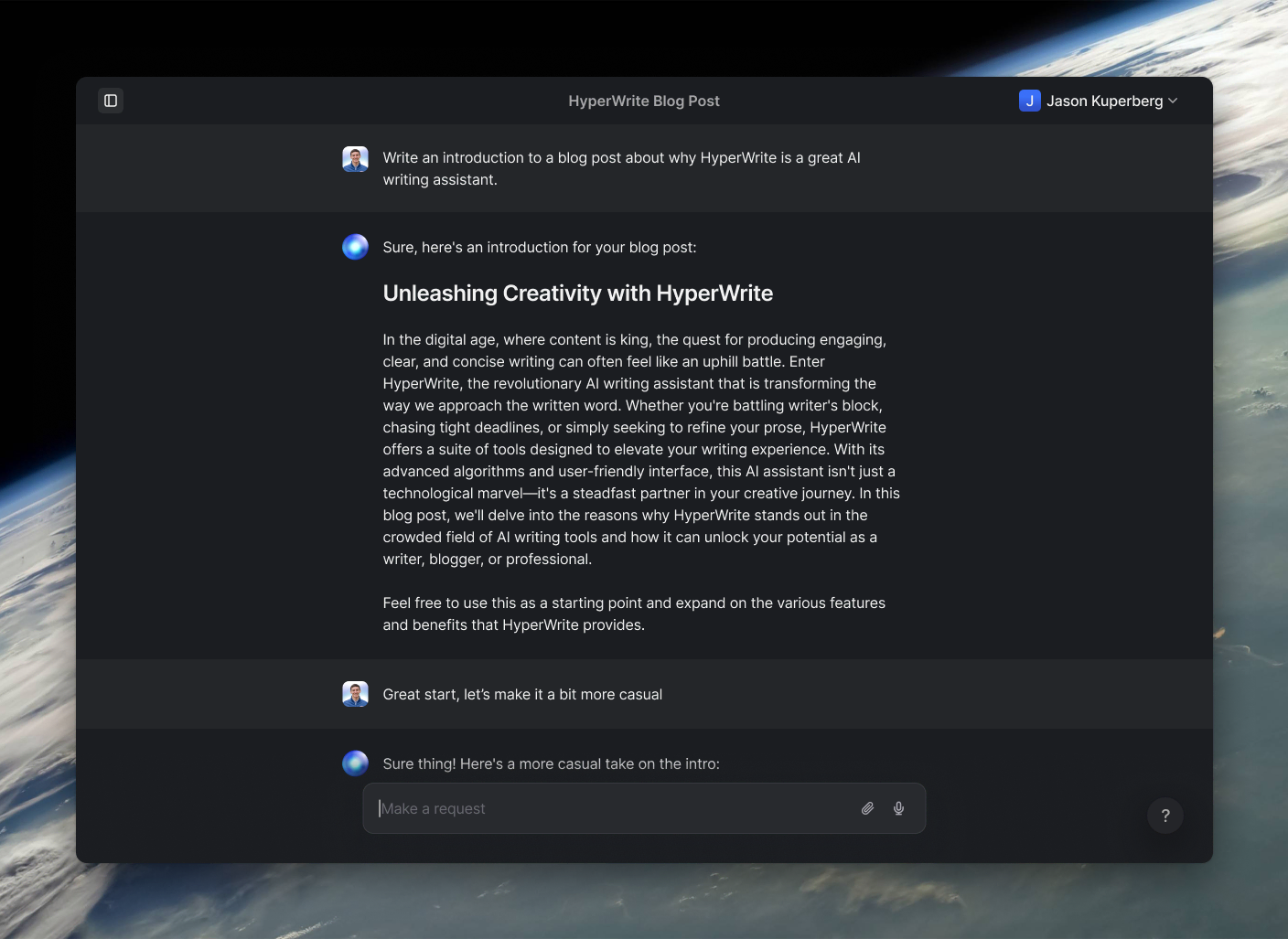
Powerful writing in seconds
Improve your existing writing or create high-quality content in seconds. From catchy headlines to persuasive emails, our tools are tailored to your unique needs.