
How To Overcome Writer's Block: 10 Proven Methods That Work


Learning how to overcome writer's block is mostly a matter of matching the right method to the kind of block you're facing. Most cases clear in minutes once you do; the trick is knowing which method to grab.
What is writer's block?
Writer's block is the experience of being unable to produce written work despite wanting or needing to. It feels creative but usually has a non-creative cause: perfectionism, unclear thinking, fatigue, fear of judgment, or the friction of staring at a blank page when the gap between empty doc and finished draft feels too wide to cross.
10 methods to overcome writer's block
The methods below are ordered by speed. The first few work in five minutes, while the last one is for when the block isn't really about writing.
1. Lower the bar to "ugliest possible first draft"
Anne Lamott calls them "shitty first drafts." The idea is to write the worst version of what you're trying to say, deliberately. Misspellings, weak verbs, bad structure, broken logic, just get language on the page. Editing a bad draft is faster than starting from a blank one.
Once you have a draft, your brain switches from generation mode to revision mode, which is easier.
Set a timer for five minutes. Tell yourself you're writing the bad version and don't backspace. When the timer ends, you'll have something to fix instead of nothing to start.
2. Set a 10-minute timer and freewrite
Peter Elbow's freewriting method goes like this: write continuously for a set time without stopping to edit, evaluate, or rephrase. Separating generation from revision lets each mode work at full speed.
Open a blank doc, start a 10-minute timer, and write whatever comes to mind about the topic. Don’t backspace or rephrase any parts during the writing process. After 10 minutes, you'll have rough material to shape, which is much easier than starting cold.
3. Skip the beginning and write the middle
The hardest sentence to write is the first one. The pressure to "open well" stops more drafts than any other single thing. You can write the introduction last. Once the middle of an argument or document is drafted, the opening writes itself because you know what it needs to set up.
Pick the section you find easiest, whether that's the conclusion, a specific example, or a counter-argument. Write that first. Come back to the opening after.
4. Talk it out loud first
Talking through an idea is faster than writing it. Most people speak far quicker than they type, and you don't stop to second-guess every word. You'll often discover what you actually think only after hearing yourself say it.
Record a voice memo. Pretend you're explaining the topic to a colleague. Don't try to be polished. Once you have the verbal version, transcribe the key parts. The phrases that came out naturally usually beat anything you would have written from cold.
5. Outline before you draft
A clear outline reduces writing time because every sentence you write knows what it's for. Most writer's block is decision fatigue in disguise. When you don't know what should go in this paragraph, you can't write the sentence.
An outline pre-decides those choices, so your brain only has to handle the wording. Write 5 to 7 one-line bullets that capture the structure of what you're trying to say. Each bullet becomes a paragraph or section. Resist the urge to write full sentences in the outline itself.
6. Read something written in the voice you want
5 to 10 minutes before you start a draft, read three paragraphs of a writer whose tone fits the work you're about to do. Read for cadence instead of content. This will help your first paragraph land closer to that tone than if you'd started cold.
7. Walk for 15 minutes
A Stanford study by Oppezzo and Schwartz found that walking increases creative output by an average of 60%, with the effects continuing for a short window after the walk ends. Movement increases blood flow to the brain and breaks the rumination loop that fuels writer's block.
Ideally, you should walk outside. Leave your phone behind, or at least don't look at it. Let your mind wander for 10 to 15 minutes. The block is often gone by the time you sit back down.
8. Change where you write
Environments carry cognitive associations. The desk where you've been stuck on this draft for two hours is now associated with stuckness.
A new environment resets your associations. Even moving from your desk to a couch, a coffee shop, or another room can shift your mental state enough to break the stall.
Close your laptop. Move somewhere new. Open the document there. The small friction of the change is part of the fix.
9. Use AI to break the blank page
The blank page is the hardest part of writing. AI removes it entirely by generating a rough first draft you can edit instead of inventing from scratch. Editing is consistently faster than generating, and AI draft quality is now high enough that editing produces good work in a fraction of the time.
10. Diagnose what's actually blocking you
Methods 1 through 9 work on most blocks. When they don't, the cause is usually upstream of the writing itself.
Sometimes the block stems from unclear thinking rather than an inability to start writing or get your ideas down. It can also be a fatigue issue or an avoidance of the task problem. You can't write your way out of these.
To beat the block, ask yourself three questions:
- Do I know what I want to say?
- Am I trying to write while exhausted?
- Am I avoiding this draft because something about it feels risky?
If the answer to any of these is yes, the fix is to clarify your thinking, take a real break, or name the resistance honestly.
The shortest writer's block is the one you don't fight head-on
Most cases of writer's block clear in under 15 minutes with one of the first nine methods. When it doesn't, method 10 is usually the answer. The best approach is to match the method to the block.
If you're stuck on a blank page, methods 1, 2, or 9 will move you fastest. If you're stuck mid-draft, methods 3, 4, or 5 work better. If nothing is working, walk (method 7) or honestly diagnose what's underneath (method 10).
How HyperWrite makes the first draft easier
Writer's block can usually be prevented by removing the small frictions that build up across a writing day. You can opt for tools like HyperWrite, which works across the tabs you have open in your browser.
TypeAhead drafts alongside you as you type, so your sentences stay in motion instead of stalling. Personas read your past writing and match your voice. This gives you authentic output rather than generic output.
Try the TypeAhead Chrome extension for free and use it the next time you get stuck on a draft.
Frequently asked questions
Is writer's block a real thing?
Yes, writer's block is a real thing, though it's better understood as a productivity problem than a creative one. Writers from Anne Lamott to Peter Elbow have described the same causes (perfectionism, unclear thinking, and blank-page friction) and the same fixes: lowering the bar, freewriting, talking it out, and drafting with AI.
How long does writer's block usually last?
Writer's block usually lasts minutes to hours for most knowledge workers and can stretch into days or weeks for longer creative projects. Most acute blocks clear in under 15 minutes once you stop fighting them head-on and switch methods.
Can AI help with writer's block?
Yes, AI helps with writer's block because the hardest part of writing is the blank page, and AI generates rough drafts you can edit instead of inventing from scratch.
What should you do if writer's block lasts for days?
If writer's block lasts for days, the cause is usually upstream of the writing. Check for unclear thinking on the topic, fatigue or burnout, avoidance of something the draft requires, or perfectionism on a piece that doesn't warrant it.
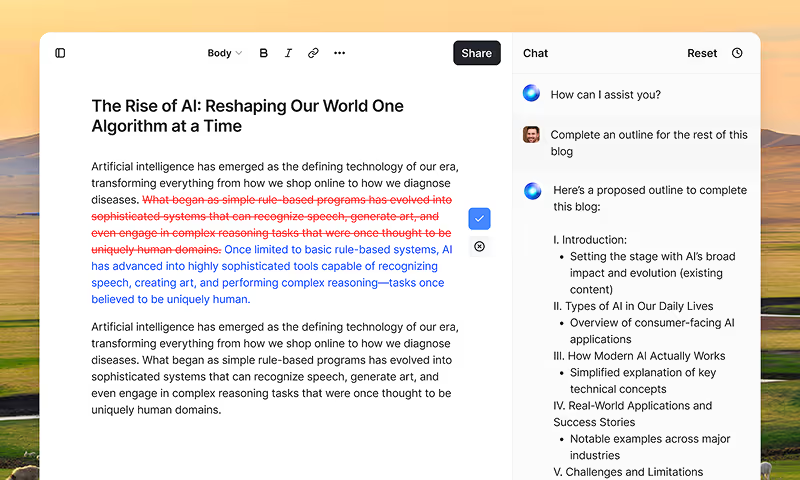
HyperWrite is the AI writing assistant that learns your style. It handles drafting, editing, and researching so you can focus on ideas.
- Autocompletes sentences as you type
- Works inside Google Docs & Gmail
- Adapts to your personal writing style
- 500+ AI tools for any writing task
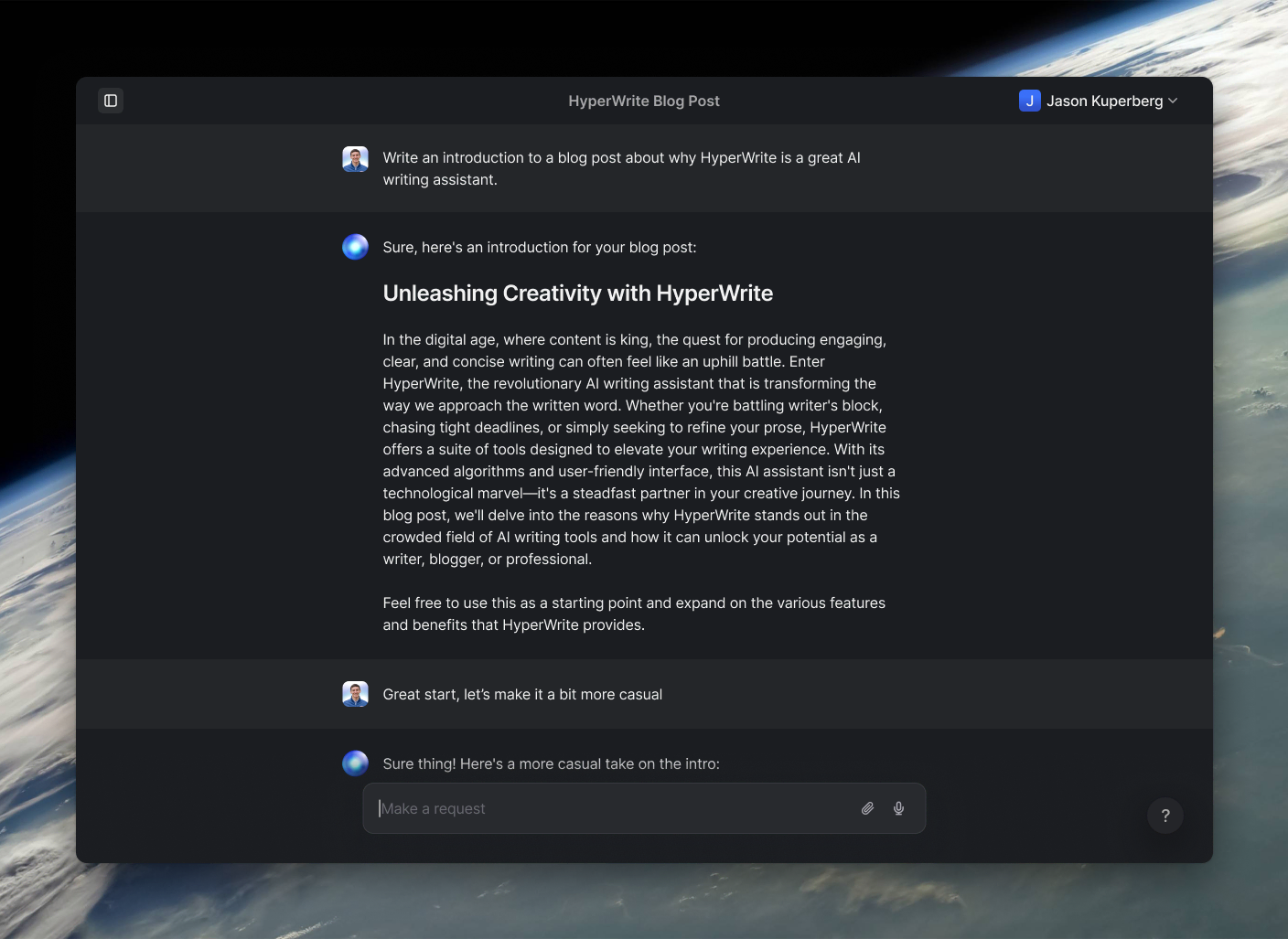
Powerful writing in seconds
Improve your existing writing or create high-quality content in seconds. From catchy headlines to persuasive emails, our tools are tailored to your unique needs.