


If you're wondering how to build a writing portfolio that gets you hired, the formula is simple. Pick a niche, choose 5–10 of your best pieces, host them somewhere clients can browse in one click, and explain the thinking behind each one.
AI has made producing basic text trivial, so clients no longer hire writers to generate words. They hire you for judgment, the ability to shape a narrative, cut the fluff, and make a piece land. Your portfolio has to prove that skill, because filling a page no longer counts for anything.
What a writing portfolio needs to do
While a resume outlines your writing skills, a portfolio demonstrates them. Every potential client or hiring manager opens your work with a single question in mind: can this person deliver what I need?
Keep that one question in mind, and these three rules follow:
- Curated and not complete. Build a tight selection aimed at the work you want next and leave the rest out.
- Quality beats volume. 5–10 strong pieces beat 50 average ones.
- Every weak sample costs you. One mediocre piece pulls down how the strong ones read, so cut it.
How to build a writing portfolio in 6 steps
These six steps take you from a blank page to a portfolio you can send a client today. Work through them in order, or jump to the stage you're stuck on.
Step 1: Pick the niche you want to be hired for
Before you choose a single sample, decide what kind of writing you want to be paid for. For example, SEO blog posts, SaaS case studies, email copy, technical documentation, and long-form journalism are different jobs with different buyers.
Your portfolio should mirror the work you want. If you want SaaS clients, a portfolio full of travel essays sends the wrong signal, no matter how good those essays are. Pick one or two niches to start, and add a section later as your range grows.
A quick test: Look at the clients or jobs you'd love to land, then ask whether your samples look like the work they already publish. If not, that's the gap to close.
Step 2: Choose your strongest samples
Once you know the target, pull the pieces that fit it best.
- Aim for 5–10 pieces at most.
- Show your range within the niche. A blog post, a landing page, and a case study together prove you can flex across formats.
- Lead with your single best piece. Many people won't scroll past the first two, so put your strongest work where they'll see it.
- Cut anything you're lukewarm about. One weak sample makes the rest look worse.
Favor published work, but don't require it. A live byline on a recognizable site adds credibility, though an unpublished sample you're proud of beats a published one you're not.
Step 3: Create samples when you have no clients
This is the classic problem: clients want samples, but you need clients to get samples. You break the loop by writing spec pieces, samples you create on your own that look exactly like paid work.
- Write spec pieces for real brands. Pick a company you'd want to work with and write the blog post or landing page you think they need. It shows initiative and lets you target your dream clients directly.
- Offer one free or discounted piece to a small business or nonprofit for a real byline and a live link.
- Publish on your own blog, Medium, or LinkedIn. Self-published work still proves you can write, and editors do read it.
Writing something without a brief proves you can shape a piece on your own, and that self-direction is what a client wants to see.
The hard part is starting, since a blank page can stall even experienced writers. That's where a drafting assistant helps.
HyperWrite works as your writing co-pilot to get a spec sample off the blank page, and its TypeAhead suggests context-aware lines in your own voice as you write. You stay in charge of the editing and judgment calls, the part that makes a sample worth showing.
Step 4: Choose where to host it
Your portfolio needs to live somewhere clients can reach in one click, with no login walls.
A personal site with your name in the domain looks most professional, but a clean Google Drive folder, or a quick portfolio platform like Journo Portfolio or Clippings.me, beats a broken or half-built website. Pick the option you'll keep updated.
Step 5: Present each sample with context
A wall of unlabeled links forces clients to do the work of figuring out why each piece matters. Make it effortless: add one line of context to every project.
- One-sentence description: what it is and who it was for (e.g. "SEO blog post for a fitness startup").
- The goal or result where you have it ("increased email open rates 40%").
- Clean, consistent formatting so the whole portfolio reads as one professional package.
Context turns a link into evidence. It shows you understand why a piece worked, and that judgment is what clients pay for.
Step 6: Add proof and make contact easy
Two things push a hesitant client over the line: proof other people trust you, and an obvious way to reach you.
- Add testimonials from past clients or editors. Even a short LinkedIn recommendation works.
- List any recognizable bylines or features you've earned.
- Put your contact details somewhere obvious, with a clear call to action like "Let's work together."
If you're new and have no testimonials yet, lead with your best spec work and let the writing carry the weight. Proof accumulates as you go.
Common writing portfolio mistakes to avoid
Even a strong set of samples can be undercut by a few avoidable slips. Here are the ones that cost writers work most often, and what to do instead.
- Including everything. You're judged on your weakest sample, not your average, so cut rather than pad.
- Showing off-niche work. A brilliant travel essay in a SaaS portfolio still reads as a mismatch.
- Hiding behind a login wall. Any barrier, whether a sign-in, a permission request, or a download, costs you readers who won't bother.
- Letting it go stale. A portfolio topped out at last year's work signals you've stopped growing.
- Using AI without editing. A raw AI draft published as-is proves nothing; your edits are the point.
Keep your writing portfolio working for you
Your portfolio grows with you. Every piece you publish is another chance for someone to find and trust your work. Start with the samples you have and swap in stronger pieces as you write them.
If drafting the spec samples is the slow part, HyperWrite's AI Tools Library has ready-made tools for outlines, rewrites, and summaries, and Personas keeps the draft in your own voice, so you can shape a rough draft into a portfolio-ready sample.
Staring at a blank page for your next spec sample? Try TypeAhead free with the HyperWrite Chrome extension and get your first draft moving in your own voice.
Frequently asked questions
How many samples should a writing portfolio have?
A writing portfolio should have 5–10 strong samples. Quality matters more than quantity: a handful of excellent, relevant pieces makes a better impression than dozens of average ones. Lead with your single best piece, since many readers won't scroll far.
How do I build a writing portfolio with no experience?
You build a writing portfolio with no experience by creating spec samples: self-directed pieces that look exactly like paid work. Write a spec blog post for a brand you'd love to land, offer one free article to a small business for a real byline, or publish on your own blog, Medium, or LinkedIn. Unpublished work still proves you can write.
Where should I host my writing portfolio?
Host your writing portfolio somewhere clients can open in one click. A personal website looks most professional; portfolio platforms like Journo Portfolio or Clippings.me are faster to set up, and a tidy Google Drive folder works on no budget. Make sure permissions are set to public.
What's the difference between a writing portfolio and a resume?
A writing portfolio shows your work while a resume describes it. A resume lists your experience and skills; a portfolio proves them with actual samples. Clients and editors almost always want to see the writing itself before they hire.
How often should I update my writing portfolio?
Update your writing portfolio every 3–6 months. Add stronger samples as you produce them, remove older or off-niche work, and refresh testimonials. Treating it as a living document keeps it aligned with the work you want next.
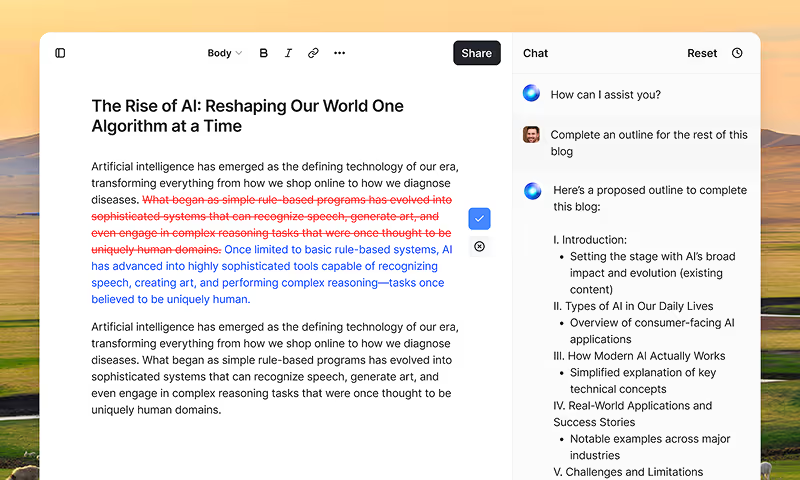
HyperWrite is the AI writing assistant that learns your style. It handles drafting, editing, and researching so you can focus on ideas.
- Autocompletes sentences as you type
- Works inside Google Docs & Gmail
- Adapts to your personal writing style
- 500+ AI tools for any writing task
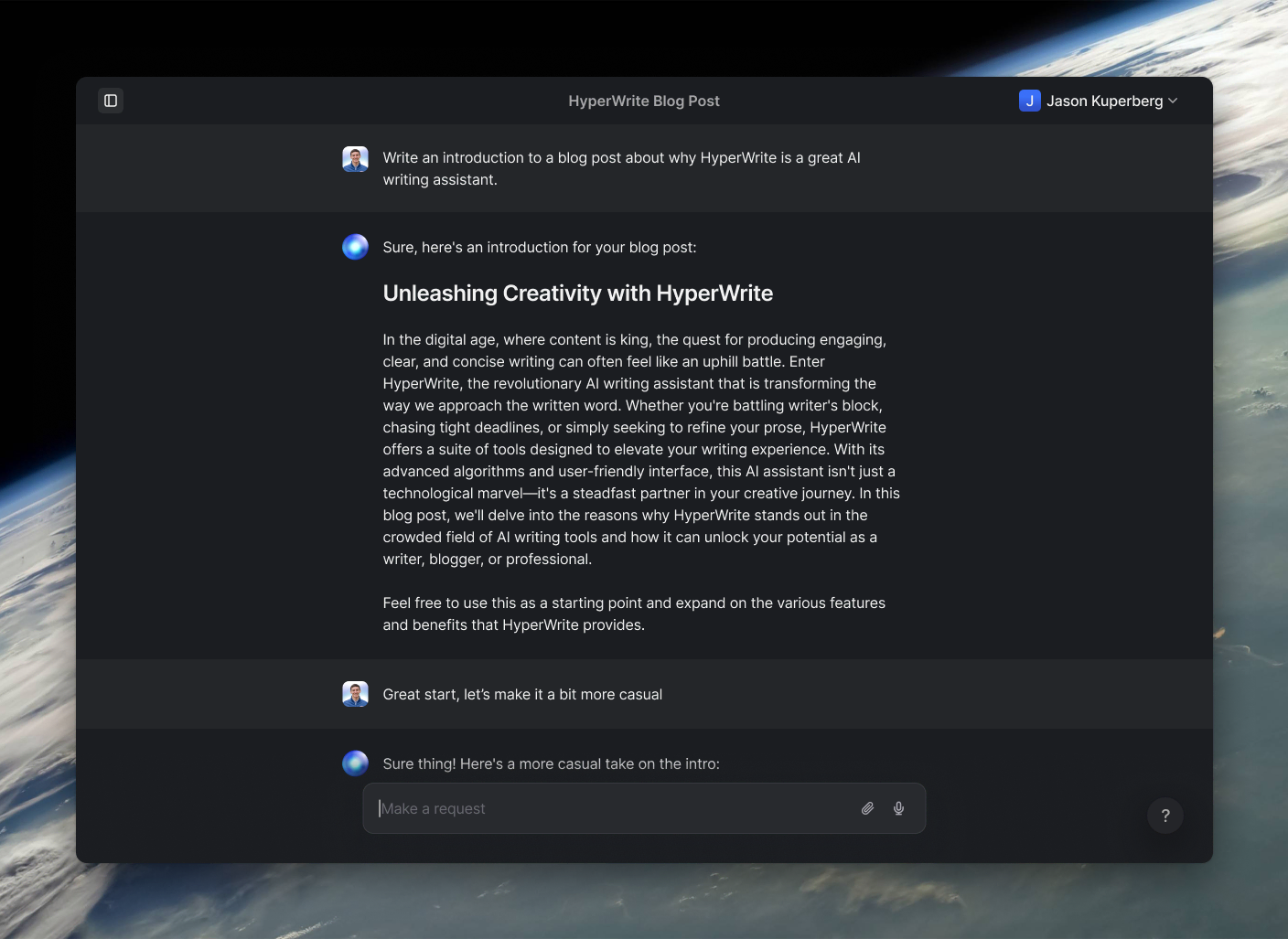
Powerful writing in seconds
Improve your existing writing or create high-quality content in seconds. From catchy headlines to persuasive emails, our tools are tailored to your unique needs.