

You spend nights reading notes again and highlighting, yet test day still feels like starting over. Study tips for College flood the web but few show how to actually learn more in less time and keep information long-term. This article on best study Methods gathers practical study strategies like active recall, spaced repetition, Pomodoro style focus, smart note-taking, practice testing, and flashcard use to help you retain information and raise your grades. Which habit will you try first to study smarter and stay consistent?
To make building those habits easier, HyperWrite's AI writing assistant turns messy notes into clear summaries, creates practice questions and flashcards, and suggests simple study schedules so you learn faster and remember more.
Summary
- Active recall is the most effective single technique cited in the article, with 90% of students naming it as such and over 70% reporting improved grades after adopting it.
- Spaced repetition reliably converts short-term familiarity into durable memory, with users improving test scores by about 30% and being 50% more likely to retain information long-term.
- The guide presents 15 research-backed study methods and recommends picking two to three complementary techniques, then measuring retention, time saved, and exam confidence to avoid overcomplication.
- Passive formats can be made active with simple constraints, for example pausing every 10 minutes during audio study or using a 10 to 15 minute blurting session to generate retrieval cues for later review.
- Time-boxing matters: Pomodoro variations use 25 or 45 minute focus blocks with 5 or 15 minute breaks and a longer break after four cycles, which helps routine tasks but may interrupt deep problem-solving.
- Centralizing notes and automating practice-material creation significantly lowers prep overhead, with teams reporting a drop from hours of manual work to minutes when summaries and practice questions are generated automatically.
This is where HyperWrite's AI writing assistant fits in; it addresses this by converting messy notes into concise summaries, automated practice questions, and flashcard-ready items that reduce manual prep time.
What is The Most Effective Method for Studying?

There is no single universal best study method; what matters is whether a technique forces active learning, strengthens long-term retention, and supports real application. Evidence-based approaches, when matched to your schedule and goals, consistently outperform passive habits like rereading.
What Makes a Method Effective?
Effective study turns exposure into durable memory by combining deep processing with repeated, effortful retrieval. Cognitive science points to two mechanisms that matter most: retrieval practice, which forces you to pull knowledge out of your head, and spacing, which spreads practice so memory reconsolidates between sessions. According to the DataCamp Blog, 90% of students found that active recall is the most effective study method, underscoring why forcing yourself to answer questions beats passive review every time.
How Do You Match a Method to Your Situation?
- If you have short, repeated study windows, pick techniques that reward small, frequent practice
- If you study in long blocks, choose activities that require production and application.
- When we ran an 8-week coaching clinic with first-year students, most began by rereading notes and felt guilty about using alternate formats like audiobooks.
- After we introduced structured retrieval tasks and flexible review formats, students reported less exam-day panic and clearer review plans.
That pattern holds across commuters, visually impaired learners, and busy double majors. Format preferences matter for comfort and access, but retention depends on active engagement, not whether you read on paper or listen while you walk.
Why Does Spacing Amplify Learning?
Spacing forces the brain to re-encode material under slightly different conditions, making recall cues more robust and transferable. DataCamp Blog, Students who used spaced repetition improved their test scores by 30% showing how structured intervals turn short-term familiarity into reliable recall, which is precisely why flashcard systems and planned review calendars work better than last-minute cramming.
The Hidden Cost of Familiar Study Routines
Most people stick with familiar routines because they feel easy. What’s the hidden cost?
Most students manage their reviews by skimming notes and highlighting, because it feels productive and requires little immediate effort.
That comfort creates an illusion of mastery, while gaps remain hidden until the test. As study tasks grow in complexity, that friction compounds: you waste hours re-reading material that never truly stuck, and you miss the chance to turn readings into usable practice items.
What Changes When You Replace Friction With Focused Workflows?
The familiar approach is understandable, but it wastes time and leaves outcomes to chance. Solutions like AI writing and research assistants provide a bridge, turning long readings into active study assets.
Platforms with features such as AI writing assistant, summarizers, explain-like-I’m-five prompts, citation-backed summaries, and automated practice-question generation let students compress review prep without sacrificing depth. Teams and students find that generating concise, evidence-backed prompts and flashcard-ready summaries cuts the manual work of creating study materials while preserving the cognitive work that actually builds memory.
How Do You Make Passive Formats Work for Active Learning?
Listening to a lecture or audiobook can feel indulgent if you treat it as passive consumption, which is why many learners feel guilty when they prefer those formats.
The fix is constraint-based:
If you must listen while commuting, pause every 10 minutes to produce one summary or a question you could answer later; when reading, annotate with a one-line retrieval prompt for later practice.
This turns any format into a source of retrieval cues, reducing the mismatch between comfort and effectiveness.
Active Study: From Passive Reading to Retrieval Practice
Think of study methods like building a rope from threads, not painting a wall. Passive reading gives you loose fibers; retrieval and spacing twist those fibers into strength you can actually use on test day and beyond.
The frustrating part? Choosing which evidence-based tactics to adopt reveals tradeoffs you won’t see until you try them in real study conditions.
Related Reading
- Study Tips for College
- When Is the Best Time to Study for a Test
- What Is the Hardest Thing to Study in College
- Can AI Solve Math Problems
- How to Study in Med School
- Types of Study Methods
- How Long Should You Study for a Test
- How to Study for a Math Test
- Study Tips for High School
- Study Tips for Middle School
- Study Strategies for High School Students
Top 15 Best Study Methods for Students of All Levels

Spaced practice and retrieval-based techniques give you the biggest, most reliable gains, but the trick is matching each method to the workload, energy, and time constraints you actually face. Below are 15 research-backed study methods, each presented with what it is, how to apply it in a concrete workflow, why it works in cognitive terms, and the situations where it helps most.
1. Spaced Repetition
A schedule that reviews material at increasing intervals so recall happens just before forgetting.
How to Use it
Build a review calendar tied to your exam date, convert notes into concise flashcards, and review cards according to an expanding schedule (shorter intervals for weak cards, longer for strong ones).
Why it Works
Spacing forces memory reconsolidation under varied contexts, strengthening retrieval cues rather than surface familiarity.
When to Use it
Use this for dense fact sets, languages, and courses where retention matters over weeks or months; avoid setting it up the night before an exam. According to 21K School, “Students who use spaced repetition are 50% more likely to retain information long-term.” That increase shows why investing time in building a schedule pays off when your semester is stacked.
2. Active Recall
Producing answers from memory instead of re-reading notes.
How to Use it
Turn headings into questions, write short answers from memory, and self-grade. Rotate between free recall, brief written responses, and practice questions.
Why it Works
Actively pulling information out strengthens retrieval pathways and exposes gaps you would not see while re-reading.
When to Use it
Use before any exam or graded assignment; pair it with spaced repetition for lasting gains. That pairing explains why over 70% of students reported improved grades after using active recall techniques. Expect this method to be mentally tiring, so schedule short, high-quality sessions rather than marathon blocks.
3. Pomodoro Study Method
Time-boxed focus sessions with regular short breaks.
How to Use it
Work for 25 or 45 minutes, then rest for 5 or 15 minutes; after four cycles, take a longer break. Track tasks and mark progress visibly.
Why it Works
It adds external structure to focus, preventing decision fatigue and helping you start and stop deliberately.
When to Use it
Use for routine reading, note-cleanup, and drilling tasks, but not when you need an uninterrupted deep run. In practice, students with long, continuous problem sets switch to focus blocks longer because Pomodoro’s breaks interrupt their flow.
4. Feynman Technique
Teach a concept in simple terms and identify gaps by how clumsy your explanation becomes.
How to Use it
Write a plain-language explanation aimed at a middle-school audience, note the shaky parts, revisit sources, then re-explain more clearly.
Why it Works
Simplifying forces you to surface implicit assumptions and connect ideas into a coherent, explainable logic, which builds a flexible understanding.
When to Use it
Use for abstract, conceptual material you must apply, like theory-heavy lectures or essay prompts; avoid relying on it alone for rote memorization.
5. Leitner System
A staged flashcard review system that increases intervals for cards you know and concentrates effort on weak cards.
How to Use it
Sort physical or digital cards into boxes by recall success, review Box 1 more frequently and Box N less often, and move cards between boxes based on performance.
Why it Works
It automates the spacing decision while focusing attention where it’s needed most.
When to Use it
Use if you prefer tactile workflows and are studying vocabulary or discrete facts; if setup time is a barrier, choose a digital SRS tool that automates the boxes.
6. PQ4R Study Method
A structured reading workflow: Preview, Question, Read, Reflect, Recite, Review.
How to Use it
Before reading, scan headings and form questions. Read to answer them, pause to restate answers in your own words, then schedule quick reviews.
Why it Works
It turns passive reading into intermittent retrieval and reflection, which increases comprehension and recall.
When to Use it
Use when you must extract meaning from long chapters or dense papers; skip it for tight timeframes where producing practice problems would be higher yield.
7. SQ3R Study Method
Survey, Question, Read, Recite, Review, an older, efficient framework for textbook study.
How to Use it
Survey the chapter, pose specific questions, read selectively for those answers, recite succinct points, and do a short review session later.
Why it Works
It forces purposeful reading and immediate synthesis, which prevents wandering attention.
When to Use it
Use for heavy reading loads when you need to compress material quickly; combine subsequent recitation with active recall tasks for durability.
8. Retrieval Practice
Any task where you retrieve information later, under test-like conditions.
How to Use it
Create practice tests, write summaries from memory, swap questions with peers, and use past exams as checkpoints.
Why it Works
Repeated retrieval strengthens recall and highlights what you still need to learn.
When to Use it
Use throughout a study plan, especially in the 1–2 weeks before an exam. This method exposes false fluency quickly, so it is a good early-warning system for last-minute gaps.
9. Color-Coded Notes
Use limited, purposeful colors to mark hierarchy and emphasize key points in notes.
How to Use it
Assign meaning to colors, for example red for definitions, yellow for key examples, blue for dates, and keep the scheme stable across courses.
Why it Works
Color creates salient visual cues that speed scanning and memory, and warm colors can increase engagement with material.
When to Use it
Use during class and revision to make important elements stand out; do not over-color or every page will lose contrast and usefulness.
10. Mind Mapping
Visual webs that show relationships between central concepts and branches.
How to Use it
Start with the core idea, add primary branches for major sections, then attach concrete examples and links; redraw a cleaned map after first draft.
Why it Works
The spatial layout mirrors associative memory, making it easier to reconstruct complex structures.
When to Use it
Use for planning essays, connecting themes across weeks, or reviewing for exams that test integration rather than isolated facts.
11. Elaborative Interrogation
Asking and answering why and how questions to tie new facts to what you already know.
How to Use it
For each new fact, write a short explanation of why it makes sense or how it fits with prior knowledge. Test the explanation later by explaining it aloud.
Why it Works
It creates relational hooks that increase retrieval paths and meaning, shifting learning from shallow to deep processing.
When to Use it
Use when learning cause and effect, mechanisms, or when you need transferable knowledge for application-based questions.
12. Interleaved Practice
Mixing different types of problems or topics within a study session.
How to Use it
Alternate problem types or topics rather than repeating the same kind; for example, rotate calculus, linear algebra, and statistics problems in one block.
Why it Works
Interleaving forces discrimination among strategies, reducing the illusion of mastery that comes from repetitive practice on a single problem type.
When to Use it
Use for skill-building in math, physics, and problem-solving courses. It slows initial performance but accelerates adaptability and exam transfer.
13. Dual Coding
Presenting ideas both verbally and visually.
How to Use it
Pair brief explanatory text with diagrams, timelines, or annotated images, and practice reconstructing either format from the other.
Why it Works
Two complementary representations create more retrieval cues and richer encoding.
When to Use it
Use for processes, historical sequences, and systems where a diagram plus explanation clarifies relationships.
14. Practice Testing
Doing self-administered exams under exam-like conditions.
How to Use it
Time yourself, restrict materials, and use the same format as the real test. Review incorrect answers immediately and turn them into new retrieval items.
Why it Works
Simulated testing boosts recall under pressure and reveals weak spots you must fix.
When to Use it
Use this in the final stage of preparation and regularly during the term to normalize exam conditions and reduce anxiety.
15. The Blurting Method
A timed, uncensored free-write where you write everything you remember about a topic.
How to Use it
Set a 10–15 minute timer, write everything that comes to mind, then use the result to target the gaps you missed during later retrieval sessions.
Why it Works
It is a rapid diagnostic of what is actually accessible in memory, and it breaks start-up inertia for writing tasks.
When to Use it
Use it to kick off essays, outlines, or to test initial recall before you schedule targeted review.
The Stealth Cost of Familiar Study Habits
When students fall back into old habits, it is usually because their current workflow feels familiar and low-friction. Most learners build notes, highlight, and cram because those steps demand less immediate effort.
At scale, they create stealth costs: fragmented materials, duplicate effort, and frantic last-week rewrites that kill sleep and clarity. This is where the friction becomes measurable, not moral.
Streamlining Academic Workflow with AI Research Platforms
Most teams handle study prep by collecting notes in fragmented places, which works early on, but as topics multiply and deadlines stack, that approach fragments context and doubles the time spent recreating citations, practice questions, and coherent summaries. Solutions like AI writing assistant and research platforms change that tradeoff, centralizing readings into:
- Concise, citation-backed summaries
- Generating practice questions automatically
- Producing ELI5 explanations on demand
So students cut prep time while preserving the cognitive work that builds memory. Teams find that these capabilities reduce manual prep from hours to minutes, letting time go back to focused practice rather than housekeeping.
Practical Tradeoffs to Watch For
This list is not a buffet where you take a little of everything. Choose two or three complementary tools that match your schedule and constraints, then measure outcomes:
- Retention
- Time saved
- Exam confidence
If you study on commutes, prioritize retrieval tasks you can do in short bursts; if you have long lab sessions, schedule interleaved practice blocks that mimic test conditions.
The consistent failure mode is overcomplication:
If your system takes more mental energy to maintain than it does to study, simplify until it fits your week.
A Short Analogy to Close This Part
Learning is less like painting a wall and more like building a bridge, piece by piece; every method above supplies a different kind of beam, and using the right mix prevents collapse under exam load.
That improvement feels good, but the more complex question is how to turn all that preparation into natural, confident output when it really counts.
Related Reading
- How Many Hours Do College Students Study per Week
- Good Study Habits for College
- Study Habits for High School
- How to Study the Night Before an Exam
- How to Study for Finals in High School
- Different Study Techniques
- How to Study for a Final Exam
- How to Create a Study Schedule
- Scientifically Proven Study Methods
Try our AI Writing Assistant to Write Natural-sounding Content
When we worked with student study groups over a term, the pattern became clear: they wanted an assistant who kept their voice while turning rough notes into polished, citation-ready drafts. Consider HyperWrite, create a free account, and try writing with AI that actually gets you, backed by over 80% of users reporting improved content quality.
Related Reading
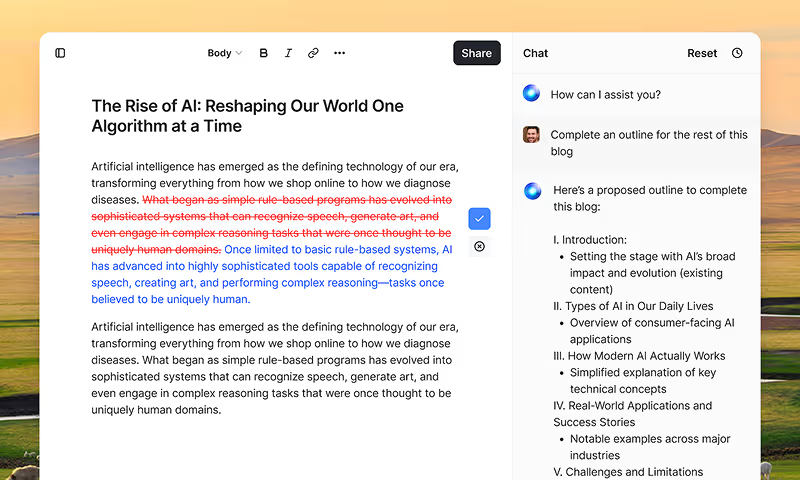
HyperWrite is the AI writing assistant that learns your style. It handles drafting, editing, and researching so you can focus on ideas.
- Autocompletes sentences as you type
- Works inside Google Docs & Gmail
- Adapts to your personal writing style
- 500+ AI tools for any writing task
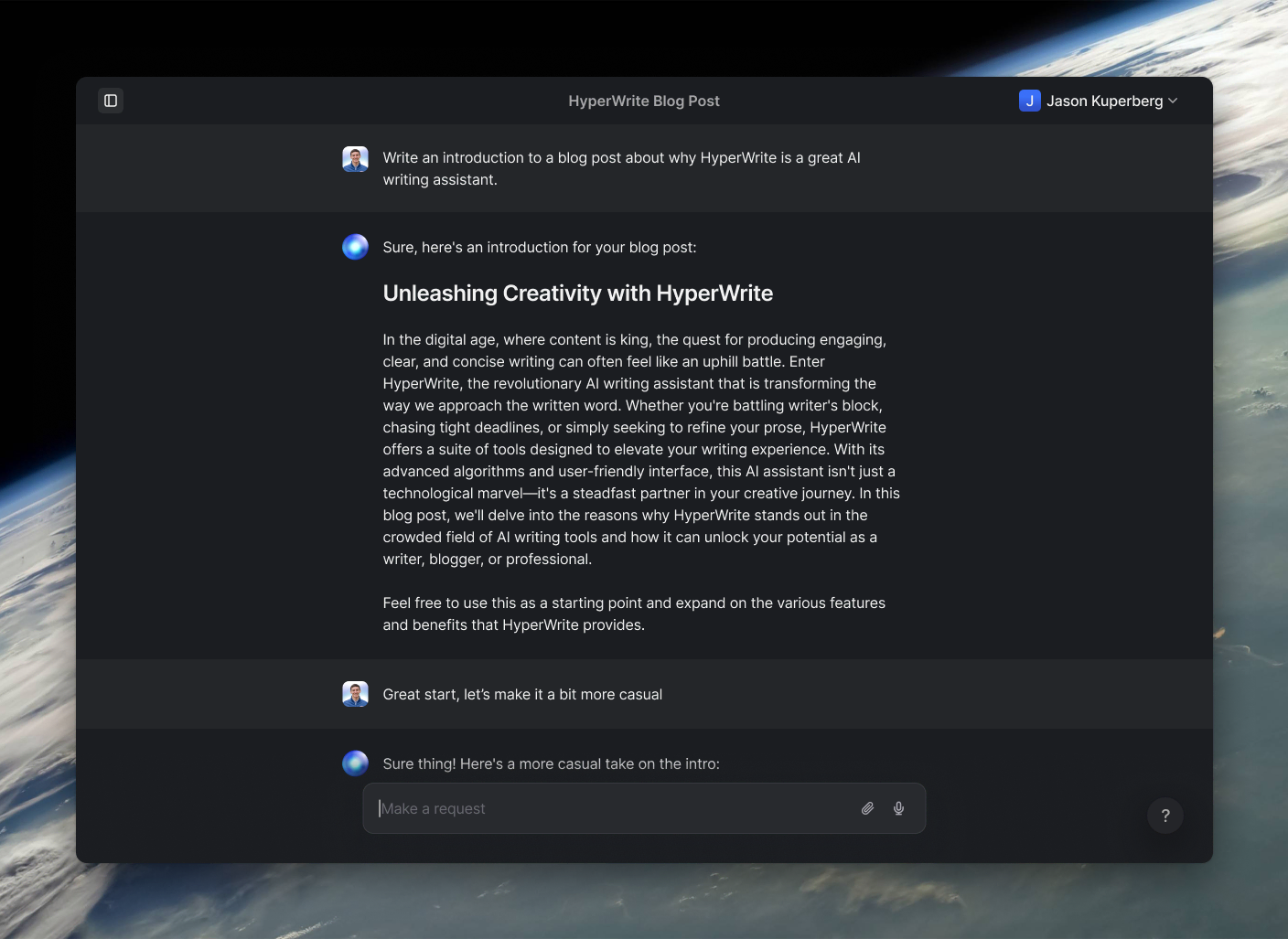
Powerful writing in seconds
Improve your existing writing or create high-quality content in seconds. From catchy headlines to persuasive emails, our tools are tailored to your unique needs.