


If you want to know how to write LinkedIn posts that get read, the first two lines matter more than everything else combined. LinkedIn shows only about the first 140 characters (roughly two to three lines) on mobile before the "see more" cutoff, so if your opening doesn't stop the scroll, the rest of your post is invisible.
This guide breaks down the structure that works, the hook formulas that earn the click, and the formatting that keeps people reading, so your posts do more than sit in the feed unseen.
Why the first line decides everything
The LinkedIn algorithm doesn't read your whole post to judge it. It watches what people do in the first few minutes:
- Click "see more" or scroll past
- React or ignore
- Comment or stay silent
Strong early engagement tells the algorithm to show your post wider. A slow start gets it buried. So your reach comes down to your opening line more than any other part of the post.
How to write a LinkedIn post: A simple formula
Strong LinkedIn posts follow a simple four-part shape:
- The hook (first 1-2 lines): Stop the scroll and earn the click.
- The promise (next 1-2 lines): Tell the reader what they'll get for staying.
- The body: Deliver it: a story, a framework, an argument, or a lesson.
- The close: End with a question or a specific prompt that invites a reply.
Once someone clicks "see more," short paragraphs and a clear payoff keep them reading to the end.
4 LinkedIn hook formats that work
Your hook has one job: create enough curiosity or promise enough value that stopping feels worth it. Four formats consistently earn the click:
The personal story
Open mid-story, at a moment of tension.
- Opener: "There's no such thing as 'surviving a layoff,'" from Bryan Creely's layoff post.
- Promise: The next lines argue that even the people who keep their jobs don't walk away unscathed.
- Why it works: It denies the reassuring story you were bracing for, so you read on to see what he means.
Story hooks pull the hardest because they trigger curiosity and empathy at once. The catch is they have to be true; LinkedIn readers have a sharp radar for manufactured vulnerability.
The contrarian claim
Say something that challenges what your industry takes for granted.
- Opener: "UNPOPULAR OPINION: One of the most harmful lies we told this generation is that they should aim for INDEPENDENCE..." from a widely shared Steven Bartlett post.
- Promise: The argument that follows, that chasing independence traded meaning for isolation.
- Why it works: It attacks a value the reader has been sold their whole career, so they need to see whether it holds up.
Use it for opinion and thought-leadership posts, and only make the claim if you can back it.
The question
Ask something your reader has quietly wondered.
- Opener: "What if the reason you're not advancing isn't a lack of skill but lack of strategy?" from Diana Lasso's leadership post.
- Promise: The next lines lay out five levels of leadership growth, the strategy she's pointing to.
- Why it works: It names a frustration the reader has lived, working hard without moving up, then reframes the cause, so they read to find out what they've been missing. The comments outran the reactions, which is what a question hook is built to do.
The knowledge gap
Promise something the reader is missing.
- Opener: "LinkedIn is literally telling you how to write posts," from a viral Jasmin Alić post about LinkedIn writing itself.
- Promise: The rule the platform is signaling, to fit the whole post into the first three visible lines.
- Why it works: It reframes something you assumed was complicated as obvious and already in front of you, so you stay to find out what it means.
It names what you're missing and hints at the fix, which is what holds the reader to the end.
Format for the feed
A post can have a great hook and still lose people if it looks like a wall of text. On a fast-moving mobile feed, dense paragraphs get skipped before they're read.
- Keep paragraphs to one or two lines. Each idea gets its own beat.
- Use white space between lines to make the post easy on the eye.
- Bold one key phrase per section so skimmers still catch the point.
- Go easy on emojis. One or two with purpose is fine; a row of icons looks cluttered.
Aim for roughly 1,300 to 2,500 characters for a substantive post. Long enough to say something real, short enough to hold attention.
Posts under 400 characters tend to get less engagement, so they rarely build the momentum a longer post can.
Write a close that earns replies
Comments are one of the strongest signals you can earn, so your ending has to work for them. Vague sign-offs like "Let me know your thoughts" are too easy to scroll past.
Ask something specific instead.
- Weak: "Thoughts?"
- Strong: "What's the one LinkedIn habit you'd tell your younger self to start sooner?"
A pointed question gives people an easy, specific thing to answer, which is what turns a passive reader into a commenter.
What kills a good post
A great post can still flop, and it's usually one of these six habits behind it:
- The link in the body. LinkedIn says links themselves aren't penalized, but a post built around one pushes readers off-platform and loses the dwell time and comments that drive reach. Put the link in the first comment instead.
- The press-release voice. Nobody engages with a corporate memo. Write like a person talking to one other person.
- The engagement-bait ask. "Comment 'GUIDE' and I'll DM it" backfires. LinkedIn works to demote obvious comment-baiting, so ask a real question instead of farming for replies.
- Post and ghost. Replying to comments in the first hour feeds reach and pulls more replies. Leaving your own comment section dead wastes the window you worked to open.
- The overpromise hook. A hook that oversells what the body delivers spikes the click, then tanks dwell time when readers bail, and LinkedIn reads that drop-off as a weak post.
- Writing for everyone. A post aimed at all professionals lands with none. Name one reader and one situation, and the right people feel it's for them.
Draft faster so you can post consistently
The hard part of LinkedIn is showing up regularly. One good post won't move anything, but a steady rhythm builds the audience. The bottleneck for most people is getting the draft written in the first place.
This is where a writing co-pilot helps. HyperWrite's TypeAhead is a context-aware co-pilot that works right inside LinkedIn's composer: it reads what's already open in your other browser tabs and drafts your next line in your own voice.
Personas learns from your writing samples so posts start in your own voice instead of a generic tone. You still make the calls on what to keep. It just gets you to a draft faster, which is what makes consistency realistic.
Staring at an empty composer again? Try TypeAhead free with HyperWrite’s Chrome extension and draft your next LinkedIn post in your own voice, without leaving the page.
Frequently asked questions
How do I write a LinkedIn post that gets engagement?
You write an engaging LinkedIn post by opening with a strong hook and ending with a specific question. The first two lines have to stop the scroll before the "see more" cutoff; the body needs to deliver real value; and a pointed closing question invites comments.
How long should a LinkedIn post be?
A LinkedIn post works best between roughly 1,300 and 2,500 characters. That range is long enough to say something substantive and short enough to hold attention. Very short posts often don't generate enough engagement, while posts near the 3,000-character ceiling tend to lose readers before the end.
What makes a good LinkedIn hook?
A good LinkedIn hook creates curiosity or promises value in the first line. The strongest formats are a personal story, a contrarian claim, a pointed question, or a knowledge gap. The hook has to land within the first two or three lines.
Should I put links in my LinkedIn posts?
No. You should keep the link out of the post body and put it in the first comment. LinkedIn has said links aren't penalized on their own, but a post built around an outbound link pushes readers off-platform and loses the dwell time and comments that fuel reach. Dropping it in the comments protects your distribution while still pointing readers where you want them to go.
How often should I post on LinkedIn?
You should post on LinkedIn consistently, ideally a few times a week. Regular posting compounds reach far more than occasional bursts, because it gives the algorithm and your audience repeated chances to engage. A steady, sustainable rhythm beats posting daily for a week and then going quiet.
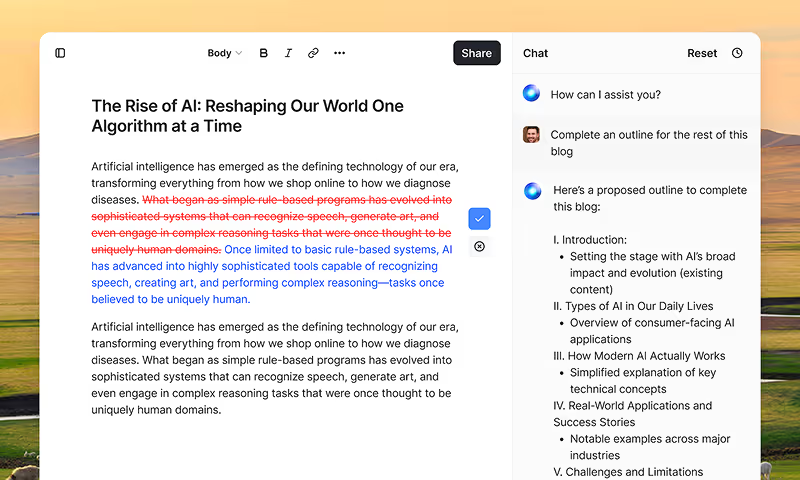
HyperWrite is the AI writing assistant that learns your style. It handles drafting, editing, and researching so you can focus on ideas.
- Autocompletes sentences as you type
- Works inside Google Docs & Gmail
- Adapts to your personal writing style
- 500+ AI tools for any writing task
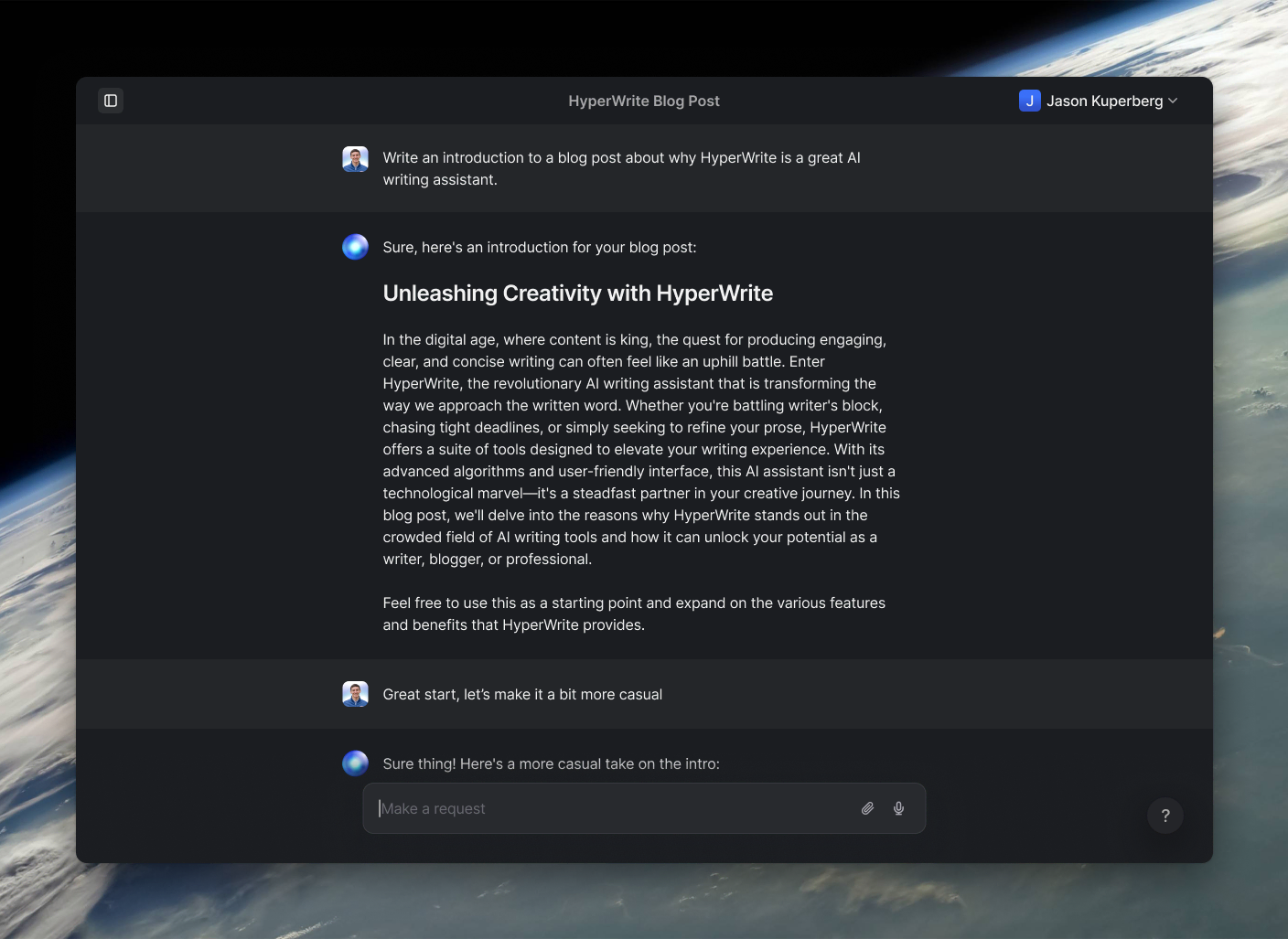
Powerful writing in seconds
Improve your existing writing or create high-quality content in seconds. From catchy headlines to persuasive emails, our tools are tailored to your unique needs.