


Staring at an empty composer, wondering what to post, is the most expensive five minutes in B2B marketing. So here's a fix: 50+ B2B social media content ideas, grouped by platform, each with a real example. Pull from it whenever the composer's blank.
Start with the platform before the idea
The same idea performs differently depending on where it lands. A data teardown that earns shares on LinkedIn dies on Instagram. Three rules hold everywhere:
- Lead with the audience's problem. Buyers follow accounts that help them work, then buy from the ones they trust. Save the pitch until your value posts have earned it.
- Make every post searchable. Buyers now type full questions into LinkedIn and Instagram like they search Google, so write hooks in the words they actually use.
- Pick one goal per post. Decide whether a post is built to teach, spark a reply, or earn a share before the first line. Posts chasing all three land none.
The ultimate list of B2B social media content ideas
LinkedIn: The B2B core (16 ideas)
LinkedIn drives the majority of B2B social leads, so it earns the largest share of your ideas. It rewards thoughtful, text-led posts and founder voices over polished brand accounts.
- The argued contrarian take. Stake a position your peers won't and back it with evidence. Example: "Gating your best case study costs you your most qualified lead. Here's the data that changed our mind."
- The "I changed my mind" reversal. Name a belief you held, then explain what flipped it. Example: "We swore by chasing enterprise logos. The SMB segment we ignored became 60% of revenue."
- The hard-call story. Walk through a tough decision and what it cost or won. Example: a founder on the pricing change that lost a marquee deal but doubled retention.
- The customer win as narrative. Tell a real story with a beginning, middle, and result. Example: "A logistics client cut onboarding from 3 weeks to 4 days. Here's the exact process change."
- The "steal this" asset. Give away something you actually use internally. Example: the cold-email script, QBR agenda, or pricing calculator your team runs, pasted in full.
- The deal post-mortem. Have the rep who lost a deal break down publicly why it slipped. Example: "We lost a $90K deal last week. The three signals we missed in discovery."
- The category prediction. Forecast where your space is heading and commit to it. Example: "By next year, half of these tools will fold AI visibility into the base plan. Here's why."
- The framework. Give the audience a repeatable way to decide something. Example: a simple 2x2 for choosing which features to build next.
- The myth-buster. Correct a misconception your whole industry repeats. Example: "No, more demos don't mean more deals. Here's what the data actually shows."
- The "what this stat hides" post. Take a number everyone cites and expose what it leaves out. Example: "Everyone quotes '70% of buying happens before sales.' Here's why that's misleading."
- The news analysis. React to an industry event with what it means for buyers. Example: a clear read on what a competitor's acquisition changes for their customers.
- The debate poll. Use a poll to surface a real disagreement. Example: "What kills a B2B deal fastest?" with four options people genuinely argue over.
- The process carousel. Turn a workflow you've earned into a swipeable doc. Example: "The 7-step onboarding flow that cut our churn 30%," one step per slide.
- The objection, answered in public. Take the pushback sales hears most and respond openly. Example: "'You're too expensive.' Here's the math we walk every prospect through."
- The term you're all misusing. Define a word your space throws around loosely. Example: "Everyone says 'product-led.' Most of what you're describing is just a free trial. Here's the difference."
- The culture post. Show how the company works to build trust and attract talent. Example: why the team went fully async, and what broke before it worked.
X: Fast, opinionated, real-time (10 ideas)
X rewards speed and sharp takes. B2B works here when posts are short, specific, and don't require sound or context to land.
- The one-line provocation. A single punchy line that stands on its own. Example: "Your pricing page is your best salesperson, and you've hidden it behind 'Contact us.'"
- The numbered thread. Break a result or process into a step-by-step thread. Example: "How we got 23 replies from 100 cold emails. The breakdown."
- The build-in-public number. Drop a real metric the moment it happens. Example: "MRR crossed $50K today. The one channel that moved it this month."
- The annotated receipt. Screenshot real proof and mark it up. Example: a customer's unprompted "this saved my week" message, shared with permission.
- The instant news reaction. Quote an industry announcement with your immediate read. Example: a funding headline plus what it signals for the category.
- The spot-the-mistake. Post a bad example from your field and ask what's wrong. Example: a redacted landing page with "what would you fix first?"
- The stack reveal. Show what you actually use and what each tool replaced. Example: "Our whole GTM stack is 6 tools. The list, with what each one killed."
- The live-from-the-room post. Post the sharpest moment from an event as it happens. Example: the three best lines from a keynote, posted while it's still on stage.
- The stat that stopped you. Share a surprising data point and your honest reaction. Example: "Only 5% of your market is in-market right now. That should change how you write every post."
- The open question. Ask something specific enough to pull real expertise out of the timeline. Example: "Founders who raised a Series A: which metric did investors fixate on that surprised you?"
Instagram: Visual proof and humanizing the brand (10 ideas)
Instagram matters more for B2B than it used to, especially for reaching younger decision-makers. Carousels earn the most saves and Reels pull the widest reach, and the platform rewards content that humanizes the company.
- The before-and-after. Show the messy starting point beside the cleaned-up result. Example: a client's chaotic spreadsheet next to the dashboard that replaced it.
- The behind-the-scenes Reel. Show how the work actually happens. Example: a 30-second clip of the product team arguing through a real roadmap call.
- The team-member takeover. Hand Stories to an employee for a day. Example: a salesperson narrating a real day of customer calls and what surprised them.
- The customer voice clip. A short video of a customer describing the problem you solved. Example: 20 seconds of a user explaining what their Mondays looked like before.
- The founder origin Reel. The personal story behind why the company exists. Example: the founder describing the exact moment the problem became impossible to ignore.
- The quick-tip Reel. One tactic, demonstrated on screen in under 30 seconds. Example: a founder showing the single shortcut that halves their inbox time.
- The quote card. Pull one punchy line from a customer or leader onto a clean graphic. Example: a customer's "we cancelled three tools after this" as a standalone visual.
- The day-in-the-life Reel. Walk through one real role start to finish. Example: what a customer success manager actually handles between 9 and 5.
- The product-in-context clip. Show the product clearing a real task in a live workflow. Example: a customer using the tool to finish something they used to dread.
- The milestone graphic. Turn a company number into a designed visual worth sharing. Example: "10,000 hours of customer onboarding, in one chart of what we learned."
YouTube and short-form video (8 ideas)
Short-form video is now the top-performing content type across B2B, and YouTube doubles as a search engine. Use video to frame problems fast and tie clips back to deeper assets.
- The 60-second problem breakdown. Frame a common pain and one fix, fast. Example: "Why your demo-to-close rate is low, in 60 seconds."
- The screen-recorded walkthrough. Narrate a real task on screen so viewers learn by watching. Example: building a lead-scoring rule live, explaining each choice.
- The "watch me solve it" video. Work a real customer problem on camera in real time. Example: a support lead fixing the setup mistake that generates the most tickets.
- The expert interview clip. Cut a longer talk into one sharp standalone moment. Example: a 45-second answer from your CEO on where the category is heading.
- The search-intent tutorial. A genuine how-to built around what people type into YouTube. Example: "How to set up automated lead scoring, step by step."
- The founder explainer. A leader teaching one concept to camera. Example: a two-minute breakdown of the company's point of view on a market shift.
- The webinar highlight reel. Repurpose your best webinar moments into clips. Example: the three sharpest audience questions and answers from a recent session.
- The experiment video. Run a real test and report what happened. Example: "We replied to every inbound lead in under 5 minutes for 30 days. Here's what it did to close rate."
Facebook and communities (7 ideas)
Facebook works for B2B through Groups and community-building more than the main feed. Use it for discussion, events, and longer-lived posts.
- The "what would you do" scenario. Drop a real dilemma into a niche Group and let members debate. Example: "Client wants a 40% discount to sign today. Walk away or take it?"
- The problem-first event post. Promote a webinar by leading with the pain it solves. Example: a post naming the exact problem and who should show up, with the link last.
- The member win, broken down. Feature how a customer got a result, with the steps. Example: a Group member's story of cutting their sales cycle, and the three moves that did it.
- The "question we keep getting" post. Answer the thing your audience asks most, in full. Example: a detailed walk-through of a setup question that clogs your support inbox.
- The roundup of member answers. Ask a question one week, then compile the best replies into a post the next. Example: "We asked 200 ops leaders their #1 time-waster. Here's what came back."
- The candid teardown. Share something that didn't work and ask the Group how they'd fix it. Example: a campaign that flopped, with the numbers and an open "what would you try?"
- The live Q&A or AMA. Host a real-time session in a Group. Example: a founder answering questions about the company's roadmap for an hour.
If you only try five
If you're not sure where to start, these five do the most work for the least effort:
- The deal post-mortem. Breaking down a lost deal builds more trust than any win post, because it proves you'll tell the truth when it's uncomfortable.
- The "steal this" asset. Giving away a real template earns the saves and shares that actually drive reach.
- The customer win as narrative. A story with a real arc converts better than a testimonial card, since buyers picture themselves in the before-and-after.
- The argued contrarian take. A position your peers won't say, backed by evidence, gets shared into feeds you'd never reach otherwise.
- The customer voice clip. 30 seconds of a customer describing the problem you solved carries proof no brand copy can match.
Run these for a month, then widen out using the rest of the bank above.
What's working in B2B social in 2026
Four patterns separate the accounts that grow from the ones that don’t. Build these into the ideas above:
- Founder-led beats brand-led. Posts from a real person consistently out-reach the company account, because buyers connect with people. Put your founder or a named expert in front of the content, rather than hiding behind the brand handle.
- Zero-click posts win. Every platform now rewards content that delivers its full value right in the feed and punishes posts that push people off-platform. Give the whole insight in the post itself, and treat any outbound link as a reach cost rather than a reflex.
- Posts are searchable assets. Beyond helping buyers find you, that searchability gives every post a long tail: a strong one keeps surfacing weeks after you publish, long after it leaves the feed.
- Format follows the goal. Carousels earn saves, text posts earn comments, video earns reach to new followers. Pick the format that matches what you want from the post, rather than defaulting to the same one every time.
How to know which content ideas are working
Track these on your next month of posts:
- Engagement rate per post type. Group posts by the categories above and compare. The format that wins on your account is the one to make more of.
- Saves and shares carry the most weight. On LinkedIn and Instagram, saves and shares signal real value and drive wider reach, while likes stay the weakest signal.
- Comments in the first hour. Early replies tell the algorithm a post sparked conversation, which decides how far it travels.
- Profile visits and follows. For founder-led content, a rising follow count means the personal brand is compounding, which pays off across every future post.
Pick the one platform that matters most for your buyers, run a month of ideas from that section, and let the numbers above tell you what to make more of.
Turn 50 ideas into 50 posts without burning out
Ideas were never the bottleneck. We just handed you 50-plus. What burns teams out is the execution: adapting each idea to LinkedIn's voice, then to X, then to a Reel, week after week, until the posting quietly stops. The thinking is quick; the rewriting is what drags.
That's the gap HyperWrite closes. TypeAhead writes alongside you in whatever composer you're already in, from LinkedIn to your CMS, and pulls context from your other open browser tabs, so it works from the idea in front of you instead of starting cold.
Personas match your voice, so your LinkedIn post reads considered and your X reply reads fast without either sounding like generic AI.
Still rewriting the same idea five times before it fits every platform? Try TypeAhead free with the Chrome extension and turn one idea into a week of posts that still sound like you.
Frequently asked questions
What should a B2B company post on social media?
A B2B company should post a mix of thought leadership, customer stories, educational breakdowns, and behind-the-scenes content, weighted toward the platform where its buyers spend time. The strongest B2B content leads with the audience's problem and builds trust over time, so product features stay a small part of the mix.
How often should B2B companies post on social media?
B2B companies should post three to five high-value times per week, prioritizing quality over daily volume. On LinkedIn, the main B2B platform, consistent posting a few times a week outperforms daily generic content, because algorithms read engagement-light posts as a quality signal that can hurt future reach.
What is the best social media platform for B2B?
LinkedIn is the best social media platform for most B2B companies, driving the majority of B2B social media leads and the strongest engagement on thought leadership. X works well for real-time commentary, Instagram and YouTube for humanizing the brand and short-form video, and Facebook for community-building through Groups.
How do I come up with B2B social media content ideas?
You come up with B2B content ideas by starting with the questions your buyers and sales team hear most, then turning each one into a post built for a specific platform. Repurposing one strong idea across formats, a LinkedIn post, an X thread, and a short video, multiplies a single insight into a week of content.
How do I make B2B social media content less boring?
You make B2B content less boring by leading with real people and real numbers. Founder POVs, honest failure stories, specific customer results, and a bit of humor consistently outperform polished brand-account posts. Specifics and personality travel further than logos and jargon.
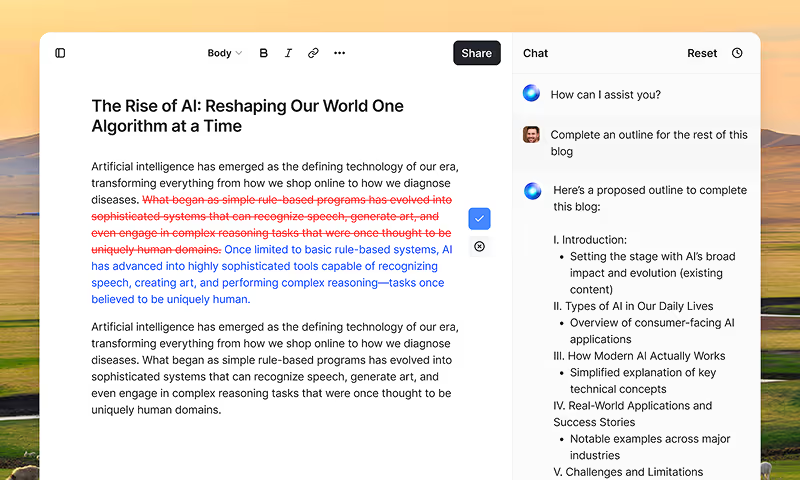
HyperWrite is the AI writing assistant that learns your style. It handles drafting, editing, and researching so you can focus on ideas.
- Autocompletes sentences as you type
- Works inside Google Docs & Gmail
- Adapts to your personal writing style
- 500+ AI tools for any writing task
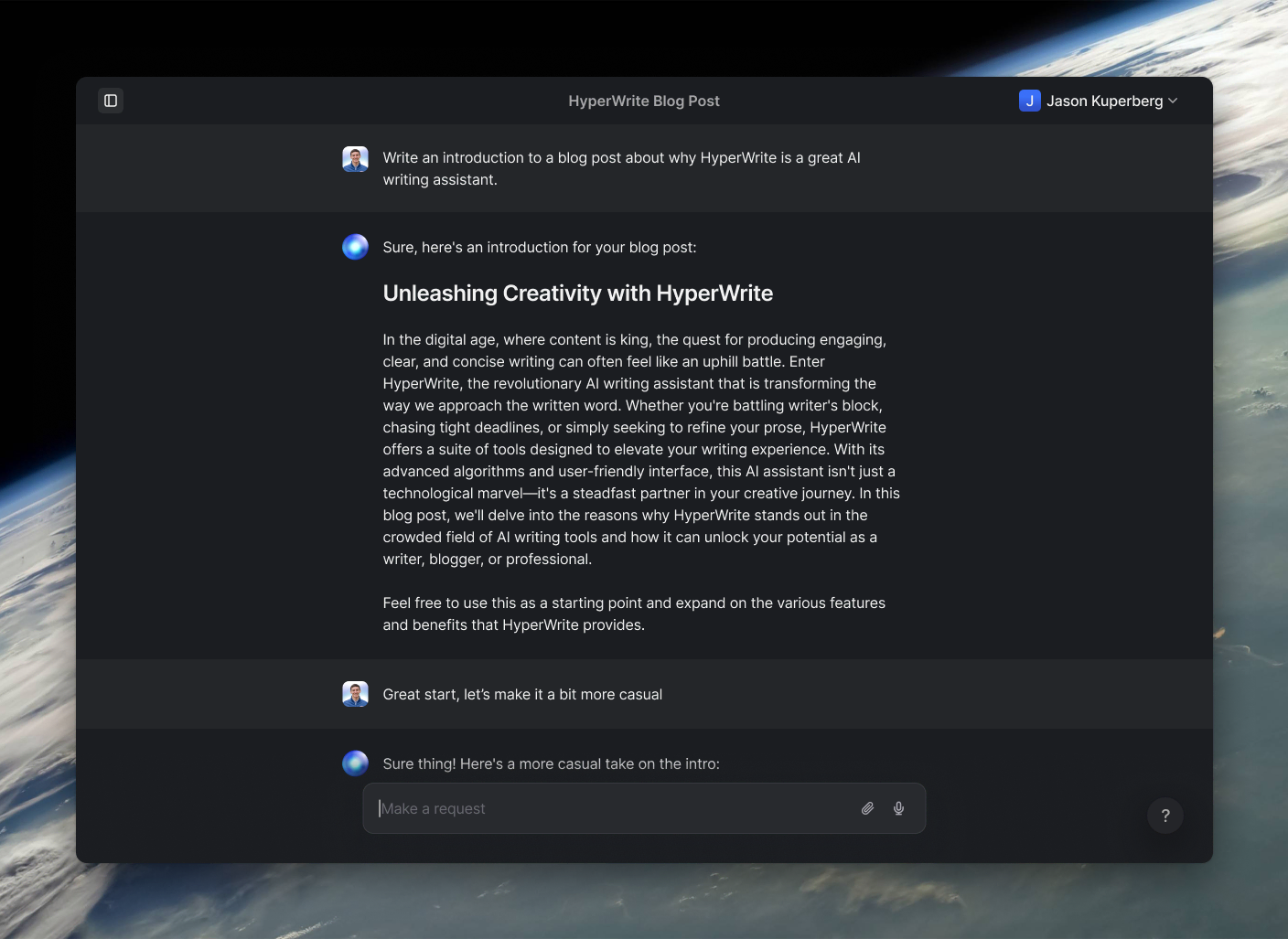
Powerful writing in seconds
Improve your existing writing or create high-quality content in seconds. From catchy headlines to persuasive emails, our tools are tailored to your unique needs.