


Posts that chase comments, saves, and shares all at once usually get none. The seven formats below each target one signal, grouped by which one they're built to drive.
Pick your engagement signal first
Five signals matter across LinkedIn, X, Instagram, and Facebook, and each one rewards a different post structure:
- Comments: The strongest distribution signal across every major platform. Thoughtful 15+ word comments tell the algorithm a post sparked conversation, which expands reach to new audiences. A handful of real comments outperform hundreds of generic likes. Target this if you’re building reach.
- Saves: The long-tail signal. A saved post is one the reader expects to use later, which is why tactical breakdowns, frameworks, and decision tools drive this signal. Strongest on Instagram and LinkedIn. If you're building authority, target saves.
- Shares: The highest-leverage signal because shares put your post in front of audiences your account doesn't reach. Readers share posts that back up their own claims or recommendations. On Instagram and Facebook, Story and DM shares count equally. Target this if you're building an audience outside your network.
- Clicks: The signal for brands driving traffic to a site, shop, or signup page. A click-optimized post builds curiosity without resolving it, so the resolution lives at the destination. Target clicks if you're driving conversions.
- Likes and reactions: The lowest-cost signal, weighted lightly by the algorithm. Useful as a top-of-funnel metric, but rarely worth optimizing for directly. Likes without comments or saves mean the post was pleasant but not memorable. Target this alongside one of the above if you’re early on a new account.
Three rules for any engagement post
Whichever signal you're targeting, three rules apply across the board:
- Pick one engagement goal per post. Posts that try to drive comments, saves, and shares simultaneously usually get none. Decide what you want before you write the first line.
- Earn the stop in the first sentence. The first line has to be the strongest line in the post. Most "engagement post" lists give you templates for the body and ignore this.
- End with a real ask. Scenario-based questions (like "Founders: have you ever fired a top performer? What was the trigger?") drive real comment threads. LinkedIn now penalizes generic engagement bait like "Thoughts?" or "Comment YES if you agree."
7 social media engagement post ideas
Each format below names the signal it drives and the platform it works best on, with an example and a teardown of why the structure earns the response.
1. The Informed Hot Take
Signal: Comments
Works best on: LinkedIn; X as secondary
A clear opinion with real evidence behind it makes readers either agree publicly or push back. Both reactions drive reach.
Example:
"Stop posting on LinkedIn at 8 am. That advice traces back to a 2017 Buffer study that predates every major algorithm change since."
The post names a concrete behavior to attack ("posting at 8 am") rather than a vague target, then shows the receipt with a specific source. What the post doesn't say (when to post instead) becomes the comment hook.
Readers will demand the answer in the replies. The version that flops is empty contrarianism: taking the opposite of any popular view without evidence gets dunked on, and burns trust fast.
2. The "I Was Wrong" Story
Signal: Comments
Works best on: LinkedIn
A clear before-and-after arc creates a story readers want to finish. Vulnerability invites readers to share their own version, which drives a comment thread instead of one-off replies.
Example:
"I used to think cold email was dead. Then I tried sending 100 with one new approach. 23 replies later, here's what I learned."
The first sentence stakes out the audience's default belief. The second introduces a specific moment that changed it. "23 replies later" plants a result without giving it away, so readers stay for the payoff and want to share their own experience by the end.
The “wrong” position has to be genuinely held. If readers sense it was set up as a strawman, the post reads as performance, and the comments dry up.
3. The Specific Question
Signal: Comments
Works best on: LinkedIn; Facebook Groups for niche communities
A specific question with stakes earns real answers, especially when it targets a clearly-defined audience.
Example:
"Question for early-stage founders: what's the one tool you can't run your company without that you didn't know existed two years ago?"
The audience callout in the first three words makes the right reader feel directly addressed. The constraints ("can't run your company without," "didn't know existed two years ago") filter for genuine answers, and the timeframe gives respondents a concrete anchor.
Broad questions without that scaffolding flop because readers don't have a quick reason for why their answer matters.
4. The Tactical Breakdown
Signal: Saves
Works best on: LinkedIn; Instagram as carousel
Step-by-step posts get saved when each step is specific enough to act on without filling in blanks.
Example:
"How we went from 200 to 5,000 LinkedIn followers in six months. The 4 things that worked, in order:
- Picked one niche topic and refused to write about anything else
- Replied to every comment within 30 minutes for the first three months
- Sent 5 thoughtful DMs per day to people who engaged with our posts
- Posted carousels (not text-only) on Tuesdays and Thursdays"
The save trigger is exact specificity. Each step has a number, timeframe, or exact behavior attached, which makes the post worth bookmarking. The "in order" framing signals that the sequence is the methodology.
Generic versions ("Be authentic. Add value. Engage your audience.") get scrolled past because they leave the reader with nothing to act on.
5. The Comparison Post
Signal: Saves (with comments as a secondary driver)
Works best on: LinkedIn; Instagram carousel for B2C
A clear comparison with a verdict drives saves because readers use it for future decisions, and drives comments because readers defend their preferred option.
Example:
"Notion vs Linear for engineering teams. After running both for six months:
- Linear wins for: speed, keyboard shortcuts, dev-team adoption
- Notion wins for: docs that live next to tickets, cross-functional visibility
If your team is engineering-only, Linear. If your team includes product or design, Notion."
The decision matrix at the end is what earns the save; readers facing the same choice bookmark the post and come back to it. The post takes a stand instead of saying "it depends," which is the actual differentiator from most comparison content online. A comparison post that refuses to pick a winner gives the reader nothing to come back to.
6. The Real Numbers Reveal
Signal: Shares
Works best on: LinkedIn; X for shorter-form versions
Sharing actual data on outcomes (cost, time, revenue, growth) earns shares because readers want to back up their own claims with your numbers.
Example:
"Our $50K Q3 ad spend produced $180K in pipeline. Channel breakdown:
- LinkedIn Ads: $30K spend → $140K pipeline
- Google Search: $15K spend → $35K pipeline
- Reddit Ads: $5K spend → $5K pipeline
Pulling Reddit, doubling LinkedIn next quarter."
The exact numbers signal real research, which makes other people willing to attach their name to it via share. The verdict at the end shows the post is from someone actually making decisions, which adds credibility to the numbers above it.
Fake numbers get detected fast, and once that happens, every future number post from the account loses credibility.
7. The Curated Resource Roundup
Signal: Shares
Works best on: LinkedIn; Instagram carousel for B2C lifestyle accounts
Personal recommendations of resources (newsletters, books, tools) drive shares when the curation reads as genuine rather than self-promotional.
Example:
"5 newsletters worth your time if you run a marketing team:
- Lenny's Newsletter: Best on product-led growth
- Demand Curve: Paid acquisition tactics
- Marketing Brew: Daily news roundup
- The Hustle: Broader business with useful crossovers
- Stratechery: Strategic context you can't get elsewhere"
The shareability comes from the small editorial opinion layered into each item. "Best on product-led growth" transforms the post from a generic list into a curated point of view. The five-item structure is substantive enough to read as real curation without being long enough to bail on.
Self-promotional roundups, where every pick is the author's own product or affiliate, get scrolled past. The curation signal evaporates the moment readers sense an agenda.
How to keep up with replies in the first 30 minutes
The first 30 to 60 minutes after posting determine a post's reach trajectory, per Richard van der Blom's Algorithm Insights Report 2025, which analyzed 1.8 million LinkedIn posts. Replying to early commenters during this window signals to the algorithm that the post is sparking real conversation, and pushes it wider.
The problem is the workload. Replying to 10 thoughtful commenters with 15+ word replies inside a 30-minute window is real writing. Most accounts lose engagement here because they can't sustain that reply quality across multiple posts a week.
HyperWrite's TypeAhead runs inside the browser as you write, including LinkedIn and X comment composers, pulling context from your open tabs and writing in your voice through a trained Persona.
A reply that would have taken five minutes lands in 30 seconds, which makes the 30-minute reply window realistic for accounts posting multiple times a week.
For high-stakes posts where the comment thread decides whether the post reaches second and third-degree networks, sustaining the reply pace can matter more than the post itself.
How to know if a post actually worked
Here's what to measure on your next post:
- Comments per impression. Comment count divided by impressions. Above 2% is strong on LinkedIn. Above 0.5% is strong on X.
- Save count per 1,000 impressions. LinkedIn shows saves in post analytics. A post with 10+ saves per 1,000 impressions is doing real long-tail distribution work.
- Reply velocity in the first hour. How many comments came in within 60 minutes of posting? This is the algorithm's earliest signal. If it's zero, the post is unlikely to recover.
- 15-word comment ratio. What percent of comments are 15 words or more, versus emoji or "great post!" replies? The algorithm weighs the long ones much more heavily.
If a post hits the first three metrics but the 15-word ratio is low, the post is engagement-bait-adjacent. Adjust the question at the end.
Turn this list into a testing cycle
Pick the engagement signal you actually need this month: comments, saves, or shares. Use only the post types in that category for the next three posts. Track the four metrics above for each one.
The format that wins on your specific account becomes the one to rotate variations of for the following month. After three weeks of testing one category, layer in a second. Trying to test all three categories at once gives results you can't read.
For accounts posting more than five times a week where reply pace is the bottleneck, TypeAhead runs inside every tab you're already writing in and drafts replies in your voice. Try it free with the Chrome extension.
Frequently asked questions
What types of social media posts get the most engagement?
The social media post types that get the most engagement are informed hot takes, "I was wrong" stories, tactical step-by-step breakdowns, and posts with real numbers. These formats consistently outperform generic question posts and inspirational quotes because each one targets a specific algorithmic signal instead of chasing all of them.
How do I get more engagement on my social media posts?
You get more engagement on social media posts by picking one engagement goal per post, earning the stop in the first sentence, and ending with a scenario-based question instead of "Thoughts?". Replying to early commenters within the first 30 minutes also drives more comments and reach.
How often should I post for engagement?
You should post three to five times per week on LinkedIn and X for steady engagement, with daily posting reserved for accounts that can keep quality high at that cadence. Posting weaker content daily can hurt future reach because the algorithm reads engagement-light posts as a quality signal that affects subsequent posts.
Why isn't my content getting engagement?
Your content isn't getting engagement because the post is chasing multiple signals at once, the first line doesn't earn a stop, or early comments aren't getting replies fast enough. Picking one engagement goal per post and fixing the opening line usually improves results faster than any other change.
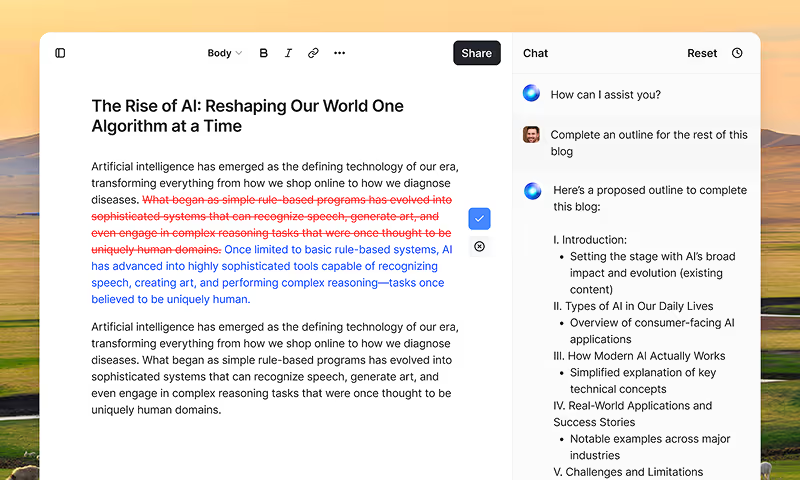
HyperWrite is the AI writing assistant that learns your style. It handles drafting, editing, and researching so you can focus on ideas.
- Autocompletes sentences as you type
- Works inside Google Docs & Gmail
- Adapts to your personal writing style
- 500+ AI tools for any writing task
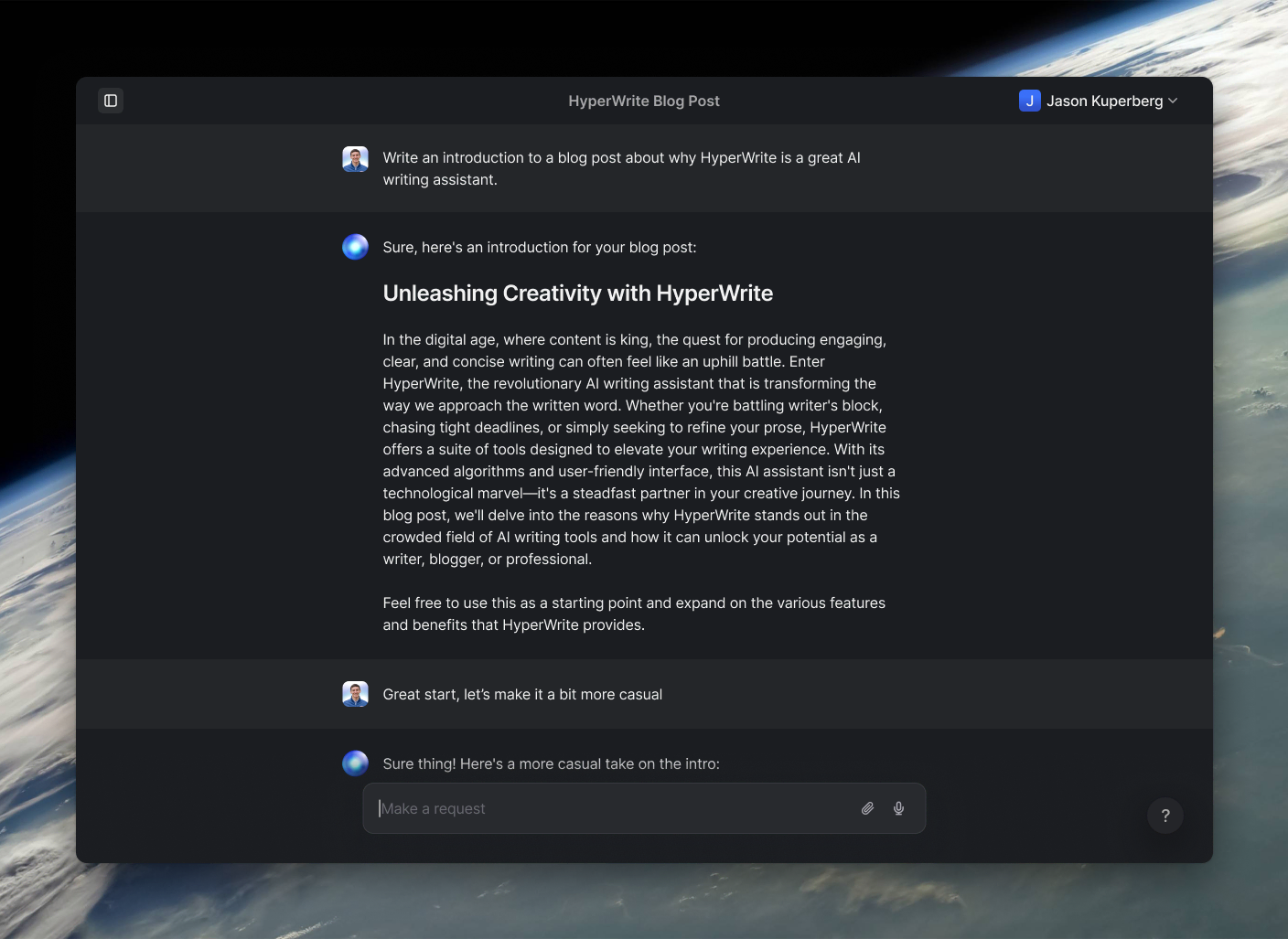
Powerful writing in seconds
Improve your existing writing or create high-quality content in seconds. From catchy headlines to persuasive emails, our tools are tailored to your unique needs.