


We've watched teams add more tools, more meetings, and more process, and still lose hours every week to the same structural problems. Here are nine workflow efficiency fixes that actually work.
What workflow efficiency actually means in real work
Workflow efficiency measures how smoothly work moves from start to finish with minimal wasted time or rework. Each step adds value, handoffs are clean, and people spend time on output rather than chasing approvals or redoing unclear tasks.
The three numbers that matter most are cycle time (how long a task takes from start to finish), throughput (how much gets completed in a given period), and rework rate (the percentage of tasks that come back for corrections). When all three move in the right direction, the workflow is genuinely improving.
Why most workflows break down
Most workflow problems trace back to the same five causes:
- Unclear ownership. When no one knows who handles the next step, work sits in inboxes, approvals get missed, and follow-ups eat time that should go toward output.
- Too much context switching. Jumping between email, Slack, a project tool, and a document editor for a single task fragments attention. Task-switching can burn up to 40% of your productive time.
- Manual repetition. Status updates, recurring reports, and templated communications get rebuilt from scratch every time. For most teams, that's hours every week on work that never needed original thinking. Asana's research puts U.S. knowledge workers at 308 hours a year lost to duplicated work alone.
- Too many approval layers. When every deliverable needs sign-off from three people before it moves, work queues up at each gate. One slow approver can hold up an entire project for days, and nobody flags it until the deadline is already at risk.
- Vague inputs. When a brief is missing key context, the receiving person either guesses wrong or asks clarifying questions. A clean setup costs five minutes. Fixing the fallout costs hours.
9 tips to improve workflow efficiency
Every workflow has a few steps that slow everything down. These nine fixes target each one.
1. Map the process before you change it
Before optimizing anything, document how work actually moves. List each step, who owns it, what triggers the next stage, and where delays consistently happen. Start with one workflow: the highest-volume, most repetitive process your team runs.
Interview the people doing the work and the managers overseeing it. A whiteboard session or a tool like Miro takes about an hour and almost always surfaces two or three fixable problems immediately.
Fix the biggest bottleneck first, measure the result, then move to the next one.
2. Automate the repetitive layer
Automation works best on tasks that are high-volume, rule-based, and don't require judgment: invoice routing, approval notifications, data entry, and onboarding checklists.
Start by asking your team to list the three tasks they rebuild manually every week. If the trigger and output are consistent, automate the trigger. Zapier, Make, or native integrations in most project management platforms handle this without code.
Example: automating new-hire IT provisioning so a single intake form triggers account creation, equipment requests, and manager notifications. Teams that automate this typically cut hours of manual coordination per hire down to minutes.
3. Standardize inputs with templates
Most wasted time happens at the start of a task. A vague brief or incomplete request means the receiving team either guesses or sends it back. Both slow the workflow.
Build templates for any recurring input: creative briefs, project requests, meeting agendas, weekly updates. The template doesn't do the thinking, but it makes sure the thinking happens before the work starts.
4. Reduce context switching
Every time someone switches from one task to another, there's a restart cost. According to UC Irvine researcher Gloria Mark, we now average just 47 seconds of focus on any screen before switching. In a role with constant communication demands, that fragmentation adds up to hours of shallow work each day.
Here are some practical fixes:
- Batch similar tasks. Answer all emails in one block rather than responding between other work. Handle all approvals at a set time.
- Consolidate tools. If your team uses four platforms to manage one project, that's a friction problem. Fewer tool switches per task means faster output per hour.
- Protect focus blocks. Even 90-minute windows without meetings or notifications produce measurably more output than the same time fragmented across interruptions.
5. Separate drafting from editing
Most people write slowly because they edit while they draft. Polishing a sentence before you know whether the paragraph belongs is just wasted time.
A founder writing a board update will often rewrite the opening paragraph several times before reaching the financials, polishing sentences that won't survive the next pass anyway.
Split the work into three passes:
- Pass 1: Draft. Push through without polishing. Use placeholders like [add Q3 number] when you hit a gap.
- Pass 2: Structure. Does the main point land early? Move sections, cut what doesn't belong, then stop.
- Pass 3: Polish. Sharpen verbs, trim repetition, fix tone. This is the only pass where line-level edits earn their time.
Drafting and polishing in separate passes is faster because you stop second-guessing sentences before you know whether they belong.
6. Name a clear owner for every step
Workflows stall when the next person doesn't know the task is theirs. Every step needs one named owner. When ownership is explicit, handoffs happen on schedule, and bottlenecks become visible.
In your project tracker or workflow tool, list every step of your most common workflows and assign each one to a specific person. If any step is tagged "team" or "TBD," that's where work is going to sit. Pick one owner, set a response time expectation, and move on.
For approval-heavy workflows, this single change can cut cycle time by a full day or more.
7. Measure cycle time, not just output
Track how long each workflow step takes. That's where workflow efficiency actually shows up.
Start with your highest-volume workflows:
- How long does a proposal take from brief to sent?
- How many days does a content piece sit in review before approval?
- How long does client onboarding take from signed contract to first delivery?
Without a baseline, you can't tell if anything improved. Adding a single brief template to a project intake process can cut days of clarifying back-and-forth per project. That's only measurable because cycle time was logged before and after.
Pick three KPIs and review them together monthly: cycle time, throughput, and rework rate. Rising throughput alongside a rising rework rate means the team is moving faster but breaking more.
8. Build a short prep layer before complex tasks
Starting cold wastes the first 15–20 minutes on orientation rather than output. Before any significant task, spend five minutes writing down four things: who this is for, what outcome they need, the core point to communicate, and the inputs you'll need. That's enough to start typing immediately.
This works for any task type, but it's the highest-leverage move for writing-heavy work, where the cost of starting cold stacks up across every paragraph.
9. Use AI for the workflow steps that repeat
The biggest workflow gains from AI come from tasks you repeat dozens of times a week: emails, status updates, meeting summaries, and follow-ups. AI handles the first draft; you handle judgment, voice, and polish.
The catch is fitting it into the workflow you already have. A separate ChatGPT tab adds friction (open it, paste your context, copy the output back) and that friction often cancels the time saved. The AI tools that actually stick are the ones that work inside whatever you're already doing, not the ones that require you to stop and switch.
Why writing is the highest-leverage workflow to fix
Most teams focus on project workflows: approvals, handoffs, task tracking. Writing workflows get ignored, even though writing touches almost every process in the business.
A proposal has to be written before it can be approved. A project doesn't start until someone writes the brief, while a status update sits in drafts until someone phrases it well enough to send. When writing slows down, everything downstream slows down with it.
The stakes are higher for writing executive updates and client-facing docs, where tone and precision both have consequences. Getting it done fast means nothing if the email sounds off or the doc misses the point.
Writing workflows break down in three specific places:
- Starting cold. Most writing time gets lost before a single sentence is written, figuring out what the point is, who it's for, and where to start.
- Rebuilding from scratch. Most recurring documents, like status updates or proposal decks, get rebuilt from scratch even when the structure never changes.
- Context fragmentation. The draft is in one tab, the source material is in four others. Every switch back and forth costs more than just the time it takes.
These are structural problems, and they're fixable with the same approach as any other workflow: reduce the cold starts, standardize the repeatable parts, and keep the work in one place.
Write faster without losing your voice
Starting cold, switching context, rebuilding work that didn't need rebuilding: that's where most writing time actually goes.
HyperWrite is built specifically for this. TypeAhead works inline in Gmail, Google Docs, ChatGPT, and any browser tab, predicting your next sentence as you type so you're never starting from nothing.
Personas learn from your writing, so suggestions sound like you. And because it lives in whatever tab you're already in, there's no switching or extra step needed.
For professionals writing dozens of emails and docs a day, that adds up fast.
Still writing every sentence from zero? Try TypeAhead free with the Chrome extension and see how fast it fits your workflow.
Frequently asked questions
What causes poor workflow efficiency?
Poor workflow efficiency is often caused by unclear task ownership, too much context switching, and vague inputs that force rework. These are structural problems, and fixing them doesn't require people to work harder.
What is the fastest way to improve workflow efficiency?
The fastest way to improve workflow efficiency is to map your current process, find the single step causing the most consistent delays, and fix that before changing anything else. One targeted fix is faster to implement and easier to measure than a full process overhaul.
How does automation improve workflow efficiency?
Automation improves workflow efficiency by removing manual effort from high-volume, rule-based tasks like approvals, notifications, and data entry. That frees people for work that requires judgment and shortens cycle time across the whole process. The best place to start is any task your team rebuilds manually every week with consistent inputs and outputs.
Can writing tools improve workflow efficiency?
Yes, writing tools can improve workflow efficiency, particularly in roles where emails, proposals, updates, and documentation make up a large share of daily output. HyperWrite's TypeAhead provides real-time inline suggestions across Gmail, Google Docs, and any browser tab, so professionals write faster without switching tools or starting from scratch.
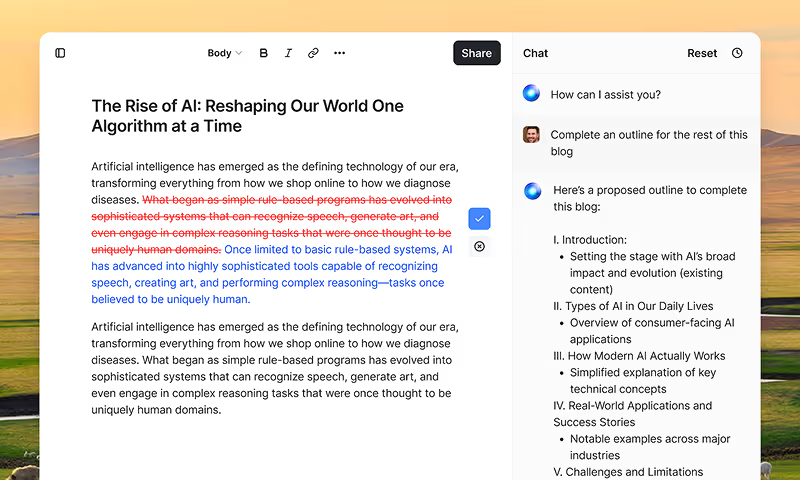
HyperWrite is the AI writing assistant that learns your style. It handles drafting, editing, and researching so you can focus on ideas.
- Autocompletes sentences as you type
- Works inside Google Docs & Gmail
- Adapts to your personal writing style
- 500+ AI tools for any writing task
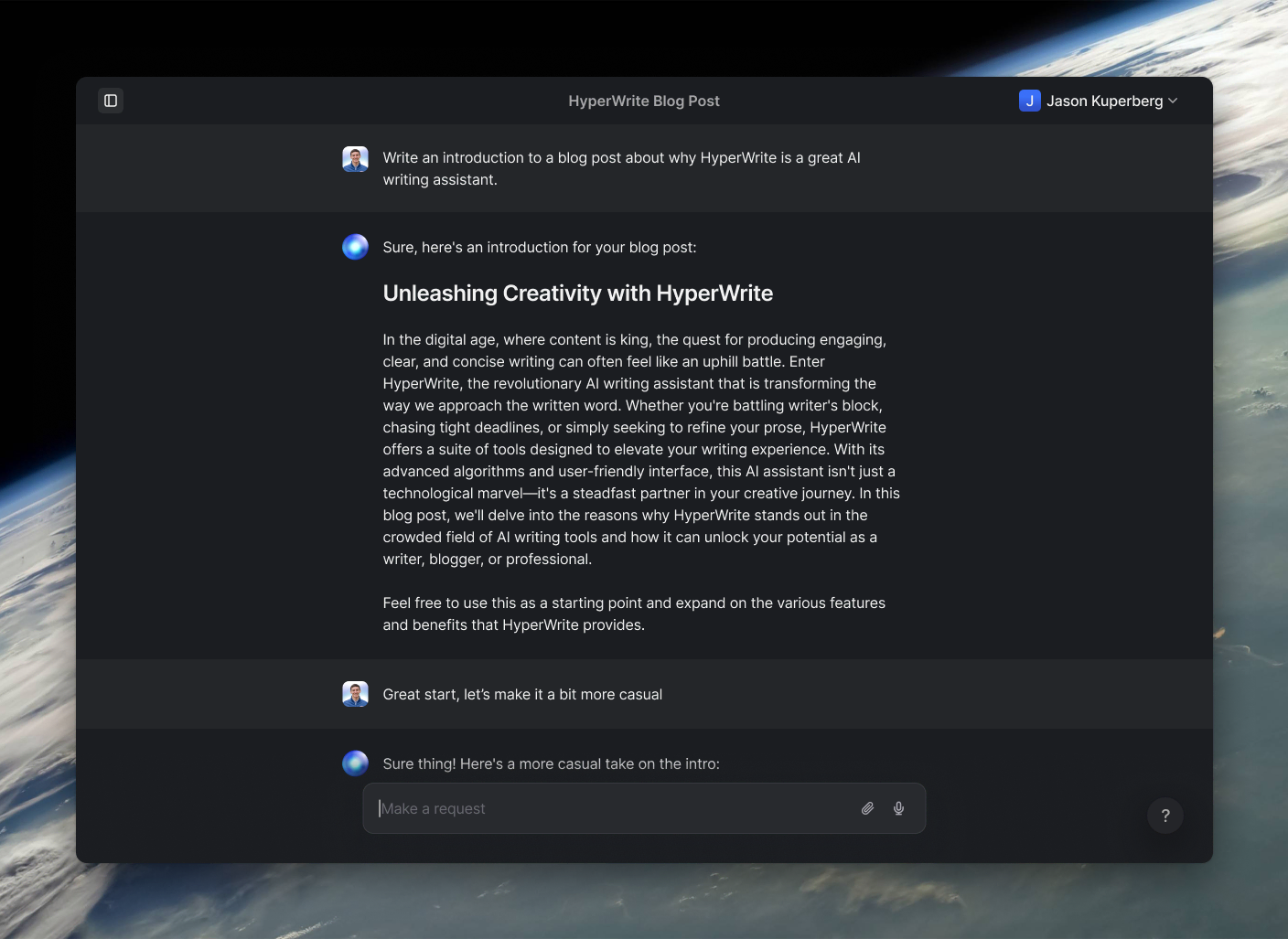
Powerful writing in seconds
Improve your existing writing or create high-quality content in seconds. From catchy headlines to persuasive emails, our tools are tailored to your unique needs.