


After years of watching teams (and myself) lose hours to scattered tasks, buried inboxes, and messy notes, here are 11 tips for how to be organized at work that actually stick past week one.
How to be organized at work: 11 tips that work
The first two are the foundation; nail those before adding anything else.
1. Start every day with a 5-minute morning plan
A morning plan stops reactive work by setting clear priorities before email pulls you in. The simplest version is the 1-3-5 rule: pick one big task, three medium tasks, and five small ones for the day. Write them down before opening Slack or Gmail.
Try this tomorrow: Open a blank doc or sticky note. Write the date. List your 1-3-5.
2. Get everything out of your head and into one system
A single capture tool is the foundation of being organized at work. When tasks, ideas, and follow-ups live in your head, they leak into your nights, weekends, and focus time.
Pick one place to put everything: Todoist, Notion, Apple Notes, or a paper notebook.
David Allen's Getting Things Done method calls this the "capture" step, and it's the habit that separates organized people from people who feel organized for two days at a time.
3. Stop checking email all day
Microsoft's 2025 Work Trend Index found that the average employee is interrupted 275 times a day by email, meetings, and chat. The fix is to batch emails and check them at set times: 9 am, 12 pm, and 4 pm. This way, you're choosing when to engage instead of reacting all day.
Turn off desktop notifications and close the tab between sessions. You'll handle the same volume in half the time and stop letting other people set your agenda.
4. Block time for deep work and protect it like a meeting
Time blocking puts focused work directly on your calendar. If "write the proposal" is just on a to-do list, it gets bumped. If it's a 90-minute calendar block at 10 am, it gets done. Cal Newport's Deep Work made the case for this years ago, and the logic still holds up.
A simple daily template:
- 9:00 to 10:30 am: Deep work
- 10:30 to 11:00 am: Email batch
- 11:00 am to 12:00 pm: Meetings
- 1:00 to 3:00 pm: Deep work
- 3:00 to 5:00 pm: Email, calls, admin
5. Build templates for anything you write more than twice
Templates cut down on writing time for repeat messages. If you've written something twice, save it. Meeting follow-ups, candidate rejections, status updates, intro emails, project kickoffs, all of it.
Keep templates in a single doc you can search, or use a snippet tool. The goal is to remove the friction of starting from a blank page so you can spend your thinking time on the parts that actually need it.
Templates worth building first:
- Meeting follow-up emails
- Weekly status updates
- Recruiting outreach messages
- Common project intros
- Polite declines and reschedules
6. Do a weekly review, every single week
A weekly review catches the things your daily system misses. Without one, your task list gets filled with stale items, projects drift, and small commitments fall through. Block 30 minutes every Friday afternoon.
Walk through:
- This week's completed work.
- Open tasks and their next steps.
- Next week's calendar.
- Top three goals for next week.
7. Organize digital files like you'd organize a kitchen
Digital files need a consistent structure, or they turn into a junk drawer within months. The kitchen analogy works: utensils in one drawer, plates in one cupboard, spices on one shelf. You don't store flour in the freezer because "you have room." Pick a folder structure and stick to it.
Here’s a simple structure that works:
/2026
/ClientA
/Contracts
/Briefs
/Invoices
/ClientB
/Contracts
Pair it with consistent file names like YYYY-MM-DD_Project_Type.docx. You'll find anything in under 10 seconds instead of search-scrolling through "Untitled-3-FINAL-v2."
8. Cut down on context switching
Every time you jump from email to a doc to Slack to a spreadsheet, your brain pays a switching cost. Gloria Mark's research at UC Irvine found it takes an average of 23 minutes and 15 seconds to refocus after an interruption.
Multiply that by 10–15 switches a day, and you've lost hours you can’t get back.
Fix this by grouping similar tasks. All emails at one time. All calls in one block. All writing in another. When Slack is pinging during a focus block, batch it. Reply to all of it at once instead of in dribs and drabs.
9. Match tasks to your energy, not just your calendar
Energy management beats time management for staying organized. A task that takes 30 minutes at 9 am can take 90 minutes at 3 pm if you're depleted. Track your patterns for a week. Most people have a creative peak in the morning and an admin window in the afternoon.
Then, schedule accordingly:
- Morning peak: Writing, strategy, hard problems.
- Midday dip: Meetings, email, calls.
- Afternoon second wind: Planning, review, lighter creative work.
You'll produce more in less time without working longer hours.
10. Learn to say no without burning bridges
Saying no is an organizational skill. Every yes to a low-priority request is a no to your real priorities.
Use a short template for declining politely:
"Thanks for thinking of me. I'm at capacity through [date] and can't take this on without compromising work I've already committed to. If [alternative suggestion] would help, I'm happy to point you in that direction."
Three sentences, honest, kind, clear. Pair this with a calendar already booked with your real priorities, and you'll find yourself in far fewer meetings you didn't need to attend.
11. End every day with a 5-minute shutdown ritual
The morning plan sets your day up, and a shutdown ritual closes the workday so it doesn't bleed into your evening. It stops the next morning from starting in chaos. The logic is simple: review what's been done, capture what hasn't, and set tomorrow's anchor task before you log off.
A 5-minute shutdown looks like this:
- Check today's task list and mark what's done.
- Move incomplete tasks to tomorrow or later in the week.
- Skim your inbox for anything urgent that came in late.
- Write down the one task you'll start with tomorrow morning.
- Close every tab and quit Slack.
Say "shutdown complete" out loud if it helps. The verbal cue is a deliberate signal to your brain that the workday is over.
Tools that actually help you stay organized
The right habits only go as far as the tools that support them. Here's a small stack that earns its place.
Task management: Todoist, Asana, or a paper notebook
Todoist is the fastest tool for individual task capture. The mobile app launches instantly, its recurring task syntax is the cleanest of any tool I've used ("every other Tuesday" works), and it fits if your work is mostly solo with the occasional shared project.
Asana is built for team projects with handoffs, dependencies, and status tracking. Pick it when more than one person needs to see what's moving and what's stuck. Solo users will find it a bit heavy for simple to-do lists.
A paper notebook still beats most apps if you think better offline. The Bullet Journal method is the most common system and takes about 10 minutes to learn. Best for people who get pulled out of focus mode every time they open an app.
Calendar: Google Calendar + a scheduling link
Google Calendar handles time blocks, recurring events, and connects to almost every other tool you use. Use color coding for categories like deep work, meetings, and admin so you can tell at a glance where your week is going.
Pair it with a scheduling tool like Cal.com or Calendly to kill the "are you free Tuesday?" email loop. A scheduling link in your email signature can save you an hour a week on its own.
Notes: Notion, Apple Notes, or Obsidian
Notion is the right choice when you need linked docs, databases, and a shared team wiki under one roof. The trade-off is speed: capturing a quick thought takes 3–4 clicks, so most Notion users end up with an "Inbox" page that eventually becomes a graveyard.
Apple Notes beats almost everything else for fast capture across Mac, iPhone, and iPad. There’s no learning curve, databases, or shared workspaces. If you mostly need to get ideas out of your head before they evaporate, Notes will help.
Obsidian suits those building a long-term personal knowledge base. Files live locally as markdown, link to each other, and outlast any single app. It works well for researchers, writers, and anyone whose notes need to be compiled over the years.
Writing speed: HyperWrite
HyperWrite handles the messages and drafts you write every workday: candidate outreach, client follow-ups, status updates, intros, and briefs. TypeAhead is its Chrome extension that reads context from your open tabs and suggests sentence completions inside Gmail, Google Docs, your CRM, or anywhere else you write in the browser.
Personas keep the output sounding like you instead of generic AI. If you write 20 or more professional messages a week, using the tool saves about an hour a day on email and message writing.
Focus: Freedom or Cold Turkey
Freedom blocks distracting sites and apps across Mac, Windows, iOS, and Android from one schedule. You can use it to manage distractions between your phone and your laptop. Most useful for a recurring morning deep work block that locks Slack, social apps, and news sites across every device at the same time.
Cold Turkey is more aggressive and harder to disable mid-session. Pick it if "just one quick check" usually turns into 20 minutes of scrolling. Its "Frozen Turkey" mode locks down your entire computer until a scheduled end time.
Pick one tool per category and leave it at that. The fastest way to break a working system is to keep stacking new tools that promise to fix the last one.
The real next step
Most organization overhauls collapse because people try to fix everything in a weekend. By Wednesday, they've slipped on three things at once and given up on the whole system. Pick one tip and run it for a week before adding the next.
If repetitive writing is eating your week, start there. Install HyperWrite’s Chrome extension, set up one Persona that matches your voice, and TypeAhead will start suggesting completions inside Gmail, Google Docs, and any other tab where you write, usually within the first 10 minutes of using it.
Frequently asked questions
What is the best way to be organized at work?
The best way to be organized at work is to combine three habits: a single capture system for tasks, time blocking for deep work, and a 30-minute weekly review. Productivity apps and tools matter less than these three habits.
How do I get organized at work when I feel overwhelmed?
When you feel overwhelmed at work, do a 20-minute brain dump of every open task, then pick three priorities for tomorrow. Trying to fix your entire system at once is what makes overwhelm worse.
Why am I so disorganized at work?
You're disorganized at work because you rely on memory instead of a system. Tasks, ideas, and follow-ups stored in your head leak into focus time and create mental clutter. A single capture tool, digital or paper, fixes this faster than any other change.
What tools help me stay organized at work?
The most useful tools for staying organized at work are a task manager (Todoist or Asana), a notes app (Notion or Apple Notes), and a writing assistant for repetitive professional messages (HyperWrite). Keep the stack small.
How long does it take to get organized at work?
Getting organized at work usually takes about three weeks before the habits feel automatic and, according to habit research from University College London, an average of 66 days to fully stick. Most people see quick wins from a single habit, like a morning plan, within days.
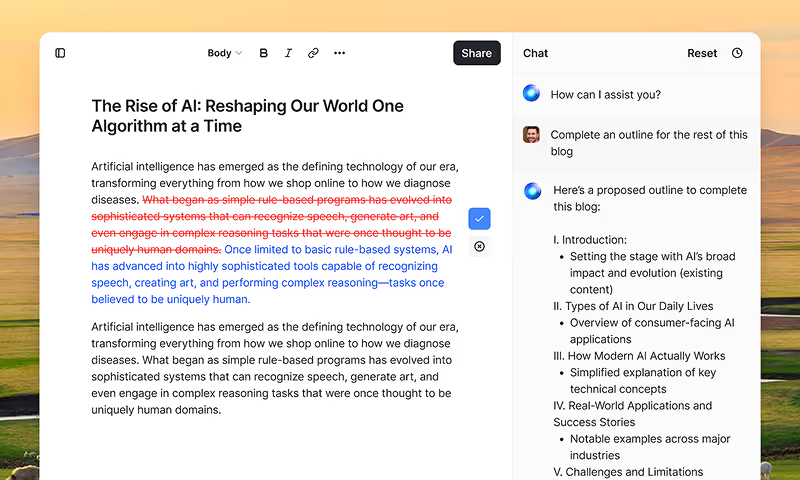
HyperWrite is the AI writing assistant that learns your style. It handles drafting, editing, and researching so you can focus on ideas.
- Autocompletes sentences as you type
- Works inside Google Docs & Gmail
- Adapts to your personal writing style
- 500+ AI tools for any writing task
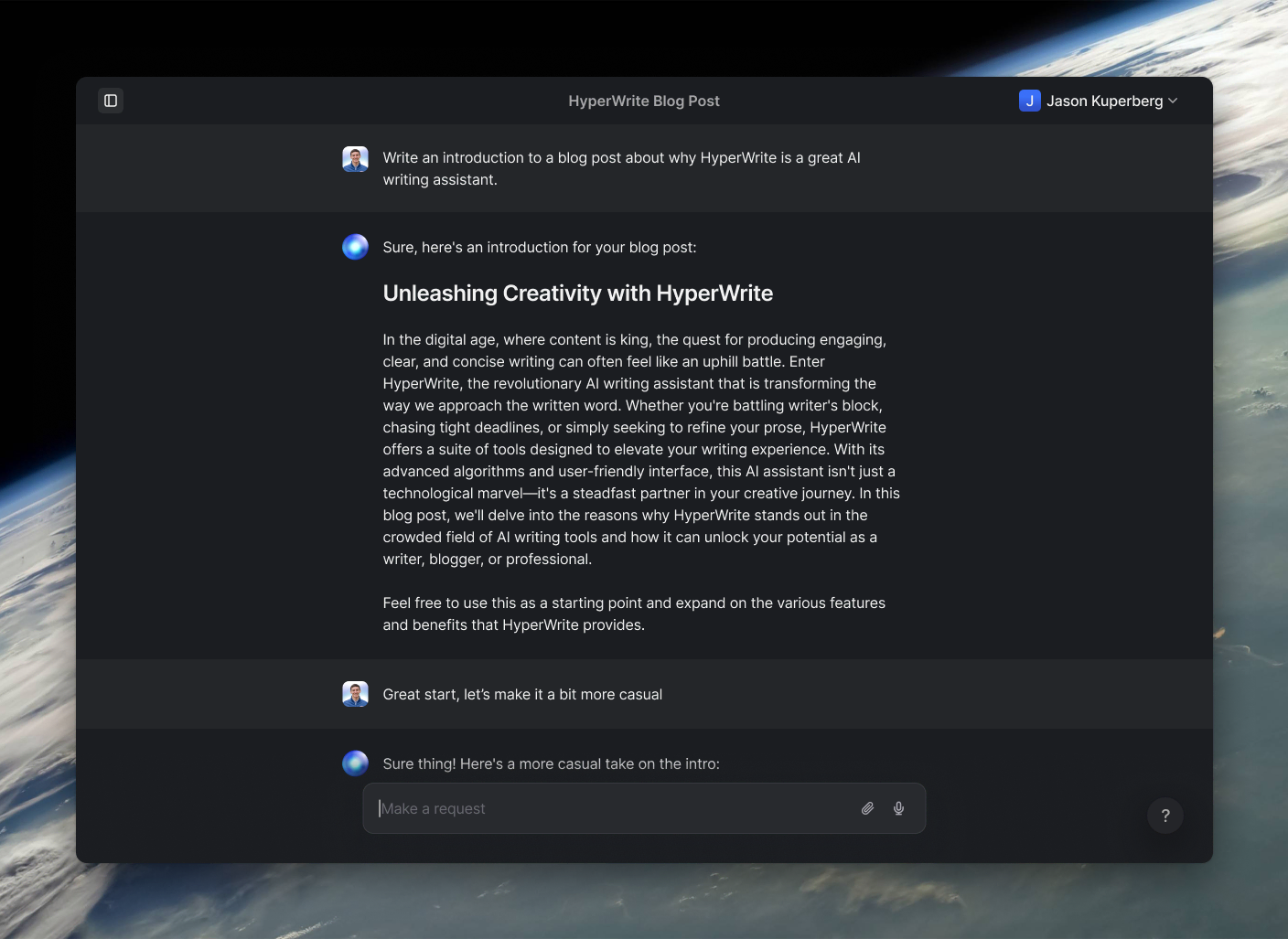
Powerful writing in seconds
Improve your existing writing or create high-quality content in seconds. From catchy headlines to persuasive emails, our tools are tailored to your unique needs.