


While reading the top-ranked pages on brand manifestos, I kept finding the same gap: plenty of quotes, but almost no craft or direction. I've pulled together five examples worth stealing and a tight process for writing your own.
What makes a strong brand manifesto
A brand manifesto is a written statement of belief, purpose, and point of view. It tells people why your company exists, what it stands for, and why anyone outside the building should care.
Unlike a mission statement, which describes what the business does and how it operates, a manifesto makes readers feel the stakes. Think of it as the brand's heartbeat, not its job description.
5 brand manifesto examples worth imitating
These brand manifesto examples hold up because each one uses a specific writing mechanic you can replicate: how they frame the reader, structure belief, and tie words to real decisions.
1. Nike: Make the customer the hero
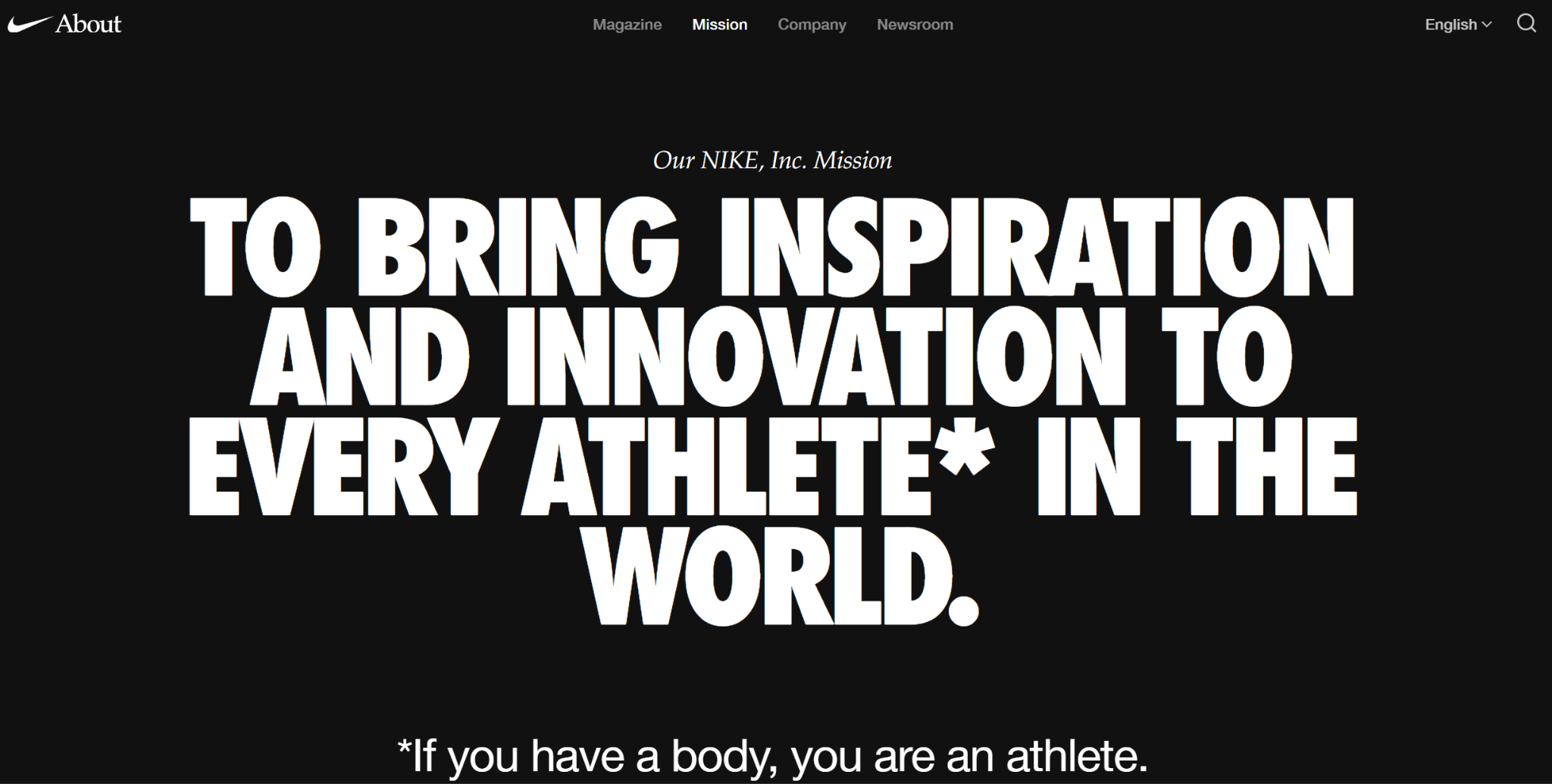
Nike's mission: "Bring inspiration and innovation to every athlete in the world" is footnoted with a line that expands the entire audience: "If you have a body, you are an athlete." Nike isn't selling shoes in that sentence. It's selling identity, ambition, and belonging.
Lesson: Your manifesto gets stronger when it names the person you believe in instead of the product you sell. The mechanic that makes Nike's line work is conditional inclusion: "if you have a body" sets the lowest possible bar for entry, then the second clause hands the reader a status they didn't ask for.
Most brands write the opposite, gating identity behind a purchase. Nike gives it away first and makes the product the proof.
2. Le Labo: Repeat one idea until it becomes a worldview
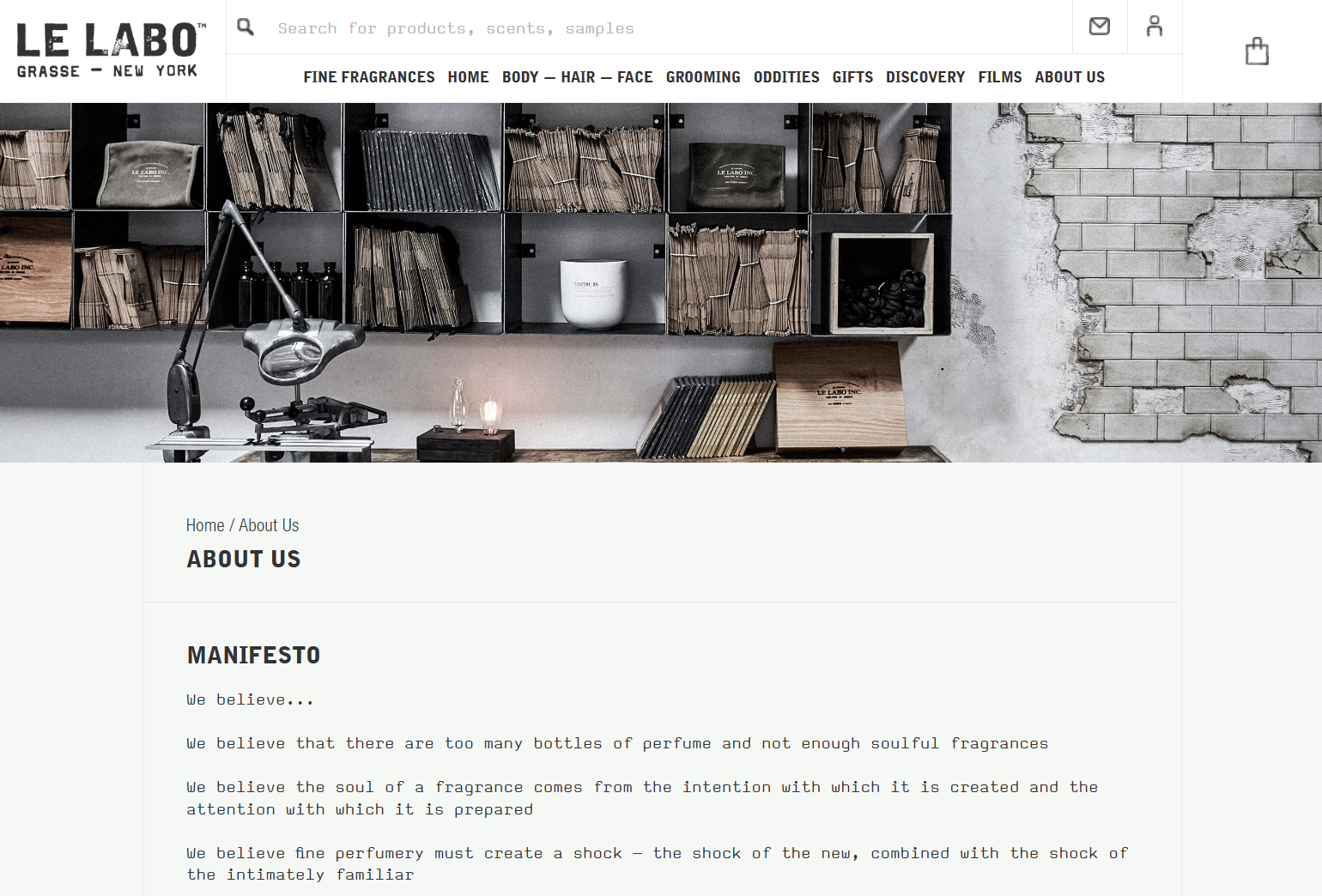
Le Labo's manifesto leans hard on one phrase: "We believe." The repetition does the heavy lifting. It turns a list of opinions into a rhythm, and that rhythm makes the brand feel certain, specific, and slightly stubborn in a good way.
The content is sharp too: craftsmanship, irreverence, thoughtful hands, celebrities paying full price.
Lesson: Pick a sentence structure and lean on it. Anaphora (repeating the opening phrase across consecutive sentences) is the same device used in political speeches and religious creeds, because it forces the reader into the same posture sentence after sentence.
Most brand manifestos vary their sentence openings to feel "natural," which dilutes the conviction. Le Labo trades that polish for cadence, and it makes a worldview feel non-negotiable.
3. Moleskine: Start with a belief bigger than the product
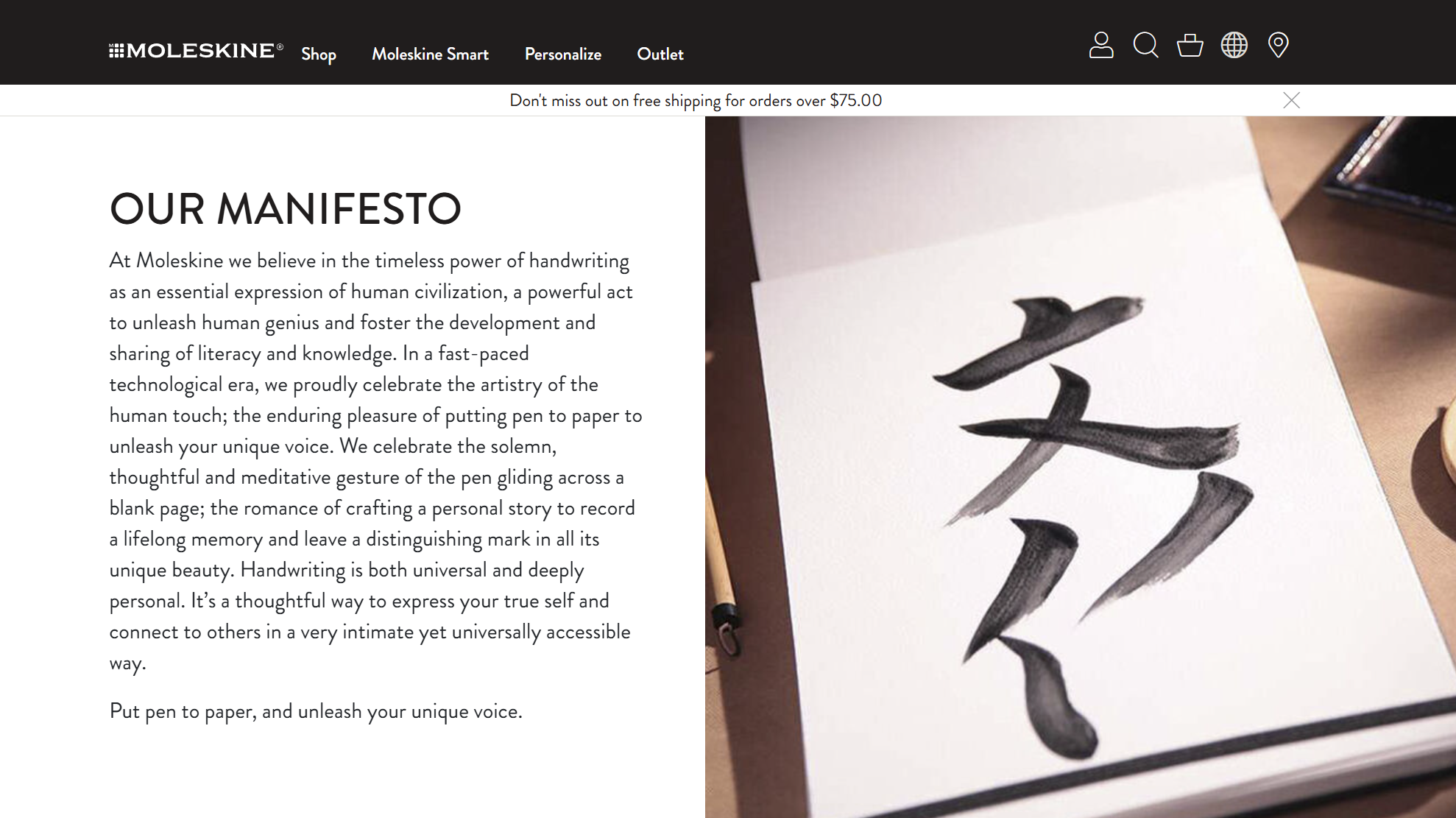
Moleskine's manifesto barely mentions notebooks. Instead, it centers handwriting as an expression of human creativity, memory, and connection. That move pulls the brand out of the office supply aisle and drops it inside a larger cultural idea: that the physical act of writing still matters in a screen-dominated world.
Lesson: The strongest manifestos tie the product to a bigger human behavior: creating, exploring, competing, healing, or belonging. The structural decision is to write past the product entirely, treating it as the byproduct of a worldview rather than the subject.
Most brands invert this, leading with what the product does and tacking on emotional language at the end. Moleskine treats the product as evidence of a belief that already exists, which makes the brand feel discovered instead of marketed.
4. Patagonia: Back the words with a costly decision

Patagonia's line, "We're in business to save our home planet," lands because the company has tied real financial decisions to it. In 2018, founder Yvon Chouinard replaced the original mission, "Build the best product, cause no unnecessary harm, use business to inspire and implement solutions to the environmental crisis," with that single, unambiguous sentence.
The 2022 transfer of company ownership to environmental nonprofits was the financial proof behind the words.
Lesson: A manifesto only matters when it costs you something. The language itself does almost no rhetorical work here; the sentence is plain, declarative, and short, but that's the point. Most brand purpose statements over-engineer the prose to compensate for the absence of action behind them.
Patagonia's line is bare because the proof is somewhere else: in an ownership structure most companies would never sign off on.
5. Apple: Make the manifesto a creed your customer wants to belong to
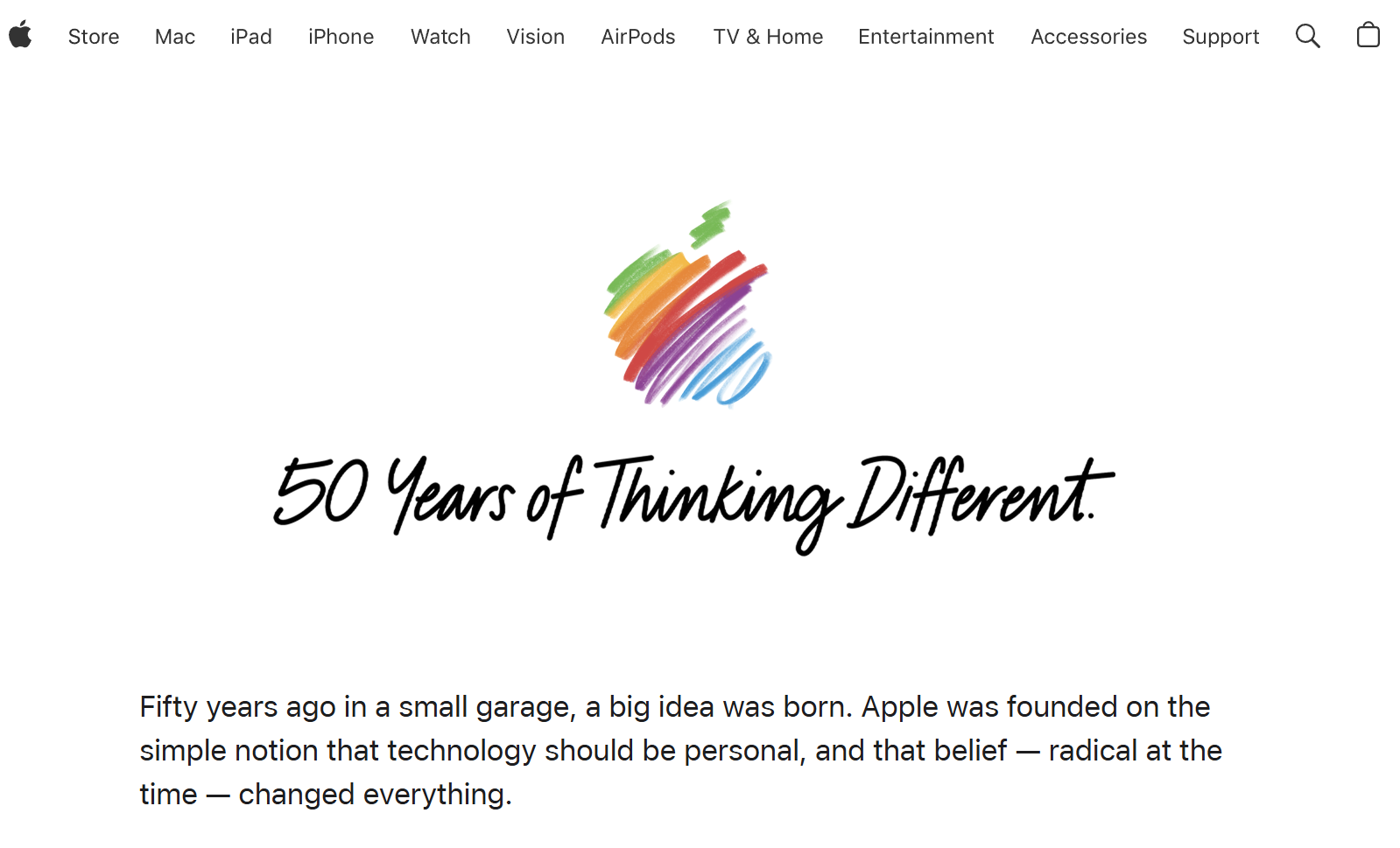
Apple's "Think Different" slogan from 1997 didn't describe a product, a feature, or a price. It celebrated "the crazy ones, the misfits, the rebels, the troublemakers" and positioned Apple customers as the people who push the world forward.
The manifesto ran as a TV ad before the iMac launched, before any new product proved the claim, and it worked because it gave customers a worldview they wanted to be part of.
Lesson: A manifesto isn't an ad for what you sell. The mechanic at work is identification through enumeration: a list of unflattering labels (crazy, misfits, rebels, troublemakers) that the reader is invited to wear as a compliment.
Most brands write toward the customer they want, polished and aspirational. Apple wrote toward the customer's self-image, which is almost always messier and more romantic than the polished version. That's the version people actually want to belong to.
How to write your brand manifesto
Most brand manifestos fail in execution, so this process forces you to define clear beliefs, write lines people remember, and align every word with how your company actually operates.
1. Start with the problem you hate
Don't start with adjectives; begin with tension.
Ask yourself:
- What frustrates you about your category?
- What do customers quietly tolerate that nobody is fixing?
- What change are you actually trying to create?
A strong manifesto usually has an enemy: waste, complexity, bad taste, exclusion, fake luxury, jargon, cheap materials, whatever fits your world. Without that enemy, the manifesto has nothing to push against.
2. Write your beliefs before you write your story
Weak manifestos jump straight into origin-story mode. Your audience doesn't care that you started in a garage unless the garage proves a belief.
Write 5–7 short statements that begin with one of these openers:
- We believe…
- We reject…
- We exist to…
- We are here for…
- We will never…
That gives you raw material with an actual spine. Write them fast, then circle the lines that feel risky or specific. Those are the ones worth keeping.
3. Shape the voice around the beliefs
Tone does the work here. The voice of your manifesto should match what you're claiming to believe, because readers register the mismatch faster than they register the words.
Two mechanics that actually shift voice:
- Sentence length. Short sentences (5-10 words) express urgency and conviction. Longer sentences (20+ words) signal craft and deliberation.
- Verbs over adjectives. "We refuse" is stronger than "we're committed to." Verbs commit you to action. Adjectives like "innovative," "passionate," and "dedicated" describe a feeling and sound generic because every brand uses the same ones.
- First- and second-person language. "We" and "you" make the manifesto read like a conversation instead of a press release.
4. Make it about the reader
The best manifestos invite people into a shared belief system. A simple test: count how many times you say "we" versus "you." If the ratio is wildly one-sided, rewrite the weak side.
Nike’s manifesto, for example, works because a reader can picture themselves in it. Many corporate manifestos fail because they're written for the company and not the reader.
5. Cut it until it sounds quotable
The strongest brand manifestos are short: Nike's core line is one sentence, Le Labo's full manifesto is under 250 words, and even Patagonia's purpose fits in nine words. The discipline forces you to pick your three to five sharpest ideas and drop the rest.
Here are two final sweeps to run on every line:
- The "any brand" test: If the sentence could belong to any company, delete it.
- The "would I put this on a wall?" test: If the line isn't quotable, tighten it until it is.
Common brand manifesto mistakes to avoid
These mistakes are a telltale sign of a weak manifesto:
- Generic virtue words. "Quality." "Innovation." "Excellence." Nobody remembers them.
- Mission statement sludge. If it sounds like it belongs in a PDF no one opens, start over.
- Fake rebellion. A manifesto is not louder copy. It's a sharper belief.
- No operational proof. If the manifesto says one thing and the business does another, customers spot it within a quarter, and the manifesto works against you.
- Committee voice. The more people who edit a manifesto, the less it sounds like anyone.
Draft it faster with HyperWrite
Most brand manifestos die in revision meetings. Every sentence gets sanded down until it sounds safe, and the sharp version you had on draft one disappears by draft four. HyperWrite helps in the messy middle, where you're trying to hold onto a voice while the words aren't quite there yet.
Two features matter specifically for this kind of writing:
- TypeAhead reads the context from your open tabs and offers real-time sentence completions as you draft inside Google Docs, Notion, or your CMS. It stays inside the voice you're building instead of flattening it.
- Personas lets you train the tool on your existing brand writing (founder emails, past campaigns, internal docs, etc.) so completions come back sounding like you, not a generic AI paragraph.
Struggling to turn a rough list of beliefs into lines people actually remember? Try TypeAhead free with the Chrome extension and shape them in real time as you write.
Frequently asked questions
What is the difference between a brand manifesto and a mission statement?
The main difference between a brand manifesto and a mission statement is focus. A manifesto expresses beliefs and emotional purpose, while a mission statement describes what the company does and how it operates.
How long should a brand manifesto be?
Most brand manifestos fit on one page. There's no fixed rule, but the ones that actually get read tend to be short enough to hold attention in a single sitting.
Where should you publish a brand manifesto?
Most brands publish the manifesto on the About page, founder page, or a dedicated values page. You can also break it into shorter lines for campaigns, onboarding decks, packaging copy, and social posts.
Do small businesses need a brand manifesto?
Yes, small businesses benefit from a brand manifesto when they have a clear point of view and want customers or early hires to rally around it. A sharp manifesto often makes a small brand feel distinct well before scale does.
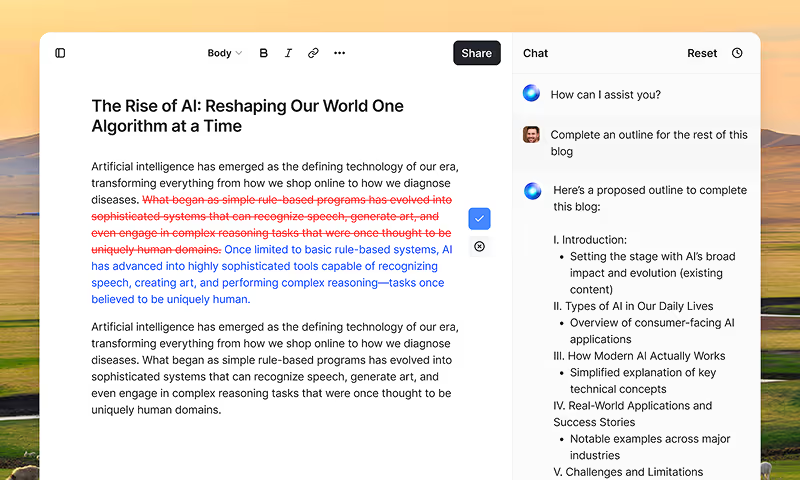
HyperWrite is the AI writing assistant that learns your style. It handles drafting, editing, and researching so you can focus on ideas.
- Autocompletes sentences as you type
- Works inside Google Docs & Gmail
- Adapts to your personal writing style
- 500+ AI tools for any writing task
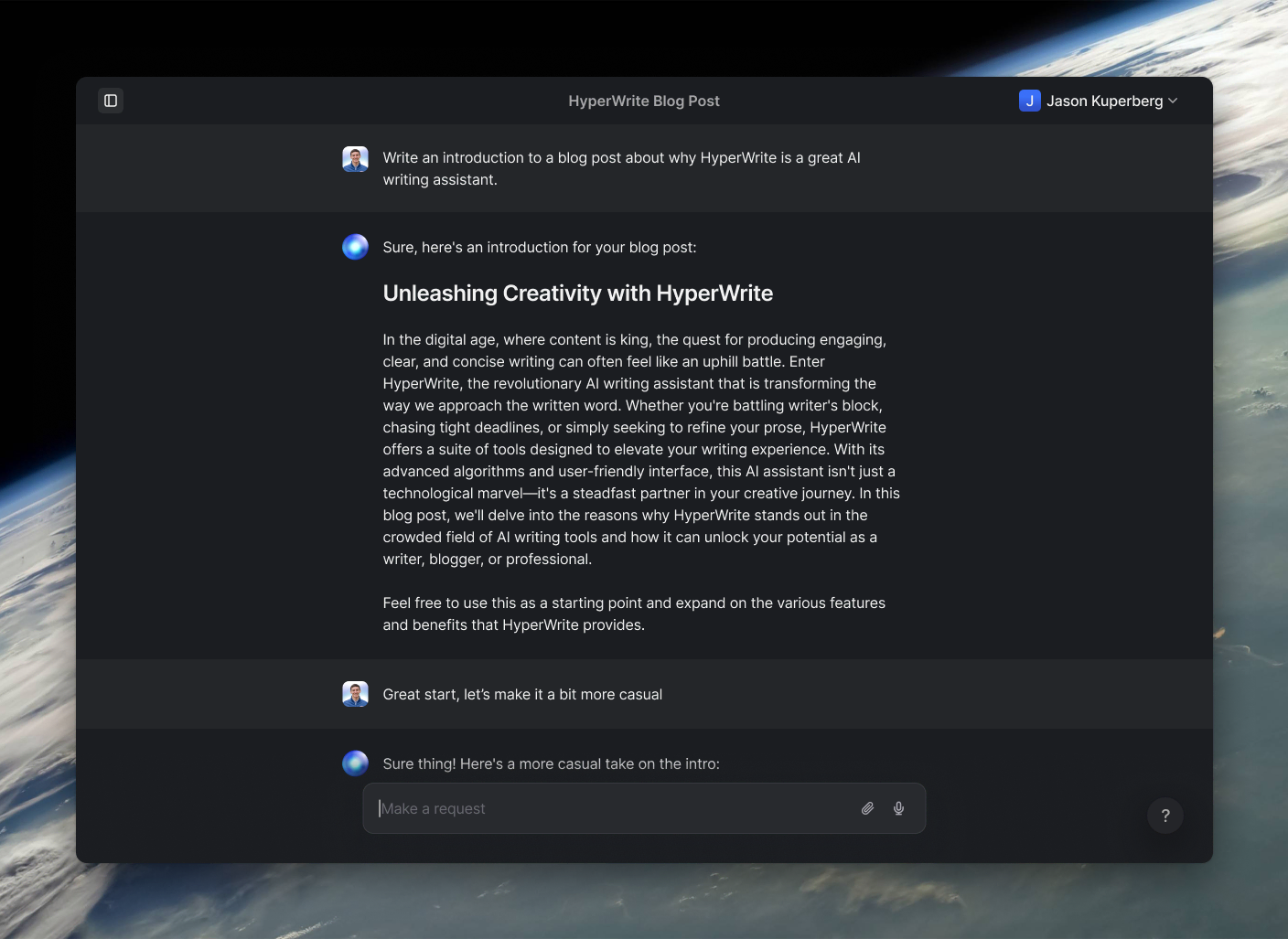
Powerful writing in seconds
Improve your existing writing or create high-quality content in seconds. From catchy headlines to persuasive emails, our tools are tailored to your unique needs.