
Adjectives That Start With I: 750+ Words & Meanings


Most of the time, you're after one adjective that starts with I: the one that fits the sentence in front of you, in the next few seconds. So this page puts the most useful groups first, then the complete list, with a quick meaning for every word.
Pick a job below: praise someone, name a flaw, describe a personality, or scroll to the complete list.
Positive adjectives that start with I
These are the words you reach for when you want to compliment, recommend, or lift someone up. Here are the ten strongest first, since that is what most people are after, followed by a wider set of positive adjectives to describe someone.
- Incredible: so good it is hard to believe.
- Ingenious: cleverly original and inventive.
- Insightful: quick to see the truth of a situation.
- Inspiring: makes other people want to act.
- Impressive: commands real admiration.
- Independent: self-reliant, does not need hand-holding.
- Industrious: hard-working and steady.
- Intuitive: understands things without being told.
- Invaluable: too useful to put a price on.
- Imaginative: creative and full of fresh ideas.
A few more worth knowing: impeccable (flawless), incomparable (in a class of its own), irreplaceable (impossible to swap out), illustrious (widely admired), immaculate (spotless), iconic (instantly recognizable), irresistible (too appealing to resist), invincible (impossible to beat), and impassioned (full of strong feeling).
"Impressive" and "ingenious" both praise someone, but they are not interchangeable. The right pick carries the exact shade you mean.
Negative adjectives that start with I
The letter I is unusually loaded with negative words because the prefixes in-, im-, il-, and ir- often flip a word to mean "not." Impatient is "not patient." Insincere is "not sincere." Inconsiderate is "not considerate." You can see the full rule in the Merriam-Webster entry for the prefix "in-".
Here are negative I-adjectives people actually use, with a wider set in this list of negative adjectives to describe a person:
- Impatient: unwilling to wait or tolerate delay.
- Inconsiderate: careless of other people's feelings.
- Insecure: anxious and unsure of oneself.
- Insincere: saying things you do not mean.
- Inept: clumsy or incompetent at a task.
- Irritable: quick to annoyance.
- Impulsive: acts before thinking.
- Indecisive: unable to settle on a choice.
- Intolerant: unwilling to accept other views.
- Insensitive: blind to how others feel.
- Idle: avoiding work or effort.
- Ignorant: lacking knowledge or awareness.
- Impractical: not sensible or workable.
- Irresponsible: not to be relied on.
- Immature: behaving younger than one's age.
One caution before you lean on the prefix trick: it does not always hold. Invaluable does not mean "not valuable," ingenious does not mean "not clever," and inflammable actually means easy to set on fire. That's because it uses a second in- prefix, the one in "inflame," which means "into." So treat the prefix as a strong hint and check the meaning anyway.
Neutral and descriptive adjectives that start with I
These neutral, descriptive adjectives describe what something is like, how big it is, or when it happens, so they fit reports, instructions, and everyday writing:
- Identical: exactly alike in every detail.
- Immediate: happening right away, without delay.
- Immense: extremely large in size or degree.
- Indoor: located or done inside a building.
- Inherent: built in as a permanent quality.
- Initial: happening at the beginning.
- Intangible: real but impossible to touch or measure.
- Internal: existing or happening on the inside.
Adjectives that start with I to describe a person
This is where precision pays off. Whether you are writing a performance review, a character, a reference, or a wedding toast, the goal is the same: pin down the actual person, down to the one trait that defines them. For even more range, see these descriptive words for people.
Here is a quick-scan table of common character traits:
Mix the warm ones with the honest ones. A person who is idealistic can also be inflexible, and a description that admits both reads as honest.
Compliments and cool words that start with I
Some I-words are just fun to hand someone. If you want a compliment that lands, try incredible, ingenious, impeccable, or incomparable. Each one says the person stands out, in a slightly different key.
And if you want a cool, less-common word that makes a reader pause, here are a few favorites:
- Ineffable: too great to be put into words.
- Idyllic: serenely, almost impossibly peaceful.
- Iridescent: shimmering with shifting color.
- Inimitable: impossible to copy.
- Incandescent: glowing, radiant, lit from within.
- Intrepid: brave in a quiet, steady way.
Save these for the moments that deserve them. Call every dinner "incredible" and the word stops meaning much.
Example sentences using I adjectives
Seeing a word in a real sentence beats any definition. Here are ten, with the I-adjective in bold:
- The sunset was incredible, the kind you stop the car for.
- Her presentation was impeccable, down to the last slide.
- He has an infectious laugh that fills a room.
- The lake at dawn felt idyllic, still and silver.
- My impatient coworker was already refreshing the inbox.
- She is the most industrious person on the team, first in, last out.
- The design is intricate, with detail hiding in every corner.
- An icy wind came off the water and ended the picnic.
- Our new hire is sharp and inquisitive, asking the right questions.
- He stayed independent through the whole project, no hand-holding needed.
Read them out loud. The adjective should feel like it belongs in the sentence. If it reads like you reached for it to show off, pick a plainer one.
750+ adjectives that start with I: the complete list
Here is the full browse, every word with a quick meaning. Because the in- and im- groups are so large (that "not" prefix again), the list is grouped by opening letters so you can jump to what you need. If you want other letters afterward, we also have adjectives that start with A, B, C, D, and E.
I- (general)
- Iatrogenic: (medicine) caused by medical treatment.
- Icebound: held fast or blocked by ice.
- Iceless: free of ice.
- Ichthyic: relating to fish.
- Icky: unpleasantly sticky or distasteful.
- Iconic: widely recognized as a symbol of something.
- Iconoclastic: attacking established beliefs or traditions.
- Iconographic: relating to images and visual symbols in art.
- Icosahedral: having twenty flat faces.
- Ictal: (medicine) occurring during a seizure.
- Icteric: (medicine) yellowed by jaundice.
- Icy: covered with ice or extremely cold.
- Ideal: perfect for a given purpose.
- Idealistic: guided by high principles over practicality.
- Idealized: shown as better than it really is.
- Ideational: relating to forming ideas or concepts.
- Idempotent: (math, computing) giving the same result when repeated.
- Identical: exactly alike in every detail.
- Identifiable: able to be recognized or named.
- Ideographic: using symbols that represent ideas directly.
- Ideological: based on a system of political beliefs.
- Ideomotor: (psychology) describing unconscious movement triggered by a thought.
- Idiomatic: natural to native speakers of a language.
- Idiopathic: (medicine) arising from an unknown cause.
- Idiosyncratic: peculiar to one individual.
- Idiotic: extremely foolish or senseless.
- Idle: not active, busy, or in use.
- Idolatrous: worshipping idols or admiring something excessively.
- Idyllic: peaceful and close to perfect.
- Iffy: uncertain or doubtful.
- Igneous: (geology) formed from cooled molten rock.
- Ignescent: giving off sparks when struck.
- Ignitable: able to catch fire.
- Ignitible: capable of being set on fire.
- Ignoble: dishonorable or of low character.
- Ignominious: shameful and publicly humiliating.
- Ignorant: lacking knowledge or awareness.
- Iodic: (chemistry) relating to or containing iodine.
- Iodinated: (chemistry) treated or combined with iodine.
- Ionic: (chemistry) relating to or made of ions.
- Ionospheric: relating to the electrically charged upper atmosphere.
- Ischemic: (medicine) lacking adequate blood supply.
- Isentropic: (physics) occurring with no change in entropy.
- Isobaric: (physics) at constant pressure.
- Isobilateral: (botany) with matching upper and lower surfaces.
- Isochronal: occurring at equal time intervals.
- Isochronous: taking equal amounts of time; evenly timed.
- Isoclinal: having equal inclination or magnetic dip.
- Isodynamic: having equal force or magnetic intensity.
- Isoelectric: having no net electric charge or potential difference.
- Isogonic: having or marking equal angles.
- Isometric: having equal dimensions or measurements.
- Isometrical: of equal measure or dimensions.
- Isomorphic: identical in form or structure.
- Isosceles: (geometry) having two equal sides.
- Isostatic: (geology) relating to crust floating in balance on the mantle.
- Isotactic: (chemistry) with a polymer's side groups all aligned.
- Isothermal: at constant temperature.
- Isothermic: having or occurring at equal temperature.
- Isotonic: (biology) having the same salt concentration as body fluids.
- Isotopic: relating to different atomic forms of one element.
- Isotropic: (physics) having the same properties in every direction.
- Italic: (typography) slanting to the right, like handwriting.
- Itchy: causing or feeling an urge to scratch.
- Iterative: repeating a process to refine results.
- Itinerant: traveling from place to place for work.
- Ivied: covered or overgrown with ivy.
- Ivory: having the creamy white color of ivory.
IL-
- Iliac: (anatomy) relating to the hip bone.
- Ill: sick or in poor health.
- Ill-advised: unwise and badly thought out.
- Illative: (logic) stating a conclusion drawn by inference.
- Illaudable: not worthy of praise.
- Ill-bred: badly brought up and rude.
- Illegal: forbidden by law.
- Illegible: too unclear to read.
- Illegitimate: not allowed by law or accepted rules.
- Ill-equipped: lacking the tools or skills needed.
- Ill-fated: destined for misfortune.
- Illiberal: narrow-minded and opposed to personal freedoms.
- Illicit: forbidden by law or custom.
- Illimitable: without limits or boundaries.
- Ill-informed: lacking accurate knowledge.
- Illiquid: (finance) not easily turned into cash.
- Illiterate: unable to read and write.
- Ill-mannered: rude and impolite.
- Ill-natured: bad-tempered and unkind.
- Illogical: lacking sound reasoning.
- Ill-prepared: not ready for a task or situation.
- Ill-tempered: easily angered and irritable.
- Ill-timed: happening at a bad moment.
- Illuminable: able to be lit up.
- Illuminant: giving off light.
- Illuminating: helping to clarify or explain.
- Illuminative: tending to give light or clarity.
- Illusional: based on false impressions.
- Illusionary: deceptive and not real.
- Illusionistic: (art) creating a convincing illusion of depth or reality.
- Illusive: deceptive and unreal.
- Illusory: seeming real but actually false.
- Illustrational: relating to pictures that accompany text.
- Illustrative: serving as an example or explanation.
- Illustrious: famous and widely admired for achievements.
IM-
- Imaginable: possible to picture or conceive of.
- Imaginal: relating to mental images or the imagination.
- Imaginary: existing only in the mind.
- Imaginative: creative and full of fresh ideas.
- Imbalanced: lacking balance or fair proportion.
- Imbecilic: extremely foolish or stupid.
- Imbricate: overlapping in rows, like roof tiles.
- Imbricated: arranged with edges overlapping one another.
- Imitative: copying others rather than original.
- Immaculate: perfectly clean, neat, or tidy.
- Immane: (archaic) monstrously huge or cruel.
- Immaterial: irrelevant or unimportant to the matter.
- Immature: behaving younger than one's age.
- Immeasurable: too large or great to measure.
- Immediate: happening right away, without delay.
- Immedicable: impossible to cure or heal.
- Immemorial: older than anyone can remember.
- Immense: extremely large in size or degree.
- Immensurable: impossible to measure.
- Immersive: surrounding you completely, as if you are inside.
- Immethodical: lacking method, order, or system.
- Imminent: about to happen very soon.
- Immiscible: (chemistry) unable to mix, like oil and water.
- Immitigable: impossible to lessen or soften.
- Immobile: not moving or unable to move.
- Immoderate: excessive; beyond reasonable limits.
- Immodest: boastful, or lacking in decency.
- Immoral: morally wrong or wicked.
- Immortal: living or lasting forever.
- Immotile: (biology) unable to move on its own.
- Immovable: impossible to move or change.
- Immune: protected from a disease or effect.
- Immunochemical: relating to the chemistry of immune reactions.
- Immunocompetent: having a normally working immune system.
- Immunocompromised: having an immune system less able to fight infection.
- Immunodeficient: lacking a fully working immune system.
- Immunogenic: able to trigger an immune response.
- Immunologic: relating to immunology or the immune system.
- Immunoreactive: reacting with a specific antibody or immune agent.
- Immunosuppressive: lowering the body's immune response.
- Immutable: unchanging over time; fixed for good.
- Impactful: having a strong, noticeable effect.
- Impactive: having an impact; forceful in effect.
- Impaired: weakened or damaged in function.
- Impalpable: impossible to feel by touch or grasp easily.
- Imparipinnate: (botany) having paired leaflets plus one at the tip.
- Impartial: treating all sides fairly and equally.
- Impassable: impossible to travel through or across.
- Impassible: incapable of feeling pain or emotion.
- Impassioned: filled with strong emotion.
- Impassive: showing no emotion or reaction.
- Impatient: unwilling to wait or tolerate delay.
- Impeccable: free of any flaw or fault.
- Impeccant: free from sin or wrongdoing.
- Impecunious: having little or no money.
- Impedimental: acting as a hindrance or obstacle.
- Impellent: driving or pushing forward.
- Impendent: (rare) about to happen; impending.
- Impending: approaching and likely to happen soon.
- Impenetrable: impossible to get through or understand.
- Impenitent: feeling no regret for wrongdoing.
- Imperative: absolutely necessary or urgent.
- Imperceptible: too slight or subtle to notice.
- Imperceptive: slow to notice or understand things.
- Imperfect: having flaws or faults.
- Imperfectible: incapable of being made perfect.
- Imperforate: having no openings or perforations.
- Imperial: relating to an empire or emperor.
- Imperialistic: seeking to extend power over other nations.
- Imperious: arrogant and domineering.
- Imperishable: lasting forever; never decaying.
- Impermanent: lasting only for a limited time.
- Impermeable: not allowing fluids to pass through.
- Impermissible: not allowed under the rules.
- Impersonal: lacking warmth or personal feeling.
- Imperturbable: calm and unbothered under pressure.
- Impervious: unaffected by something; letting nothing through.
- Impetuous: rash and hasty in action or feeling.
- Impious: lacking respect for religion or God.
- Impish: playfully mischievous in a harmless way.
- Implacable: impossible to appease or calm.
- Implausible: hard to believe; unconvincing.
- Implicit: implied rather than stated directly.
- Implosive: formed by or relating to implosion.
- Impolite: rude; lacking good manners.
- Impolitic: unwise and likely to cause trouble.
- Imponderable: impossible to estimate or assess.
- Important: of great significance or value.
- Importunate: persistent to the point of annoyance.
- Imposable: able to be imposed or charged.
- Imposing: grand and impressive in appearance.
- Impositional: relating to imposing a burden or rule.
- Impossible: unable to exist, happen, or be done.
- Impotent: powerless to act or take effect.
- Impoverished: very poor; drained of resources.
- Impracticable: impossible to carry out in practice.
- Impractical: not sensible or workable.
- Imprecatory: expressing or invoking a curse.
- Imprecise: lacking exactness or accuracy.
- Impregnable: impossible to capture or break into.
- Impressable: easily impressed or influenced.
- Impressionable: easily swayed by others.
- Impressional: relating to or based on impressions.
- Impressionistic: based on general impressions, not detail.
- Impressive: commanding real admiration.
- Improbable: unlikely to happen or be true.
- Impromptu: done without planning or rehearsal.
- Improper: unsuitable or incorrect for the situation.
- Improved: made better than before.
- Improvident: failing to plan for future needs.
- Improvisational: made up on the spot.
- Improvisatory: having a spontaneous, unrehearsed quality.
- Improvised: put together from whatever is available.
- Imprudent: unwise; lacking good judgment.
- Impudent: cheeky and disrespectful.
- Impuissant: powerless or weak.
- Impulsive: acting before thinking.
- Impunctual: habitually late or behind schedule.
- Impure: mixed with something unwanted; not clean.
- Imputable: able to be attributed to someone.
- Imputative: (theology) credited or charged to someone by imputation.
IN- (the big group)
- Inaccessible: impossible or very hard to reach or use.
- Inaccurate: containing errors; not correct or precise.
- Inactive: not currently working, moving, or in use.
- Inadequate: not enough or not good enough.
- Inadmissible: not allowed to be accepted or considered, especially in court.
- Inadvertent: done by accident, without intention.
- Inadvisable: likely to be unwise or unhelpful.
- Inaesthetic: unattractive or lacking any sense of beauty.
- Inalienable: unable to be taken away or given up.
- Inane: silly and lacking sense or meaning.
- Inanimate: without life or movement.
- Inapparent: not easily seen; (medicine) showing no symptoms.
- Inappetent: lacking appetite or desire.
- Inapposite: not relevant or suitable to the situation.
- Inappreciable: too small to notice or measure.
- Inapt: unsuitable for the purpose or situation.
- Inarguable: too clear or certain to dispute.
- Inarticulate: unable to express ideas clearly in words.
- Inartistic: lacking artistic skill, taste, or style.
- Inattentive: not paying attention.
- Inaudible: too quiet to be heard.
- Inaugural: marking the first event or start of something.
- Inauspicious: suggesting a poor or unlucky outcome.
- Inauthentic: not genuine; false or imitation.
- Inborn: present from birth; natural rather than learned.
- Inbound: coming in or traveling toward a place.
- Inbred: deeply rooted by nature; also, bred from close relatives.
- Inbuilt: built in as an integral part.
- Incalculable: too great to be measured or estimated.
- Incandescent: giving off light because of intense heat.
- Incapable: lacking the ability to do something.
- Incarnate: in human form; embodied or personified.
- Incautious: acting without enough care or caution.
- Incendiary: designed to start fires; likely to provoke conflict.
- Incessant: continuing without pause or interruption.
- Inchoate: just begun and not yet fully formed.
- Incidental: minor and occurring alongside something more important.
- Incisive: sharp, clear, and direct in thought.
- Incitative: tending to stir up or provoke action.
- Inclement: stormy or harsh, especially of weather.
- Inclinable: leaning or disposed toward something.
- Inclined: willing or likely to do something; sloping.
- Inclusive: including everyone or everything; not excluding anyone.
- Incognito: with one's true identity concealed.
- Incoherent: confused and hard to understand.
- Incohesive: lacking unity or connection between parts.
- Incoming: arriving or about to arrive.
- Incommensurable: impossible to compare by a common standard.
- Incommodious: cramped and uncomfortable.
- Incommunicable: impossible to share or convey to others.
- Incommunicado: cut off from contact with others.
- Incommutable: unable to be exchanged or changed.
- Incomparable: so good that nothing else compares.
- Incompatible: unable to work or exist together.
- Incompetent: lacking the skill to do a job properly.
- Incomplete: missing parts; unfinished.
- Incomprehensible: impossible to understand.
- Incompressible: unable to be squeezed into a smaller space.
- Inconceivable: impossible to imagine or believe.
- Inconclusive: not leading to a firm result or decision.
- Incongruous: out of place or at odds with its surroundings.
- Inconsequent: not following logically; beside the point.
- Inconsequential: unimportant and having little effect.
- Inconsiderable: small and not worth much attention.
- Inconsiderate: careless of other people's feelings.
- Inconsistent: changing or contradictory; not uniform.
- Inconsolable: too upset to be comforted.
- Inconspicuous: not easily noticed; blending in.
- Inconstant: frequently changing; unreliable or fickle.
- Incontestable: too certain to be disputed.
- Incontinent: lacking self-control; (medicine) unable to control bladder or bowels.
- Incontrovertible: impossible to deny or disprove.
- Inconvenient: causing trouble, difficulty, or discomfort.
- Incoordinate: lacking coordination, especially of muscle movements.
- Incorporated: formed into a legal corporation; included as part.
- Incorporeal: having no physical body or form.
- Incorrect: wrong or not true.
- Incorrigible: unable to be corrected or reformed.
- Incorrupt: honest and free of corruption.
- Incorruptible: impossible to bribe or morally corrupt.
- Incrassate: (biology) thickened or swollen.
- Incredible: so good it is hard to believe.
- Incredulous: unwilling or unable to believe something.
- Incremental: happening in small, gradual steps.
- Increscent: growing or increasing, like a waxing moon.
- Incubatory: relating to incubation or a development period.
- Incurable: impossible to cure or fix.
- Incurious: showing no interest or desire to know.
- Indebted: owing money or gratitude to someone.
- Indecent: offensive to accepted standards of behavior.
- Indecipherable: impossible to read or make sense of.
- Indecisive: unable to settle on a choice.
- Indecomposable: unable to be broken down into parts.
- Indecorous: improper or lacking good manners.
- Indefatigable: tireless and persistent.
- Indefeasible: (law) unable to be lost or annulled.
- Indefensible: impossible to justify or defend.
- Indefinable: hard to describe or define exactly.
- Indefinite: lasting for an unknown length of time; vague.
- Indehiscent: (botany) not splitting open to release seeds.
- Indelible: impossible to remove, erase, or forget.
- Indelicate: slightly rude, tactless, or embarrassing.
- Indemonstrable: impossible to prove or show.
- Indentured: bound by contract to work for another.
- Independent: self-reliant and free from outside control.
- Indescribable: too extreme or unusual to put into words.
- Indestructible: impossible to destroy or break.
- Indeterminable: impossible to determine or settle.
- Indeterminate: not exactly known, fixed, or defined.
- Indexical: (linguistics) meaning depends on context, like "here."
- Indexless: having no index.
- Indicative: serving as a sign of something.
- Indicatory: serving to point out or signal.
- Indifferent: uninterested or unconcerned; mediocre in quality.
- Indigenous: native to a particular place.
- Indigent: very poor and in need.
- Indigested: not digested; poorly thought out or organized.
- Indignant: angry at something that seems unfair.
- Indirect: not straight or direct; roundabout.
- Indiscernible: impossible to see or detect.
- Indiscreet: careless about revealing private or sensitive matters.
- Indiscriminate: done at random, without careful choice.
- Indispensable: absolutely necessary; impossible to do without.
- Indisposed: slightly ill; also, unwilling.
- Indisputable: too clear to be questioned.
- Indissoluble: impossible to break apart or dissolve.
- Indistinct: unclear, faint, or blurred.
- Individual: single and separate; belonging to one person.
- Individualistic: independent and focused on personal freedom.
- Indivisible: unable to be divided or separated.
- Indocile: hard to teach, train, or control.
- Indomitable: impossible to defeat or discourage.
- Indoor: located or done inside a building.
- Indubitable: beyond doubt; certain.
- Inductive: reasoning from specific cases to general rules.
- Indulgent: generous or lenient; allowing pleasure freely.
- Indurate: hardened; also, callous or unfeeling.
- Indurative: tending to harden or cause hardening.
- Industrial: relating to industry and manufacturing.
- Industrious: hard-working and steady.
- Indwelling: living within; (medicine) left inside the body.
- Inebriated: drunk or intoxicated by alcohol.
- Inedible: not safe or fit to eat.
- Ineducable: incapable of being taught.
- Ineffable: too great to be put into words.
- Ineffaceable: impossible to erase or wipe out.
- Ineffective: failing to produce the intended result.
- Ineffectual: weak and unable to get results.
- Inefficient: wasting time, energy, or resources.
- Inelaborate: plain and simple in design.
- Inelastic: unable to stretch; (economics) barely affected by price changes.
- Inelegant: lacking grace, polish, or style.
- Ineligible: not meeting the requirements to qualify.
- Ineloquent: lacking fluent or persuasive speech.
- Ineluctable: impossible to avoid or escape.
- Ineludible: impossible to evade.
- Inept: clumsy or incompetent at a task.
- Inequitable: unfair or unjust.
- Ineradicable: impossible to get rid of.
- Inerasable: unable to be erased.
- Inerrant: incapable of being wrong.
- Inert: lacking the power to move or react.
- Inescapable: impossible to avoid or ignore.
- Inessential: unnecessary and easy to do without.
- Inestimable: too great to be measured or valued.
- Inevitable: certain to happen and impossible to prevent.
- Inexact: not precise or fully accurate.
- Inexcusable: too bad to be justified or forgiven.
- Inexhaustible: plentiful enough never to run out.
- Inexistent: not existing or not present.
- Inexorable: impossible to stop or change.
- Inexpedient: unwise or unsuitable in the circumstances.
- Inexpensive: low in price.
- Inexperienced: lacking practical knowledge or skill.
- Inexpert: lacking skill; amateurish.
- Inexpiable: too wrong to ever make amends for.
- Inexplicable: impossible to explain or account for.
- Inexpressible: too strong to be put into words.
- Inextended: (philosophy) having no physical extent in space.
- Inextinguishable: impossible to put out or suppress.
- Inextricable: impossible to separate or escape from.
- Infallible: incapable of making mistakes.
- Infamous: well known for something bad.
- Infantile: childish, or relating to infants.
- Infatuated: carried away by a strong, short-lived passion.
- Infeasible: impossible or impractical to carry out.
- Infected: contaminated by germs or a virus.
- Infectious: easily spread to others, like a disease or mood.
- Infective: (medicine) capable of causing infection.
- Infelicitous: badly chosen or poorly suited.
- Inferable: possible to deduce from evidence.
- Inferior: lower in rank, status, or quality.
- Infernal: relating to hell or the underworld; hellish.
- Infertile: unable to produce offspring or crops.
- Infinitary: (mathematics) involving infinitely many terms or operations.
- Infinite: without limits or end.
- Infinitesimal: so small it is nearly zero.
- Infinitival: (grammar) relating to the infinitive form of a verb.
- Infirm: physically weak, especially from age or illness.
- Inflammable: easily set on fire.
- Inflammatory: provoking anger or causing inflammation.
- Inflatable: able to be filled with air.
- Inflated: exaggerated or set unrealistically high.
- Inflationary: causing or linked to rising prices.
- Inflectional: (grammar) relating to word-form changes that show tense or number.
- Inflexible: rigid and unwilling to change.
- Influential: having a strong effect on people or events.
- Informal: relaxed and casual in style.
- Informational: focused on providing facts or information.
- Informative: providing useful knowledge.
- Informed: having or based on good knowledge.
- Infrahuman: (biology) relating to animals below humans.
- Infrared: having wavelengths just longer than visible red light.
- Infrasonic: below the frequency humans can hear.
- Infrequent: happening only rarely or occasionally.
- Infuriating: making someone extremely angry.
- Infusorial: (biology) relating to tiny organisms found in water.
- Ingenerate: inborn, or self-existent and never created.
- Ingenious: cleverly original and inventive.
- Ingenuous: innocent, open, and trusting.
- Ingestible: safe or able to be swallowed.
- Inglorious: shameful and lacking honor.
- Ingrained: firmly fixed and hard to change.
- Ingratiating: trying hard to win someone's favor.
- Ingravescent: (medicine) gradually growing more severe.
- Ingressive: relating to entering, or speech made while inhaling.
- Ingrown: growing inward into the flesh, like a toenail.
- Inguinal: (anatomy) relating to the groin.
- Inhabitable: fit to live in.
- Inhalant: intended to be breathed in.
- Inharmonic: (music) out of harmony; discordant.
- Inharmonious: clashing or not getting along.
- Inherent: built in as a permanent quality.
- Inheritable: able to be passed to heirs or offspring.
- Inhibited: self-conscious and unable to act freely.
- Inhibitive: tending to restrain or hold back.
- Inhomogeneous: varied in makeup rather than uniform throughout.
- Inhospitable: unwelcoming, or harsh and hard to live in.
- Inhuman: cruel and lacking pity.
- Inhumane: causing needless suffering.
- Inimical: harmful or hostile.
- Inimitable: impossible to copy.
- Iniquitous: grossly unfair or wicked.
- Initial: happening at the beginning.
- Initiatory: relating to a beginning or an initiation.
- Injectable: able to be given by injection.
- Injudicious: showing poor judgment.
- Injunctive: (law) relating to a court order that commands or forbids.
- Injured: hurt or harmed.
- Injurious: causing harm or damage.
- Inland: located away from the coast.
- Inmost: deepest or most private.
- Innate: present from birth; natural.
- Inner: located inside or closer to the center.
- Innermost: farthest in, or most private.
- Innocent: free from guilt or wrongdoing.
- Innocuous: harmless and unlikely to offend.
- Innominate: having no name; anonymous.
- Innovational: relating to the introduction of new ideas.
- Innovatory: introducing new methods or ideas.
- Innumerable: too many to count.
- Innumerate: lacking basic math skills.
- Innumerous: countless; beyond numbering.
- Inobedient: unwilling to obey.
- Inobservant: failing to notice things.
- Inoculable: (medicine) able to be vaccinated or passed on by inoculation.
- Inoffensive: harmless and unlikely to upset anyone.
- Inoperable: too risky to treat by surgery, or unworkable.
- Inoperative: not working or not in effect.
- Inopportune: coming at a bad time.
- Inordinate: far more than is reasonable.
- Inorganic: not derived from living matter.
- Inotropic: (medicine) affecting the force of heart muscle contraction.
- Inquiring: curious and eager to learn.
- Inquisitive: eager to know or find out.
- Inquisitorial: harshly questioning, like an interrogator.
- Insalubrious: unhealthy or unpleasant to live in.
- Insane: seriously mentally ill, or wildly unreasonable.
- Insanitary: dirty enough to threaten health.
- Insatiable: impossible to satisfy.
- Inscrutable: impossible to read or understand.
- Insectivorous: feeding on insects.
- Insecure: anxious and unsure of oneself.
- Insensate: lacking feeling or awareness.
- Insensible: unconscious or unaware of something.
- Insensitive: blind to how others feel.
- Insentient: incapable of feeling or perception.
- Inseparable: impossible to separate; always together.
- Insertable: able to be put into something.
- Inshore: near or toward the shore.
- Insightful: quick to see the truth of a situation.
- Insignificant: too small or unimportant to matter.
- Insincere: saying things you do not mean.
- Insipid: bland and lacking flavor or interest.
- Insistent: demanding something firmly and repeatedly.
- Insociable: avoiding the company of others.
- Insolent: rude and disrespectful.
- Insoluble: impossible to dissolve or to solve.
- Insolvable: impossible to solve.
- Insolvent: unable to pay one's debts.
- Insomniac: suffering from or relating to sleeplessness.
- Insomnious: sleepless or troubled by insomnia.
- Insouciant: carefree and unconcerned.
- Inspective: relating to or engaged in inspection.
- Inspirable: able to be breathed in, or inspired.
- Inspirational: providing motivation or a creative spark.
- Inspired: unusually creative or brilliant.
- Inspiring: providing inspiration or encouragement.
- Instant: happening or available immediately.
- Instantaneous: occurring at once, with no delay.
- Instinctive: done naturally without thinking.
- Instinctual: based on natural impulse, not learning.
- Institutional: relating to established organizations or institutions.
- Instructive: useful for teaching a lesson.
- Instrumental: key to making something happen.
- Insubordinate: defiant toward authority.
- Insubstantial: flimsy, weak, or lacking solidity.
- Insufferable: too unpleasant to tolerate.
- Insufficient: not enough for the purpose.
- Insular: narrow-minded and inward-looking.
- Insulative: able to block heat, sound, or electricity.
- Insuperable: too great to be overcome.
- Insupportable: too unpleasant or unjust to be endured.
- Insurable: eligible to be covered by insurance.
- Insurmountable: impossible to overcome or get past.
- Intact: whole and undamaged.
- Intangible: real but impossible to touch or measure.
- Integral: essential to making something complete.
- Integrated: combined into one working whole.
- Integumental: (biology) relating to skin or an outer covering.
- Integumentary: (biology) relating to skin, hair, and nails.
- Intellectual: relating to the mind and reasoning.
- Intelligent: quick to learn and understand.
- Intelligible: clear enough to be understood.
- Intemperate: lacking self-restraint; excessive.
- Intended: planned or meant for a purpose.
- Intense: extreme in strength or degree.
- Intensive: concentrated and thorough within a short span.
- Intent: fully focused or determined on something.
- Intentional: done on purpose.
- Interactive: responding to input from a user or person.
- Intercalary: inserted between others, like a leap day.
- Intercaste: between different castes.
- Intercellular: (biology) located or occurring between cells.
- Interchain: (chemistry) occurring between molecular chains.
- Interchangeable: able to replace one another freely.
- Intercollegiate: between different colleges or universities.
- Intercontinental: between or across continents.
- Intercostal: (anatomy) located between the ribs.
- Intercurrent: (medicine) arising during the course of another illness.
- Interdental: located between the teeth.
- Interdepartmental: between or involving different departments.
- Interdependent: relying on each other.
- Interdigital: located between the fingers or toes.
- Interdisciplinary: combining two or more fields of study.
- Interested: curious and wanting to know more.
- Interesting: holding attention or arousing curiosity.
- Interethnic: between different ethnic groups.
- Interfacial: (science) occurring at the boundary between two surfaces.
- Interfaith: involving people of different religions.
- Intergalactic: between or across galaxies.
- Intergenerational: involving or shared between generations.
- Interglacial: (geology) occurring between ice ages.
- Intergovernmental: between or involving different governments.
- Interim: temporary, serving until something permanent arrives.
- Interior: situated on the inside.
- Interlaced: woven or crossed together.
- Interlinear: written between the lines of a text.
- Interlobular: (anatomy) located between lobules of an organ.
- Interlocal: between local governments or communities.
- Interlocking: fitting together so parts connect firmly.
- Interlocutory: (law) provisional, issued before a final ruling.
- Intermediate: in the middle stage or level.
- Interminable: seeming to go on forever.
- Intermittent: starting and stopping at irregular intervals.
- Intermodal: using more than one type of transport.
- Intermolecular: (chemistry) acting between molecules.
- Intermuscular: (anatomy) located between muscles.
- Internal: existing or happening on the inside.
- International: involving two or more countries.
- Internecine: destructive to both sides, especially within a group.
- Interoceptive: sensing signals from inside the body.
- Interoperable: able to work together with other systems.
- Interpersonal: relating to relationships between people.
- Interplanetary: between or across planets.
- Interpretative: explaining or bringing out meaning.
- Interpretive: offering an explanation or personal reading of something.
- Interracial: involving people of different races.
- Interregional: between or involving different regions.
- Interrogative: having the form or force of a question.
- Interrogatory: expressing or involving a question.
- Intersectional: considering how overlapping identities shape disadvantage.
- Interspecies: between members of different species.
- Interspecific: (biology) occurring between different species.
- Intersquad: between squads of the same team.
- Interstadial: (geology) relating to a short warm spell within glaciation.
- Interstellar: between or among the stars.
- Interstitial: located in the small spaces between things.
- Intertribal: between different tribes.
- Interurban: between cities or towns.
- Interventricular: (anatomy) located between the heart's ventricles.
- Intervertebral: (anatomy) located between the vertebrae.
- Intervocalic: (linguistics) occurring between two vowels.
- Intestate: (law) having died without a valid will.
- Intestinal: relating to the intestines.
- Intimate: closely personal and familiar.
- Intimidating: making others feel nervous or overawed.
- Intolerable: too bad to be endured.
- Intolerant: unwilling to accept other views.
- Intoxicated: drunk or under the influence of a drug.
- Intracardiac: (medicine) located or given within the heart.
- Intracellular: (biology) located or occurring within a cell.
- Intracerebral: (medicine) located or occurring within the brain.
- Intracranial: (medicine) located within the skull.
- Intractable: hard to control, solve, or manage.
- Intradermal: (medicine) located or injected within the skin.
- Intragastric: (medicine) located or given within the stomach.
- Intragroup: occurring within a single group.
- Intralobular: (anatomy) located within the lobules of an organ.
- Intramolecular: (chemistry) occurring within a single molecule.
- Intramural: taking place within one institution.
- Intramuscular: (medicine) injected into or located within a muscle.
- Intranasal: (medicine) given or located inside the nose.
- Intransigent: refusing to change one's position.
- Intransitive: (grammar) describing a verb that takes no object.
- Intranuclear: (biology) located within a cell nucleus.
- Intraocular: (medicine) located within the eye.
- Intrapersonal: happening within one's own mind.
- Intraspecies: occurring among members of one species.
- Intraspecific: (biology) occurring within a single species.
- Intrastate: existing or operating within one state.
- Intrathecal: (medicine) injected into the fluid around the spinal cord.
- Intrauterine: (medicine) located or occurring within the uterus.
- Intravascular: (medicine) located or occurring within blood vessels.
- Intravenous: (medicine) given directly into a vein.
- Intraventricular: (medicine) within a ventricle of the heart or brain.
- Intrepid: fearless and bold.
- Intricate: having many small, detailed parts.
- Intrigued: curious and eager to learn more.
- Intriguing: arousing curiosity or interest.
- Intrinsic: belonging to the basic nature of something.
- Introductory: serving as a first step or opening.
- Introrse: (botany) facing inward toward the center.
- Introspective: inclined to examine one's own thoughts and feelings.
- Introversive: tending to turn attention inward.
- Introverted: reserved and energized by time alone.
- Intrusive: unwelcome and disruptive.
- Intuitive: based on instinct, or easy to grasp without thought.
- Inundatory: relating to floods or flooding.
- Invalid: lacking legal or logical force.
- Invaluable: too useful to put a price on.
- Invariable: never changing; always the same.
- Invariant: staying constant under all conditions.
- Invasive: spreading harmfully or intruding where unwelcome.
- Invective: harshly abusive or insulting.
- Invendible: impossible to sell.
- Inventible: capable of being invented.
- Inventive: good at creating new ideas or things.
- Inverse: opposite in order, effect, or nature.
- Invertebrate: having no backbone.
- Investable: suitable for investment.
- Inveterate: firmly set in a habit.
- Invidious: likely to cause resentment or unfair comparison.
- Invigorating: making one feel energetic and refreshed.
- Invincible: too strong to be defeated.
- Inviolable: too sacred or important to be broken.
- Inviolated: kept unharmed and unbroken.
- Invisible: impossible to see.
- Invitational: open only to those invited.
- Inviting: attractive and welcoming.
- Invocative: calling on a higher power for help.
- Invocatory: serving as a prayer or appeal for help.
- Involatile: (chemistry) not easily turned into vapor.
- Involucral: (botany) relating to a ring of bracts under a flower.
- Involuntary: done without conscious control or choice.
- Involute: complex and hard to follow; curled inward.
- Involutional: (medicine) relating to age-related decline in later life.
- Involved: complicated, or actively taking part.
- Inward: directed toward the inside or the self.
- Inwrought: worked or woven into a fabric or material.
IR-
- Irascible: easily and quickly angered.
- Irate: intensely angry and upset.
- Ireful: full of anger.
- Irenic: aiming at peace and reconciliation.
- Iridaceous: (botany) belonging to the iris family of plants.
- Iridescent: shimmering with shifting color.
- Iridic: (chemistry) relating to or containing iridium.
- Irksome: annoying and tiresome.
- Iron: made of iron, or firm and unyielding.
- Ironclad: rigid and impossible to break or dispute.
- Ironic: meaning the opposite of what is said or expected.
- Ironical: humorously contrary to what is expected.
- Irradiant: shining brightly and radiating light.
- Irradiative: giving off rays or radiation.
- Irrational: not based on reason or logic.
- Irrebuttable: (law) unable to be disproved or challenged.
- Irreclaimable: impossible to recover or reform.
- Irreconcilable: too opposed to be brought into agreement.
- Irrecoverable: impossible to get back.
- Irrecusable: impossible to reject or refuse.
- Irredeemable: too bad to be saved or improved.
- Irredentist: seeking to reclaim territory once held by one's nation.
- Irreducible: impossible to simplify or reduce further.
- Irreflexive: (logic) never relating an element to itself.
- Irrefragable: too strong to be denied or argued against.
- Irrefrangible: impossible to break or violate.
- Irrefutable: impossible to disprove.
- Irregular: uneven or not following the usual pattern.
- Irrelative: unrelated and having no connection.
- Irrelevant: not connected to the matter at hand.
- Irreligious: indifferent or hostile to religion.
- Irremeable: offering no possibility of return.
- Irremediable: impossible to cure or correct.
- Irremissible: too serious to be pardoned.
- Irremovable: impossible to remove or dismiss.
- Irreparable: impossible to repair or undo.
- Irreplaceable: impossible to replace if lost.
- Irreprehensible: beyond criticism and wholly blameless.
- Irrepressible: impossible to hold back or restrain.
- Irreproachable: so good it cannot be criticized.
- Irreprovable: giving no cause for blame.
- Irresistible: too strong or appealing to resist.
- Irresoluble: impossible to solve or settle.
- Irresolute: unable to make up one's mind.
- Irrespective: regardless; without regard for circumstances.
- Irrespirable: unfit to be breathed.
- Irresponsible: lacking a sense of responsibility; careless.
- Irretrievable: impossible to recover or put right.
- Irreverent: lacking proper respect for serious things.
- Irreversible: impossible to undo or reverse.
- Irrevocable: final and impossible to cancel.
- Irritable: quick to annoyance.
- Irritated: annoyed or inflamed.
- Irritating: causing annoyance or impatience.
- Irrotational: (physics) free of rotation or vortices.
- Irruptive: bursting or rushing in suddenly.
If a word here is new to you, that is the point. The I-list is deep enough that you can always trade a tired adjective for a sharper one.
How HyperWrite turns the right adjective into the right sentence
Picking "insightful" takes a second. Turning it into three sentences that describe your colleague in a performance review, a bio, or a reference takes longer, and that's the part HyperWrite speeds up.
With HyperWrite, professionals can:
- Turn traits into a bio: give AutoWrite a few trait words and get clean, ready-to-edit prose.
- Keep your own voice: set up a Persona once so suggestions keep sounding like you across the whole platform.
- Finish sentences anywhere: TypeAhead in HyperWrite for Chrome reads your open tabs and completes your next line, so it works like a writing co-pilot. (And no, it isn't phone-keyboard autocomplete.)
- Soften or sharpen a word: rework a line that reads too blunt or too flat with the AI Writing Assistant.
- Grab a quick rewrite: pull from a library of prebuilt AI Tools for rewrites, summaries, and tone shifts.
The point is to write faster and still sound like yourself, whether you are describing a person in two sentences or two pages.
Start your next bio or performance review free in HyperWrite: list a few traits and let AutoWrite draft the first version. Writing in Gmail or Google Docs instead? HyperWrite for Chrome finishes your sentences where you already work.
Frequently asked questions
What are 10 positive adjectives that start with I?
Ten positive adjectives that start with I are incredible, ingenious, insightful, inspiring, impressive, independent, industrious, intuitive, invaluable, and imaginative. Each one praises a different quality, so match the word to the exact strength you mean.
What is a compliment that starts with I?
Strong compliments that start with I include "incredible," "ingenious," "impeccable," and "incomparable." All four tell someone they stand out, with "impeccable" leaning toward flawless work and "ingenious" toward clever thinking.
What is a cool word that starts with I?
A cool, less-common word that starts with I is "ineffable," meaning too wonderful to describe in words. Other striking options include "iridescent," "inimitable," and "incandescent," all vivid enough to make a reader slow down.
What are adjectives that start with I to describe a person?
Adjectives that start with I to describe a person include intelligent, inquisitive, incisive, introspective, and indefatigable on the positive side, plus honest ones like inflexible or impatient. A good description mixes both so it reads as true.
Do the prefixes in-, im-, il-, and ir- always mean "not"?
No. The prefixes in-, im-, il-, and ir- often mean "not," which is why words like impatient, insincere, and illogical are negative. But invaluable, ingenious, and inflammable are common exceptions, so check the meaning rather than assuming.
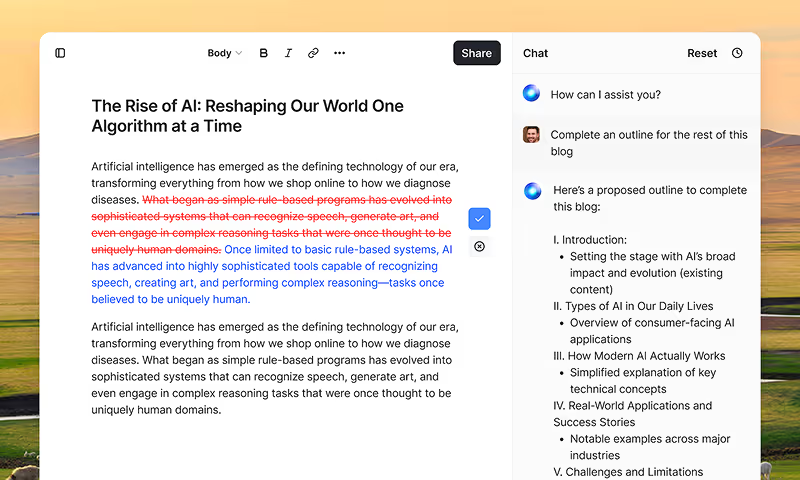
HyperWrite is the AI writing assistant that learns your style. It handles drafting, editing, and researching so you can focus on ideas.
- Autocompletes sentences as you type
- Works inside Google Docs & Gmail
- Adapts to your personal writing style
- 500+ AI tools for any writing task

Powerful writing in seconds
Improve your existing writing or create high-quality content in seconds. From catchy headlines to persuasive emails, our tools are tailored to your unique needs.