
How Long Does It Take to Write 2,000 Words? Hours by Task


You've got 2,000 words due, maybe a client blog post or a proposal that has to land before the pitch meeting, and you need to know whether that means blocking an afternoon or clearing two days on your calendar.
So how long does it take to write 2,000 words? Typing them takes about 40 minutes, writing them well takes most people 3.5 to 5.5 hours, and a researched essay can run past a full working day.
The spread between those numbers is thinking, research, and revision time, which is why typing-speed calculators tend to lowball the real job.
I checked the estimates below against a survey of more than 1,000 bloggers, a 168,000-person typing study, and the routines of authors who write 2,000 words a day for a living, so you can plug in your own writing speed and know exactly how many hours to protect.
How long does it take to write 2,000 words?
It takes about 40 minutes to type 2,000 words and 3.5 to 5.5 hours to write a finished 2,000-word article, depending on how much research and editing the piece needs. By type of writing, it looks like this:
The pure-typing row assumes the 30 to 60 words per minute most people type at. Every other row adds the parts of writing that don't show up on a keyboard, like deciding what to say and then fixing what came out wrong the first time.
For a real-world check, bloggers in Orbit Media's 2026 survey spent an average of 3 hours, 20 minutes on a 1,312-word post, which works out to about five hours at 2,000 words. Writing something shorter? The same math applies to how long it takes to write 500 words.
The four-phase time budget for 2,000 words
Most 2,000-word pieces move through the same four phases, and the fastest way to estimate your own number is to price each one separately. These are the budgets I'd plan around for a topic you already know reasonably well:
The outline is the cheapest phase and saves the most time. Fifteen minutes spent sorting your points into a clear blog post structure means every drafting session starts with a known next sentence.
Revision deserves a real slot on the calendar too. A tight pass with a self-editing checklist catches the repeated points and soft verbs that make 2,000 words feel like 3,000 to a reader.
Run a writing speed check
Typing speed and composing speed are very different numbers. In a 2018 Aalto University and Cambridge study of 168,000 volunteers, the average person typed 52 words per minute, but that was copying sentences someone else wrote (which is a lot easier than inventing them).
To find your real drafting speed, set a 25-minute timer, write without editing, and paste the result into a free word counter. Multiply the count by 2.4 to get words per hour, then find your row:
For reference, Michael Brockbank of WriterSanctuary reports 1,900 to 2,400 words in a two-hour block of daily writing sprints, which matches the fastest row of that table.
Most professionals drafting nonfiction from an outline land around the 750 row, which is the 2-to-3-hour draft the budget above assumes.
How long does it take to write a 2,000-word essay?
A 2,000-word essay takes most writers 6.5 to 10 hours, because research and citations roughly double the time you'd spend on a blog post of the same length.
Finding and reading sources closely enough to quote them accurately (then formatting every reference) happens around the drafting, and none of it speeds up with quicker typing.
I'd split an essay across at least two sittings: research and outline on day one, then draft and revise on day two. A night's distance from your own draft makes the editing pass far more honest.
For the research phase, HyperWrite's Scholar AI searches millions of scholarly papers for peer-reviewed articles, so the hunt goes faster. If you're planning the whole process from the prompt onward, these steps to writing an essay cover each stage up to the final draft.
Can you write 2,000 words in a day?
Yes, you can write 2,000 words in a day, and some of the most prolific authors around have used it as their daily target.
Stephen King set a 2,000-word daily goal in On Writing, though he later told Neil Gaiman he aims for about six pages, or 1,200 to 1,500 words.
R.L. Stine told NY1 that he writes 2,000 words a day and quits the moment he hits the number, no matter where he is.
Stine's other habit is worth stealing: he says he writes a complete, chapter-by-chapter outline before he starts each book, so by the time he sits down to write, all the hard decisions are already made.
Is 2,000 words a lot to write in a day? For someone with a full calendar of meetings and email, it's a solid day of output. The realistic way to get there, once the research is done, is two protected 90-minute blocks: one to draft the first half while your head is fresh, one to finish and tidy up later.
How many words can you write in 2 hours?
Most people can draft 1,000 to 2,000 words in two hours when they're working from an outline. Pure typing at the 52-word-per-minute average would get you past 6,000 words in the same window, which tells you how much of writing time is thinking time.
How many pages is 2,000 words?
2,000 words fills about 4 pages single-spaced or 8 pages double-spaced, based on 12-point type with 1-inch margins. Bigger fonts, wider margins, lots of short paragraphs, or headings will push that count up, so check the exact formatting rules if you're writing to a page limit.
How to write 2,000 words faster
The quickest gains come from removing stalls, since most writers lose far more time to stopping and restarting than to slow typing. Each of these tactics cuts one of those stalls, and the full playbook for how to write faster goes deeper on the ones that suit professional writing.
1. Outline in one-line bullets first
Write one line per section before you write a single paragraph. It takes about 15 minutes, and it turns a 2,000-word mountain into a list of small, obvious jobs.
2. Split the piece into four 500-word blocks
Five hundred words is a size your brain can hold in one go. Draft each block as its own mini-assignment, and you'll always know how far along you are (which does wonders for motivation around block three).
3. Draft in 25-minute sprints
The Pomodoro Technique, created by Francesco Cirillo, pairs 25 minutes of focused work with a short break. For writing, it gives you a hard stop to aim for and a clean measurement of your words per sprint.
4. Keep your inner editor out of the draft
Every time you stop to reword a sentence, you pay a restart cost when you go back to the next one. Get the whole draft down ugly first, then switch into editing mode once, when there's something complete to improve.
5. Mark missing facts with "TK" and keep going
Journalists use "TK" (short for "to come") as a placeholder for a stat or name they still need. Typing "[TK: Q3 churn number]" keeps you drafting, and a quick search for "TK" afterward catches every gap.
6. Talk it out, or type faster
Most people speak much faster than they type, so dictating a rough first pass can help when you're stuck on a section. If you'd rather stay on the keyboard, these tips to type faster raise your ceiling for every future draft.
7. Let AI handle the sentence-level grind
Tools like HyperWrite speed up the drafting phase itself. Its TypeAhead feature offers real-time, context-aware sentence completions anywhere in your browser, and you press Tab to accept, which keeps momentum up through the middle stretch of a long piece.
Common mistakes that slow you down
Most 2,000-word pieces that drag on for days hit the same handful of traps, and almost none of them have anything to do with typing speed.
- Researching mid-draft: Each "quick check" opens three more tabs. Do the research up front, mark anything you missed with TK, and look it all up in one batch at the end.
- Switching between tasks: UC Irvine researcher Gloria Mark has found that recovering from an interruption can take almost half an hour. Close Slack and email during drafting blocks, and use these ways to stay focused at work to protect the time.
- Writing the intro first: The opening is the hardest paragraph to write because you don't know yet what it's introducing. Start with the easiest section, and if you freeze anyway, these methods for beating writer's block get most drafts moving again in minutes.
- Budgeting only for the drafting: Planning "two hours to write it" usually means two hours of drafting plus research and revision you forgot to count. Price all four phases before you promise a deadline.
- Polishing every paragraph before moving on: A perfect first section with 1,500 blank words after it is a slower draft than four rough sections you can fix in one pass.
How HyperWrite cuts your 2,000-word drafting time
The answer to how long it takes to write 2,000 words is 3.5 to 5.5 hours of work for most professionals, and the drafting phase is where that number swings the most.
Outlining and sprinting shrink the stalls, but you still have to find every next sentence yourself, and that effort peaks in the long middle stretch of a piece. HyperWrite is built to speed up exactly that part, right inside the tabs where you already write.
With HyperWrite, professionals can:
- Finish sentences faster with TypeAhead's real-time suggestions in Google Docs, Gmail, and other browser-based editors
- Draw on context from your other open tabs, so suggestions reflect the research you already pulled up
- Keep suggestions in your voice by setting up Personas, reusable voice profiles that shape output across the platform
- Generate a starting paragraph in any format with AutoWrite when a section won't come
- Brainstorm, draft, and edit with the AI Writing Assistant, which runs faster than ChatGPT-style thinking models
- Start free and upgrade to Premium ($19.99 a month) for unlimited TypeAheads once you're using it every day
HyperWrite is used by professionals at Google, Netflix, LinkedIn, and Spotify. For a founder writing an investor update, an HR lead drafting offer letters, or a marketer finishing a long post, shaving even a minute off each paragraph adds up fast.
Start your next one in HyperWrite's AI Document Editor, then add HyperWrite for Chrome to keep TypeAhead running across your browser.
Frequently asked questions
How long does it take to edit 2,000 words?
Editing 2,000 words takes about 45 minutes to an hour for a typical article and one to two hours for an essay that also needs citation checks. Editing goes faster when you finish the full draft first and revise in a single pass.
How long does it take to type 2,000 words?
Typing 2,000 words takes about 40 minutes at the average speed of 52 words per minute, and 35 to 70 minutes for most people. That covers typing only, so add research, outlining, and editing time for a finished piece.
How long does it take to read 2,000 words?
Reading 2,000 words takes about 8 to 9 minutes for the average adult. A 2019 meta-analysis by Marc Brysbaert put the average silent reading speed for English nonfiction at 238 words per minute.
How many paragraphs is 2,000 words?
2,000 words is roughly 13 to 20 paragraphs at a typical 100 to 150 words per paragraph. Web articles with short, skimmable paragraphs often run 30 or more.
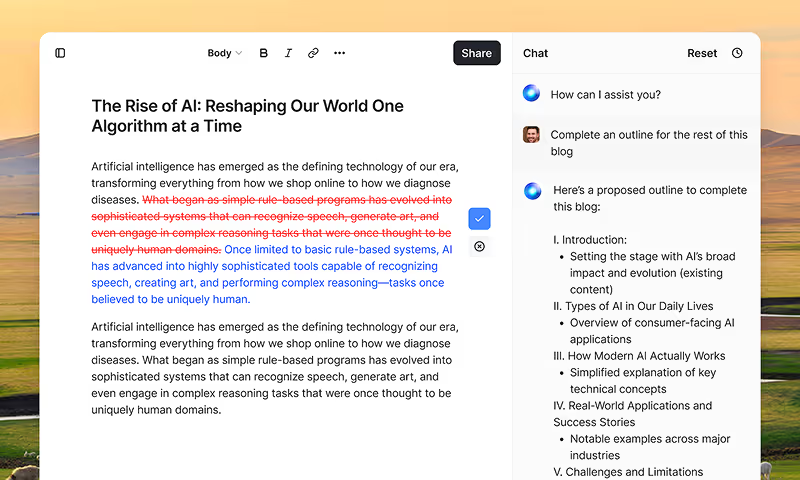
HyperWrite is the AI writing assistant that learns your style. It handles drafting, editing, and researching so you can focus on ideas.
- Autocompletes sentences as you type
- Works inside Google Docs & Gmail
- Adapts to your personal writing style
- 500+ AI tools for any writing task
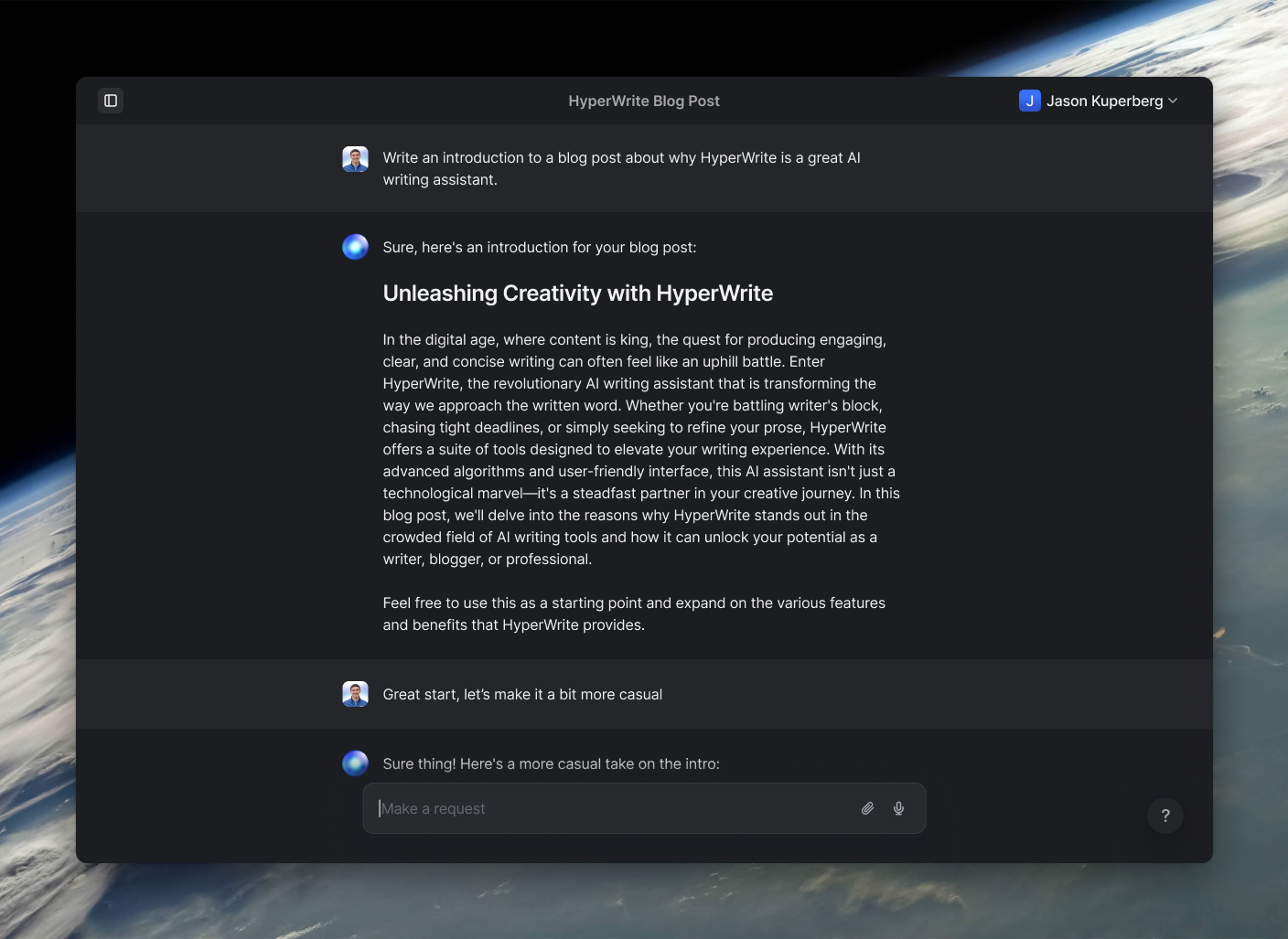
Powerful writing in seconds
Improve your existing writing or create high-quality content in seconds. From catchy headlines to persuasive emails, our tools are tailored to your unique needs.